A blog post moving through Hacker News this week makes a quiet but important point: AI tools speed up individual steps inside a process, but they don't fix the process itself. A broken approval chain doesn't get faster because one person's draft memo now takes thirty seconds instead of twenty minutes. The bottleneck was never the typing.
Most of the discussion around that piece focuses on corporate workflows. But the same logic applies directly to how households think about emergency preparedness — and it exposes a failure mode we see constantly in how families approach getting ready.
What's actually changing
There is a real wave of AI-assisted preparedness tools right now. Apps that generate 72-hour kit lists. Chatbots that answer "what should I do if the power goes out for three days." Services that will build a custom evacuation plan from your zip code. Some of these are genuinely useful.
The problem is that most families who download them have no underlying process the tools can accelerate. They have a vague intention. They have anxiety. They do not have a tested system.
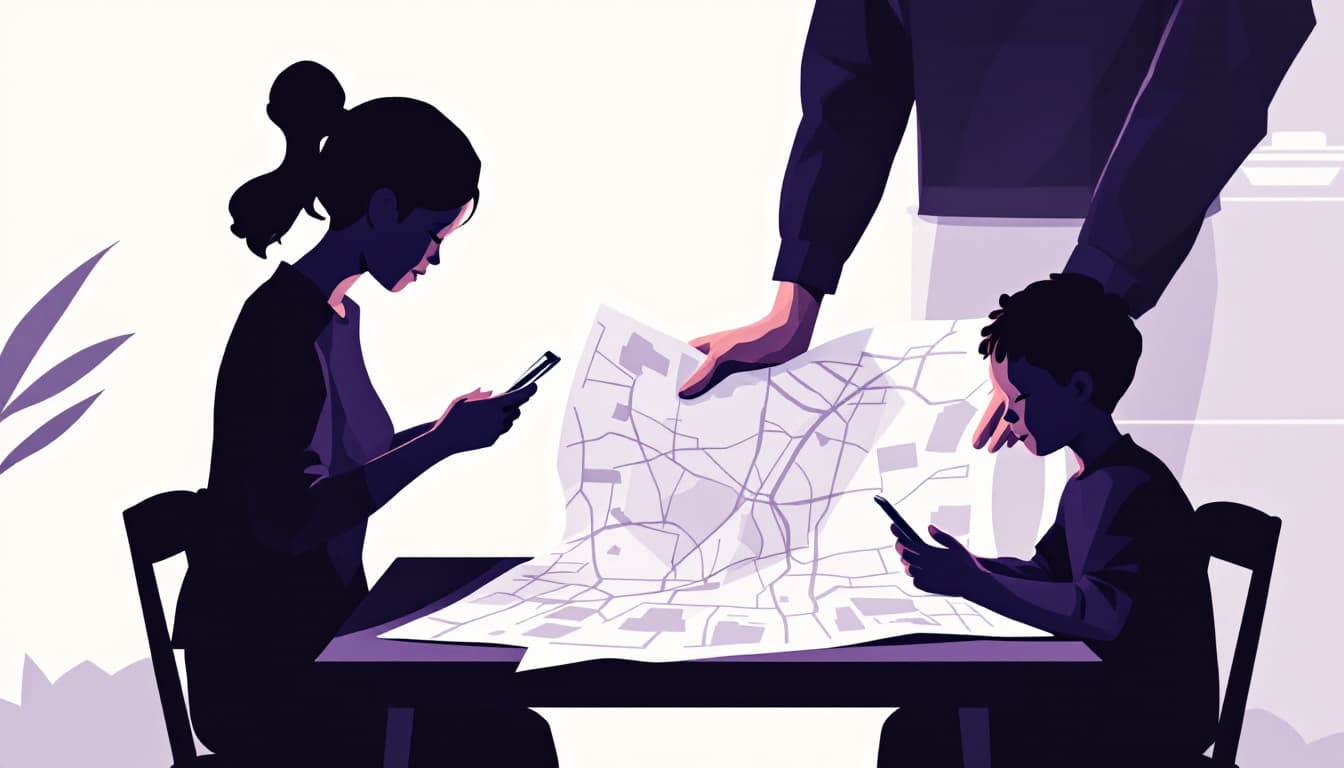
That distinction matters because AI can help you write a supply checklist in two minutes. It cannot tell you whether the checklist was actually followed, whether the supplies are where your teenager thinks they are, or whether your household has ever practiced the communication plan you saved to your phone. The tool sped up a document. The process — the human habit of rehearsal and maintenance — was never built.
This is the preparedness equivalent of the broken approval chain. Families mistake the output (a list, a plan, a filled cart) for the system. Then a real disruption arrives and the gap becomes obvious.
There's a second issue. AI tools trained on general preparedness content tend to produce general preparedness advice: three days of water, a go-bag, know your evacuation routes. That advice is not wrong. It is also not calibrated to your specific household — your medications, your pets, your elderly neighbor who depends on you, your neighborhood's actual flood history, your family members' specific roles in a crisis. Generic acceleration of generic advice still produces generic readiness.
What we'd actually do
Audit your existing process before adding any tool. Spend twenty minutes this week writing down what your household would actually do in the first four hours of a serious power outage. Not what you'd ideally do — what you would actually do based on current habits and current supplies. That honest audit is more valuable than any AI-generated plan because it shows you where the real gaps are.
Most families discover two things during this exercise: they know far less about their neighbors' situations than they assumed, and their communication plan depends entirely on cellular networks being functional. Both gaps are solvable, but you can't solve what you haven't named.
Use AI tools for maintenance tasks, not system design. Where AI genuinely helps a household is in the repetitive, forgettable work: reminding you that canned goods need rotation, generating a shopping list based on what you say you already have, or summarizing local emergency management guidance into plain language. These are task accelerators in a functioning system. If you don't have the system yet, build it by hand first — even crudely — so you understand what you're accelerating.
Test the plan with the people who have to execute it. A preparedness plan that one adult in the household knows is not a household plan. Run a ten-minute tabletop conversation — no gear, just talking — where each person in your home says aloud what they would do and where they would go in two scenarios: a 72-hour power outage and a 30-minute evacuation notice. The gaps in that conversation are your actual to-do list.
Treat paper as your AI fallback. Whatever digital tools you build your readiness around, a one-page printed summary — key contacts, medication list, meeting point, account numbers — belongs in a waterproof sleeve in your go-bag. AI tools require power, connectivity, and functioning infrastructure. Paper requires none of these.
The bigger picture
The Hacker News essay's core observation is that technology tends to make the easy parts of hard problems faster, while the hard parts remain hard. For households, the hard part of emergency preparedness has never been access to information. It has been the sustained, undramatic habit of maintaining readiness over time — checking supplies, updating plans, having the conversations, knowing your neighbors.
No tool changes that. What changes it is deciding that durability is a household value worth practicing, not a checklist worth completing once.
The goal is not to be ready for the end of the world. It is to handle the ordinary emergencies — a week without power, a sudden job loss, a medical event — without being caught flat-footed. That kind of readiness is built through process, not software.