A haboob rolls through Tucson on a Tuesday. By Saturday, the National Weather Service is posting excessive heat warnings and the high is forecast to crack 112°F. That is not a contradiction — it is Arizona in late July, and it is the hardest week of the year to manage as a household.
A report this week from KGUN 9 flagged exactly this pattern: storm chances continuing through the week before a weekend heat wave sets in across southern Arizona. The forecast itself is routine. What it demands from households is not.
The transition is where things break
Most preparedness advice treats heat and storms as separate problems. In Arizona's monsoon season, they aren't. The sequence matters because each event degrades your readiness for the next one.
A dust storm or thunderstorm knocks out power. APS and TEP restoration crews work fast, but a multi-hour outage in a home that has already absorbed a day of 108°F heat is dangerous, not merely inconvenient. Swamp coolers — still common in older Tucson and Phoenix homes — become useless when relative humidity spikes during storm passage. Then the humidity drops, the storm clears, and by Friday afternoon you are heading into a dry, unrelenting 110°F weekend with whatever energy reserves your household has left.
The compounding is the problem. One hot day is manageable. A humid storm night followed by a four-day heat wave, with a possible second outage, is where people end up in emergency rooms.
Arizona Department of Health Services data consistently shows heat-related illness spikes during these transition windows, not just during clean, uninterrupted heat events. The body doesn't get a reset between the storm stress and the heat stress.
What we'd actually do
Charge everything before the first storm, not after. Power banks, phones, a portable battery station if you have one — charge them the moment a storm watch goes up. After the outage is too late.
If you wait until the power flickers, you have already lost the window. A fully charged phone and a 20,000 mAh power bank costs nothing to top off and buys you 12-plus hours of navigation, communication, and weather alerts during an outage. If your household runs on CPAP equipment or refrigerated medication, this step moves from convenient to critical.
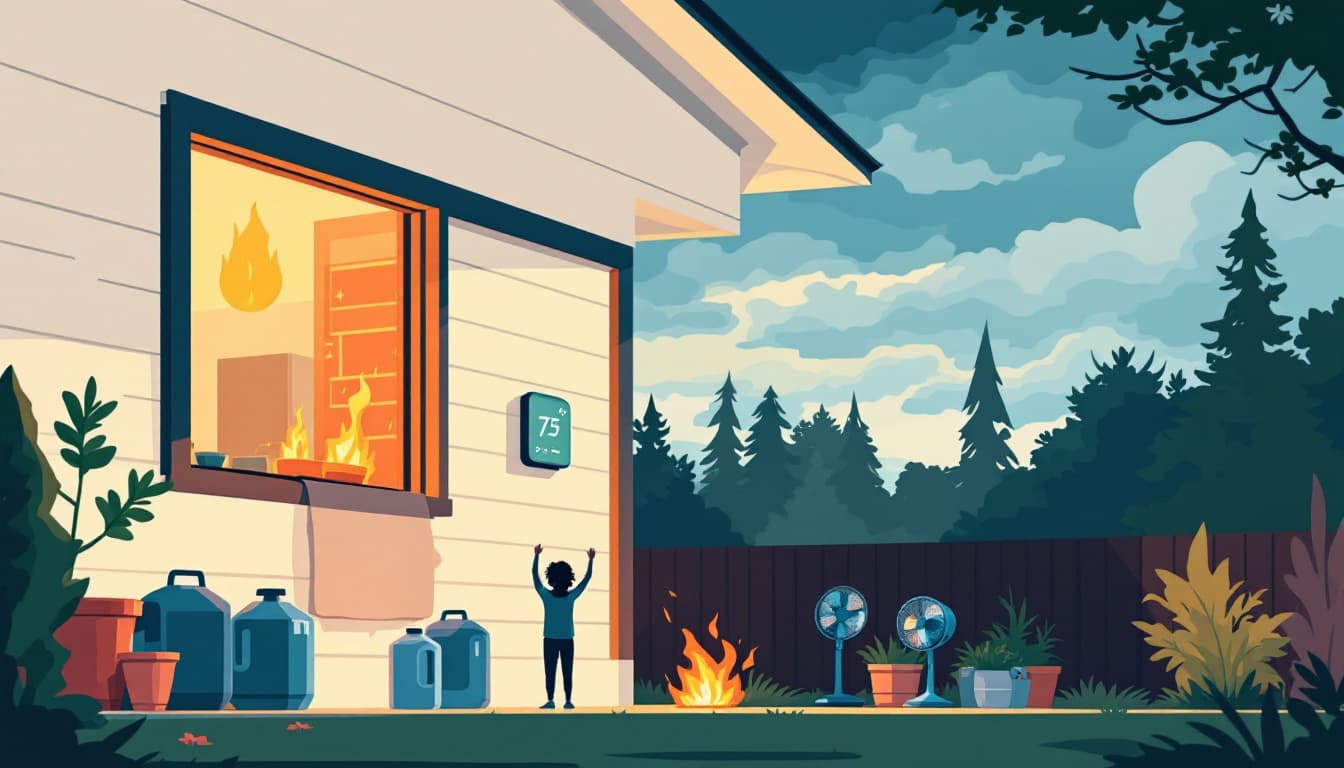
Audit your water supply before Saturday. Running tap water during a multi-day heat event is not a guarantee in Arizona's older neighborhoods, where water pressure can drop under peak demand. Seven gallons per person per day is the threshold for comfort in extreme heat — not survival, comfort.
Fill your bathtub with the WaterBOB or simply fill every large container you own Thursday night. Don't rely on the grocery store; shelves clear fast when a heat warning goes up on a Friday.
Identify your household's actual cool refuge, not a theoretical one. "We'll go to the mall" is a plan until the mall parking lot is gridlocked and your car has been sitting in 115°F direct sun for six hours. Name the specific library branch, cooling center, or family member's home with a working AC unit — and confirm it now, before the weekend.
Maricopa County and Pima County both publish cooling center locators that update in real time. Save the direct link to your phone's home screen. The Arizona Department of Emergency and Military Affairs (DEMA) also maintains a statewide resource page. These take thirty seconds to bookmark and are worth more than any gear purchase.
Pre-cool your home Wednesday and Thursday. Run your AC hard overnight while the grid load is lower and temps are slightly more tolerable. The thermal mass of your walls and floors stores that coolness. Going into a heat wave from a 78°F house is categorically different from going in from an 84°F house where you've been running the unit at minimum to save on the bill.
The bigger picture
Arizona households that navigate monsoon season well aren't the ones with the most gear. They're the ones who treat the weather calendar as a planning calendar — who see the KGUN 9 forecast on a Tuesday and spend twenty minutes Wednesday morning doing the checklist above.
Durability through an Arizona summer is mostly about not being caught in the gap between one threat and the next. The storm and the heat wave are a known sequence. The preparation window is right now, before the weekend, when you still have power, water pressure, and time.