Friday night in Central Texas looked familiar to anyone who has lived through a Hill Country summer. A report from KEYE documented heavy rain and flash flooding moving across the region — roads submerged, water rising faster than most people expected, and the standard scramble of last-minute decisions made in the dark.
This is not a freak event. Central Texas sits inside one of the most flash-flood-prone corridors in North America. The terrain is the reason: thin soil over limestone means rainwater has nowhere to go but down, fast, into creeks and low-water crossings that can go from dry to dangerous in under an hour. The National Weather Service office in Austin regularly issues flash flood emergencies — not watches, emergencies — for this region multiple times per year.
The problem for households is not that the floods are surprising. The problem is that most families still don't have a standing plan, which means every event triggers the same improvised response.
What's actually changing
The flash flood pattern in Central Texas is not new, but two things are shifting the household risk profile. First, population growth in the Austin–Round Rock metro and surrounding counties has pushed residential development into creek bottoms and low-lying areas that older residents would have left empty. If you moved to the area in the last decade, your neighborhood's flood history may be shorter than the flood risk actually is.
Second, the window between a National Weather Service flash flood warning and water on the road is often 30 minutes or less in the Hill Country. Cell phone Wireless Emergency Alerts have improved, but they still can't give you time you didn't already spend preparing.
The gap most families need to close is not gear. It is awareness and a pre-made decision tree.
What we'd actually do
Sign up for your county's emergency alert system — not just your phone's default alerts. Texas counties operate their own notification systems layered on top of federal alerts. Travis County uses AlertTravis. Williamson County has Rave Alerts. Hays, Comal, and Burnet counties each have their own. These local systems can push neighborhood-specific warnings faster than a broad NWS broadcast. Go to your county's Office of Emergency Management website this weekend and register your address and a cell number. It takes about four minutes.
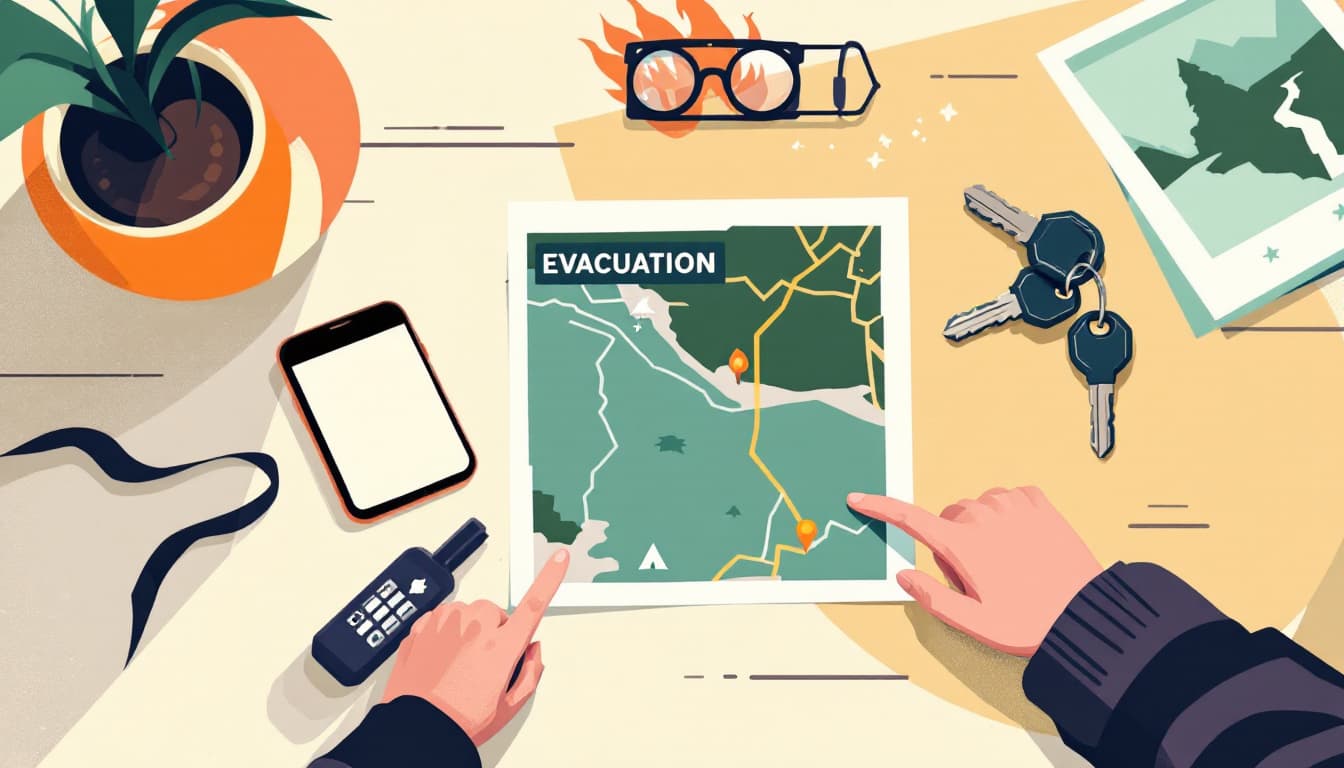
Identify every low-water crossing between your home and the two most likely destinations you'd drive to at night. Most flash flood deaths in Texas involve vehicles. The specific risk is a crossing you've driven a hundred times that looks passable but has six inches of moving water over it — enough to float a car off the road. Pull up Google Maps, plot your routes to work, to school, and to the nearest hospital, and note where they cross creeks or drainage channels. Name them. Then decide, in advance, which alternate route you take when those crossings flood. This decision should not happen in the car.
Keep a 72-hour water supply that doesn't depend on your tap. Flash flooding frequently precedes boil-water notices. The City of Austin and smaller surrounding utilities have issued them after major rain events when runoff overwhelms intake capacity. Three gallons per person per day for three days is the standard guidance. For a family of four, that's 36 gallons — manageable as a combination of commercial water jugs and a filled bathtub using a low-cost WaterBOB liner.
Put your go-bag documents in a waterproof bag tonight. Insurance cards, vehicle titles, passports, and a copy of your lease or mortgage documents should be in a single waterproof zipper bag you can grab in under two minutes. If your home floods and you're filing a claim from a hotel three days later, you want those documents with you.
Check your flood zone status, then check it again. FEMA's Flood Map Service Center lets you enter your address and see your current flood zone designation. Texas counties periodically update their maps, and recent development can alter drainage patterns in ways that change risk for existing homes. Knowing your zone doesn't protect you from flooding, but it tells you whether your standard homeowner's policy covers flood damage — and in most cases, it does not. Flood insurance through the National Flood Insurance Program has a 30-day waiting period, so "after a big rain" is already too late to buy it.
The bigger picture
Central Texas flash flooding is one of those risks that feels abstract until it's happening on your street. The families who navigate it well are not the ones with the most gear — they're the ones who made two or three decisions before the rain started. Know your crossings. Know your alerts. Know what your insurance actually covers.
Durability is not about surviving a disaster. It is about not being caught making basic decisions in the worst possible moment.