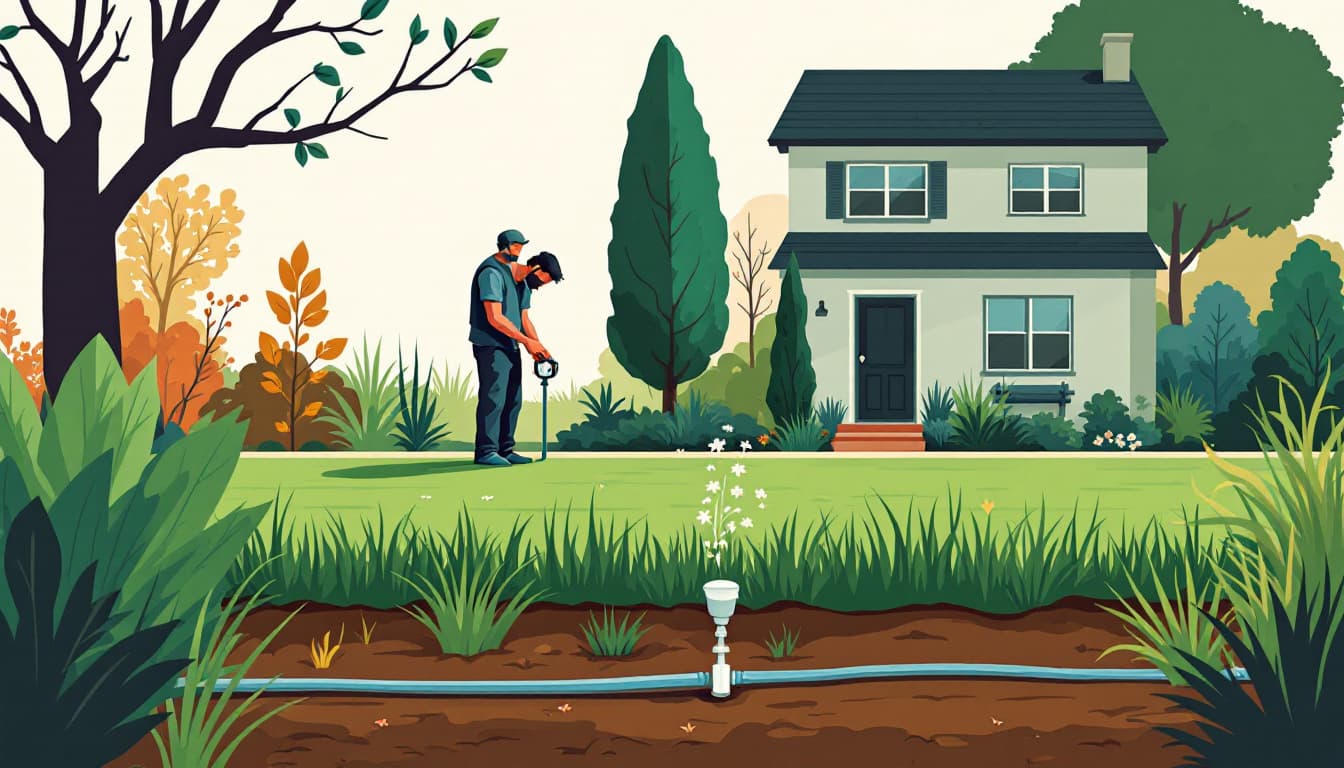
A CBS News report this week profiles Aurora's water-wise gardening program, showing residents how to keep food and ornamental gardens alive under drought restrictions. The tone is upbeat — and it should be. The program works. But the framing of "gardens flourishing despite drought" skips the harder question: Aurora is the third-largest city in Colorado, it draws from the same over-allocated river systems every other Front Range municipality does, and this is not a temporary dry spell.
What's actually changing
Colorado's drought conditions have been cycling between moderate and severe for most of the past decade, with brief reprieves that get treated as recoveries. The Colorado River Compact — the 1922 agreement governing how seven states divide river flows — was written during an anomalously wet period. Recent U.S. Bureau of Reclamation data has consistently shown that long-term average flows are running below what the compact assumed. That gap doesn't close on its own.
For Front Range households, the practical consequence is predictable: water utilities are not going to get more permissive over time. Aurora, Denver Water, Colorado Springs Utilities, and smaller district providers have all moved toward tiered pricing, outdoor watering schedules, and landscaping restrictions in recent years. The Aurora program CBS News covered is an adaptation, not an exception. Other utilities will follow, or tighten further.
What this means at the household level is that your outdoor water use — and increasingly your indoor use — is a managed resource, not an ambient utility. Families who treat it that way now will face fewer forced adjustments later.
What we'd actually do
Audit your outdoor irrigation before July. Walk your yard with the system running and time each zone. Most Colorado households lose 30–40% of outdoor water to overspray, evaporation during midday runs, or broken heads. A ninety-minute audit costs nothing. Fix or cap any head watering pavement or running outside your plant zone. This matters more than any new equipment purchase.
Replace one lawn section with xeric groundcover this season. This is not about aesthetics — it's about reducing the surface area that demands water every three days through a Colorado August. Native groundcovers like buffalo grass, blue grama, or creeping thyme establish quickly and survive on rainfall alone once rooted. Aurora's program reportedly covers some material costs for enrolled residents; check whether your municipality has a similar rebate. Denver Water's "Slow the Flow" program has offered turf replacement rebates in past seasons, and programs like it tend to reopen each spring.
Add a rain barrel or two, and understand the legal status. Colorado legalized residential rainwater collection in 2016, but with limits: residential collection is capped at 110 gallons across no more than two containers. Know the rule, stay within it, and connect your barrels to a downspout that feeds your garden beds directly. It won't replace your irrigation system, but it offsets it during the scattered afternoon thunderstorms the Front Range gets in July and August.
Review your utility's current water restriction tier. Most Front Range utilities post their active restriction stage online. If your utility is at Stage 1 or Stage 2 restrictions and you don't know it, you may already be out of compliance without realizing it. A fine is the least of your concerns — the bigger issue is that Stage 2 and Stage 3 restrictions can mean outdoor watering drops to once or twice per week, which will kill an unplanned garden fast. Knowing your tier lets you plan your planting calendar around it.
Plant a small raised bed of high-yield, low-water vegetables. If you want food production capacity at home, focus on crops that deliver the most calories or nutrition per gallon of water: beans, chard, kale, and determinate tomato varieties. Mulch the bed heavily. Water in the early morning. A 4x8 raised bed, properly managed, can produce a meaningful supplement to a family's summer vegetable consumption at a fraction of the water cost of lawn maintenance.
The bigger picture
Aurora's program is evidence that municipal governments and households can adapt to water stress without crisis. That's the right frame. The wrong frame is treating each drought year as an anomaly to survive until normal returns. For Colorado, this is the new operating baseline.
Families that make small, durable adjustments — xeric landscaping, efficient irrigation, modest food production — are not preppers in the bunker sense. They're households that have simply decided to run on what the region actually provides, rather than what it provided fifty years ago. That posture is worth building deliberately, one season at a time.