A coyotegulch.blog report tied to a recent Denver Post analysis points out something counterintuitive: stretches of the Colorado River still have enough flow for commercial rafting this summer, even as the broader basin sits in severe drought. The reason is Colorado's prior appropriation system — "first in time, first in right" — which means senior water rights holders, including major irrigation districts and some municipalities, continue to draw their full allocation before anyone with a junior claim sees a drop.
That explanation is reassuring if you want to float the Arkansas or the upper Colorado. It should not be reassuring if you're thinking about your household's water supply over the next five to ten years.
What the rights system is actually telling you
The prior appropriation system is working exactly as designed. Senior holders are protected. But junior rights — which include a significant share of newer municipal and suburban water contracts on the Front Range — are the ones that get cut first when the basin runs short. Denver Water, Aurora Water, and Colorado Springs Utilities have each published long-range demand analyses in recent years acknowledging that continued aridification will require either new storage, aggressive conservation, or both.
The rafting-ready river flows are a lag indicator, not a green light. They tell you the system is still holding. They do not tell you the system has margin to spare.
Colorado's snowpack, which feeds most of its river flows, finished below average for the second consecutive year according to the National Resources Conservation Service's spring assessment. Reservoir storage across the state is uneven: some Western Slope systems remain reasonably full from prior wet years, while others are considerably below historical medians. Your household's exposure depends almost entirely on which utility serves you and where that utility draws its water.
What we'd actually do
Find out your water utility's source and its current storage status. Every major Colorado utility publishes a water supply outlook, usually updated monthly in summer. Denver Water, Aurora Water, and Colorado Springs Utilities each have public dashboards. If you're on a smaller district or a rural co-op, call and ask. Knowing whether your supply comes from Blue Mesa, Dillon Reservoir, or a direct river diversion changes every other calculation you'd make.
Most households have no idea whether their utility's primary reservoir is at 60% or 90% of capacity. That number matters because utilities begin mandatory conservation stages at specific thresholds — and those stages translate directly to outdoor watering restrictions, which in turn affect landscape, gardens, and any food production you've invested in.
Get your indoor water use below 50 gallons per person per day before restrictions force you to. Colorado's average household uses somewhere between 80 and 120 gallons per person per day depending on the season and lot size. Dropping to 50 is achievable without suffering: low-flow showerheads (under $30 at any hardware store), toilet tank displacement bags, and fixing a single running toilet can close most of that gap. Getting there voluntarily means restrictions, if they come, feel manageable rather than disruptive.
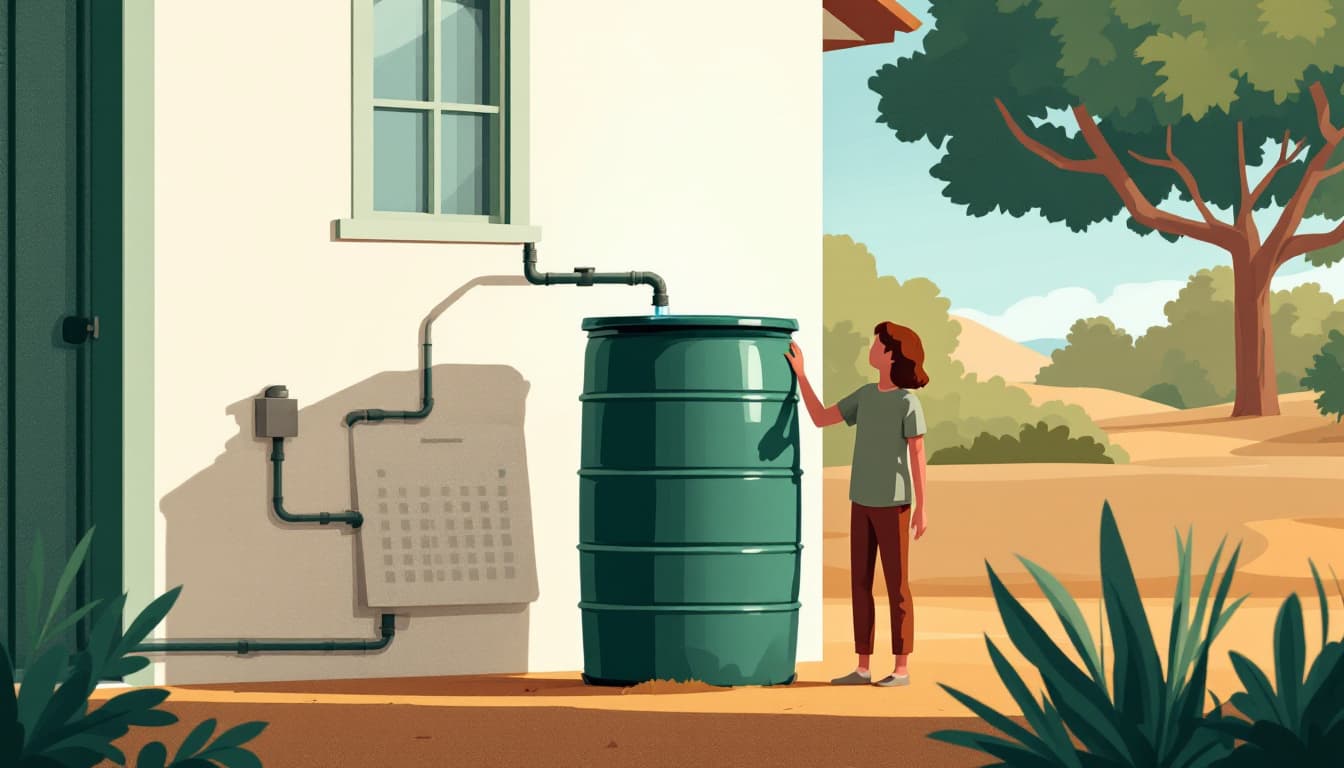
Install at least one rain barrel if your municipality allows it. Colorado only fully legalized residential rainwater collection in 2016, and some HOA and local restrictions still apply — check first. A 50-gallon barrel at a downspout is not a survival solution, but it covers several weeks of garden and container plant watering during a Stage 1 restriction. The Colorado State University Extension office publishes a free guide specific to Colorado's collection rules and setup.
Plant or source at least a portion of your food from xeric or drought-tolerant stock this season. If you grow anything edible, swap the thirstiest crops — corn, melons, large squash — for dry-farmed tomatoes, drought-tolerant beans, and herbs that survive on deep, infrequent watering. This is a one-season shift that builds a skill, not a major homestead investment.
Know your utility's conservation stage triggers and what each stage restricts. Stage 1, 2, and 3 restrictions mean different things at different utilities. Some ban outdoor watering on certain days; others ban it entirely above Stage 2. Knowing this now means you can plan your garden and landscaping around actual constraints rather than discovering them in August.
The bigger picture
The Colorado River basin has been over-allocated relative to its actual average flow since the 1922 Colorado River Compact was signed — a fact that took decades of science to confirm and that water managers are now openly acknowledging. Severe drought doesn't create that problem; it just accelerates the reckoning.
For a Colorado household, the goal isn't to stockpile water or move somewhere wetter. It's to reduce dependence on high-volume outdoor use, understand your specific utility's vulnerability, and build the habits now that won't feel like deprivation later. The river still flows. Plan as if that's a gift, not a guarantee.