A June 2026 report from Politico details the Trump administration's move to redirect funding originally allocated under the Inflation Reduction Act — money Democrats had earmarked for climate and land conservation programs — toward Western drought mitigation. The Colorado River Basin is the named target. For Colorado households, the bureaucratic shuffle is less important than the underlying condition it's responding to: the West's water situation is serious enough that the federal government is moving money around to address it, regardless of which party's budget it comes from.
That's worth sitting with for a moment.
What's actually changing
Redirecting existing federal dollars does not create new water. It reshuffles who administers conservation programs, which infrastructure projects get prioritized, and which agricultural and municipal users get assistance. The Colorado Water Conservation Board and the state's Compact obligations on the Colorado River remain in place. What changes is the funding pipeline behind drought-relief programs that ranchers, irrigation districts, and some municipal utilities have been counting on.
For households on Front Range municipal water — Denver Water, Colorado Springs Utilities, Aurora Water — the near-term operational risk is low. These systems have significant storage in mountain reservoirs, and Dillon, Chatfield, and Pueblo reservoirs are actively managed. But "low near-term risk" is not the same as "no risk." Reservoir storage levels across the Colorado River headwaters have been variable in recent years, and the summer of 2026 is arriving after a below-average snowpack season in parts of the state. The Colorado Basin River Forecast Center publishes weekly updates; it's worth checking before July.
For households on private wells in El Paso, Pueblo, Teller, and Fremont counties — or anywhere along the Arkansas River corridor — the picture is more uncertain. Aquifer recharge depends on snowpack and spring precipitation that has been inconsistent. Well users do not benefit from municipal storage buffers.
Rural water districts, particularly in the San Luis Valley and on the Western Slope, may see the most direct disruption if federal conservation-program dollars change hands mid-cycle. Farmers and ranchers in those regions were likely counting on specific program commitments.
What we'd actually do
Check your municipality's current water restrictions and reservoir report before mid-June. Denver Water and Colorado Springs Utilities both publish current-stage drought status online. If your utility is already at Stage 1 restrictions, that's a signal to reduce outdoor use now, not after enforcement starts. Fines for overuse during restrictions are real, and outdoor irrigation accounts for roughly half of residential summer water use statewide according to state estimates.
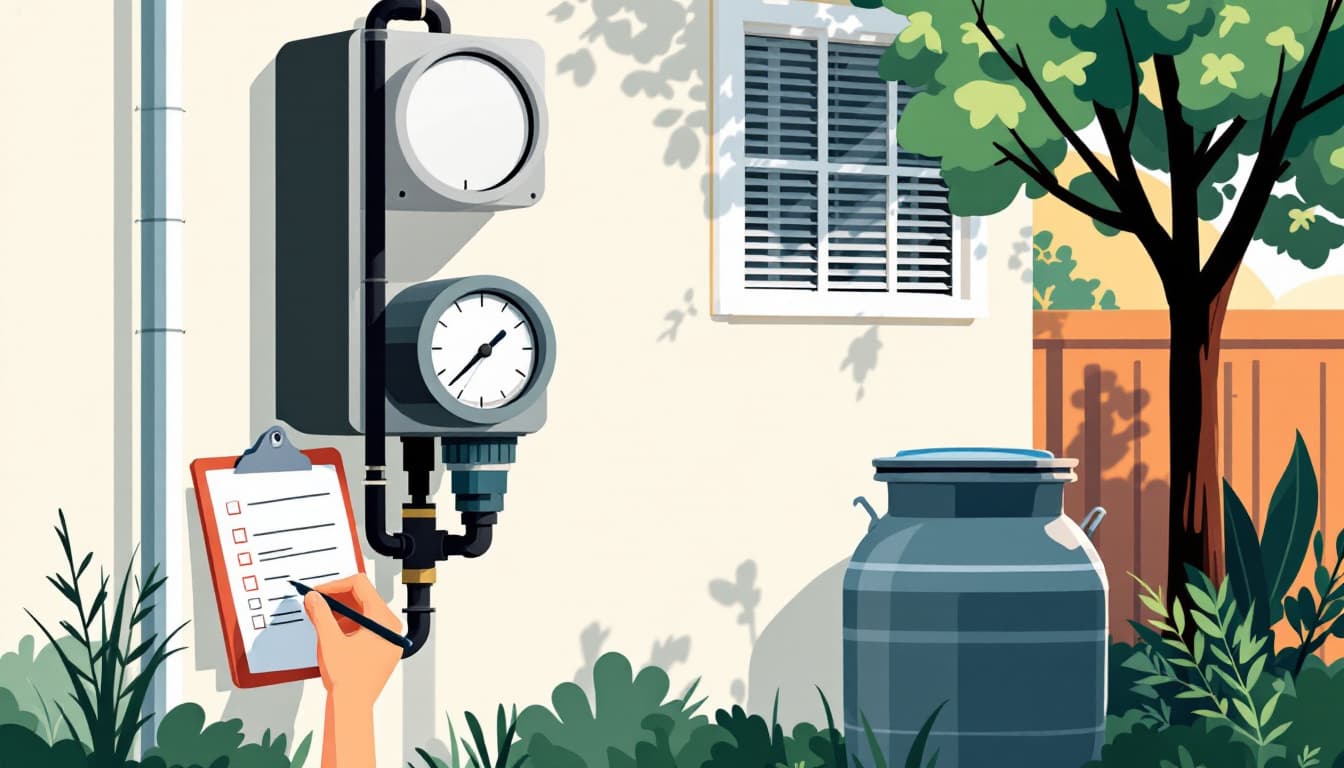
If you're on a private well, get a water quality and quantity test this summer. Testing costs between $100 and $400 depending on the panel, and it tells you two things: whether your water is safe, and whether yield is declining. A well that produced 5 gallons per minute two years ago may be producing less now. You won't know without testing. Contact the Colorado Division of Water Resources for licensed testers in your county.
Store a two-week supply of drinking water. FEMA's standard guidance is one gallon per person per day. A family of four needs roughly 56 gallons for two weeks. Food-grade 55-gallon drums run $30–$60 used and are widely available through agricultural supply stores along the Front Range. This is not about expecting your tap to stop working; it's about not being caught flat-footed during a temporary boil-water notice or a distribution disruption following a wildfire event upstream of your intake.
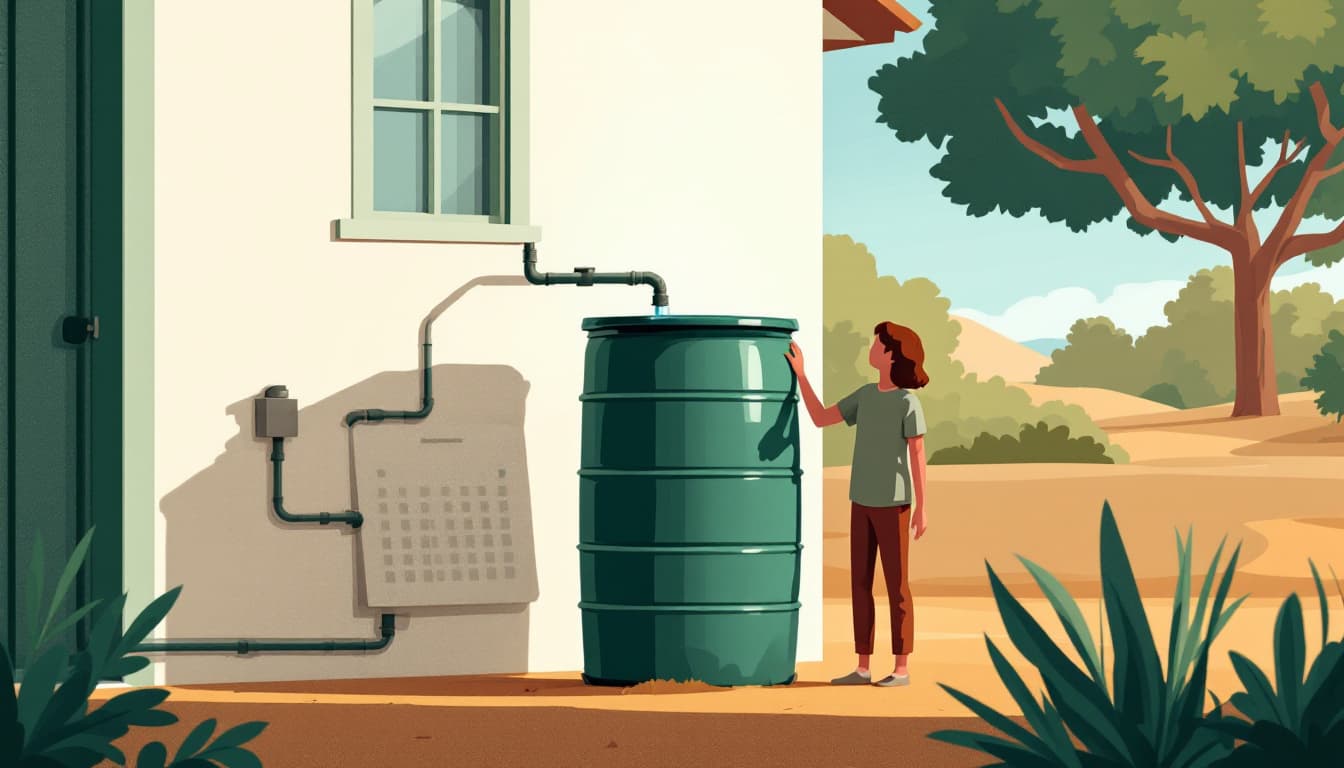
Audit your outdoor water use and install a rain barrel. Colorado legalized residential rain barrel collection in 2016, capped at two 110-gallon barrels per household. A single barrel can offset meaningful outdoor watering during the months when it actually rains. Combined with drip irrigation on a timer, most Front Range households can cut outdoor water use 20–30% without sacrificing their gardens.
Know your water rights tier if you're rural. Colorado operates on prior appropriation — "first in time, first in right." In a shortage year, junior water rights are curtailed before senior ones. If you irrigate from a ditch or surface source, contact your local water conservancy district now to understand where your rights fall in the priority stack.
The bigger picture
Federal funding fights are noise. The underlying hydrology is signal. The Colorado River compact was negotiated a century ago based on flow estimates that turned out to be optimistic, and the entire Western water system has been operating against that math ever since. What's happening now — money being moved, programs being retooled, agencies scrambling to address drought — is a symptom of a structural mismatch that no single administration will resolve.
Your household doesn't need to solve Western water policy. It needs to understand what water sources it depends on, how resilient those sources actually are, and what two weeks of independence looks like if something goes sideways. That's achievable this month, with modest effort and modest cost.
Durability, not catastrophe. Start with the water test and the reservoir report.