On a bad smoke day along the Front Range, an average home with no filtration upgrades exchanges indoor and outdoor air fast enough that fine particulate matter — PM2.5, the stuff that embeds in lung tissue — reaches near-outdoor concentrations within two to four hours. You don't smell it that strongly. You still breathe it.
A report this week from Cleaning & Maintenance Management noted that wildfire smoke and sustained heat across Colorado are working together to worsen air quality statewide. That combination matters beyond the headline: heat drives people indoors and keeps windows shut, but it also strains the HVAC systems that are your last line of filtration defense. When your AC runs hard all day, filter loading accelerates. When a filter loads, airflow drops and efficiency falls. Most households aren't checking filters on a heat-wave schedule.
What's actually changing this season
Colorado's fire season has been front-loading. The San Luis Valley, the Western Slope, and the foothills above Denver have all seen fire activity earlier and more intensely than in historically average years, according to National Interagency Fire Center tracking. Smoke doesn't stay in the mountains. The South Platte corridor, Colorado Springs, and the Boulder-to-Fort Collins stretch regularly see AQI readings climb into the "Unhealthy for Sensitive Groups" range during active fire periods — and occasionally into the flat "Unhealthy" range for everyone.
Heat amplifies this two ways. High pressure systems that drive triple-digit days also trap smoke closer to the surface by suppressing the atmospheric mixing that normally disperses it. And when it's 98°F in Denver, you're not opening windows to ventilate. Your house becomes a sealed container that slow-leaks outdoor air through every gap around doors, window frames, and duct penetrations.
For most Colorado homes built before 2010 — the majority of the housing stock along the Front Range — that leakage rate is high enough to matter. Tight construction helps, but it isn't universal.
What we'd actually do
Check and replace your HVAC filter this week, not on your normal schedule. During heavy smoke periods, a MERV-13 filter (the minimum rating that meaningfully captures PM2.5) can load in two to three weeks rather than the standard 60 to 90 days. A clogged filter running on an overworked AC unit is worse than no filter — it restricts airflow, makes your system work harder, and doesn't trap what it should. MERV-13 filters are available at most hardware stores for under $20. If your system is older and can't handle MERV-13 without straining (check with your HVAC company if you're unsure), MERV-11 is a reasonable compromise.
Set up one room as a clean-air refuge, specifically for overnight sleep. You don't need to filter your whole house perfectly. A single bedroom with a portable HEPA air purifier running on low can maintain meaningfully lower PM2.5 concentrations than the rest of the house. Consumer-grade HEPA units sized for a 200-to-300-square-foot room run $60 to $120 and drop particulate counts substantially within 30 minutes. This matters most for children, older adults, and anyone with asthma — but the evidence for sleep quality and next-day cognitive function is solid for everyone.
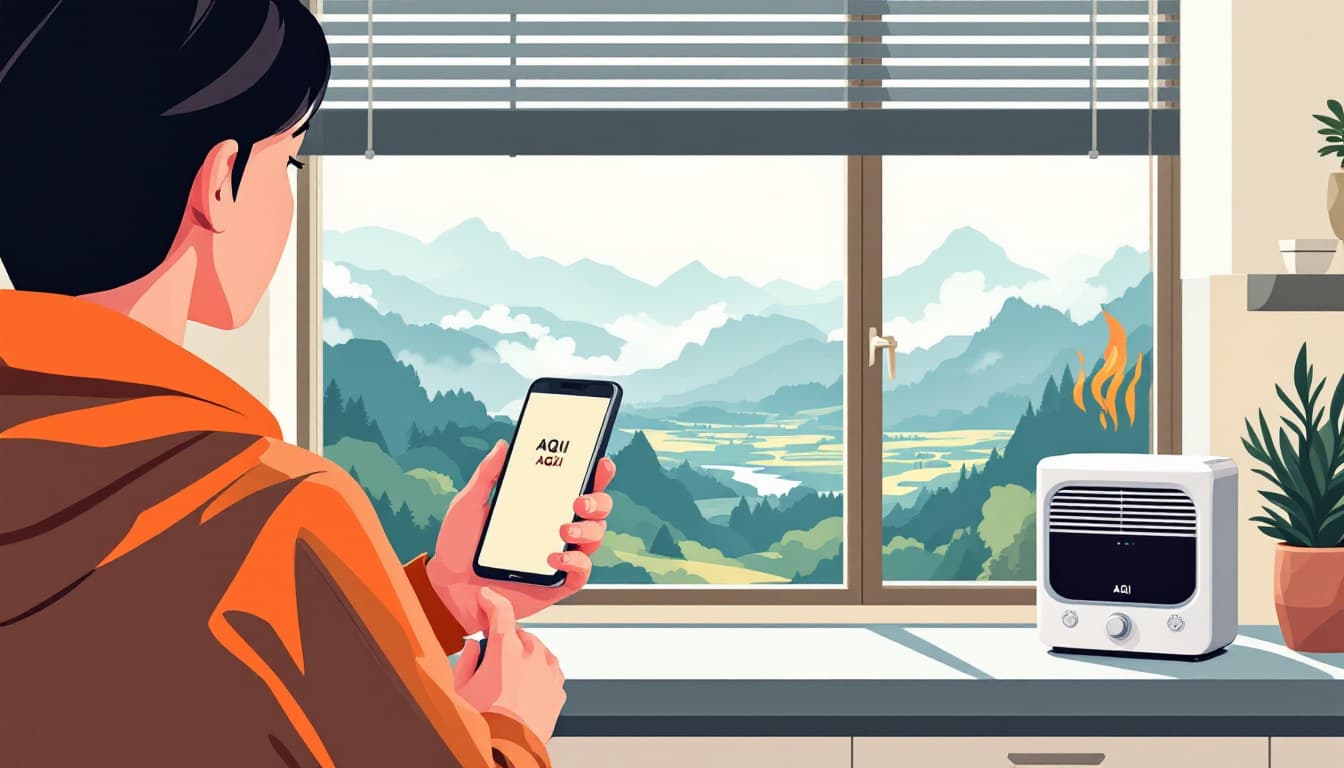
Download the AirNow app and check it before you open anything. Colorado's air quality varies significantly by hour during fire season — mornings are often cleaner than afternoons and evenings as smoke columns build and drift. The EPA's AirNow system provides hourly county-level AQI data. Building the habit of checking before opening windows, exercising outside, or running a whole-house fan takes 10 seconds and changes your daily exposure meaningfully.
Seal the worst gaps with what you already have. Door sweeps, foam weatherstripping tape, and rolled-up towels at the base of exterior doors are not elegant, but they work. During a smoke event, an unsealed front door gap is a larger infiltration source than most people expect. Hardware-store foam tape costs under $10 and installs in minutes. Focus on exterior doors and windows on the windward side of your house.
Keep N95s accessible, not packed away. If you or anyone in your household needs to go outside during an AQI above 150, an N95 respirator (properly fitted, not a cloth or surgical mask) filters PM2.5 effectively. They cost roughly $1 to $2 each in bulk. Keep a small supply near the door — not in a bin in the garage.
The bigger picture
Colorado isn't becoming unlivable. But the overlap of earlier fire seasons, longer heat events, and older housing stock is creating a consistent summer pattern that households can either adapt to or absorb as chronic low-grade exposure. The adaptation cost is low: better filters, one clean room, a free app. The alternative is years of smoke seasons treated as an inconvenience rather than a manageable household variable.
Durability doesn't mean a bunker. It means a MERV-13 filter and a HEPA unit in the bedroom, bought before the next red flag warning, not during it.