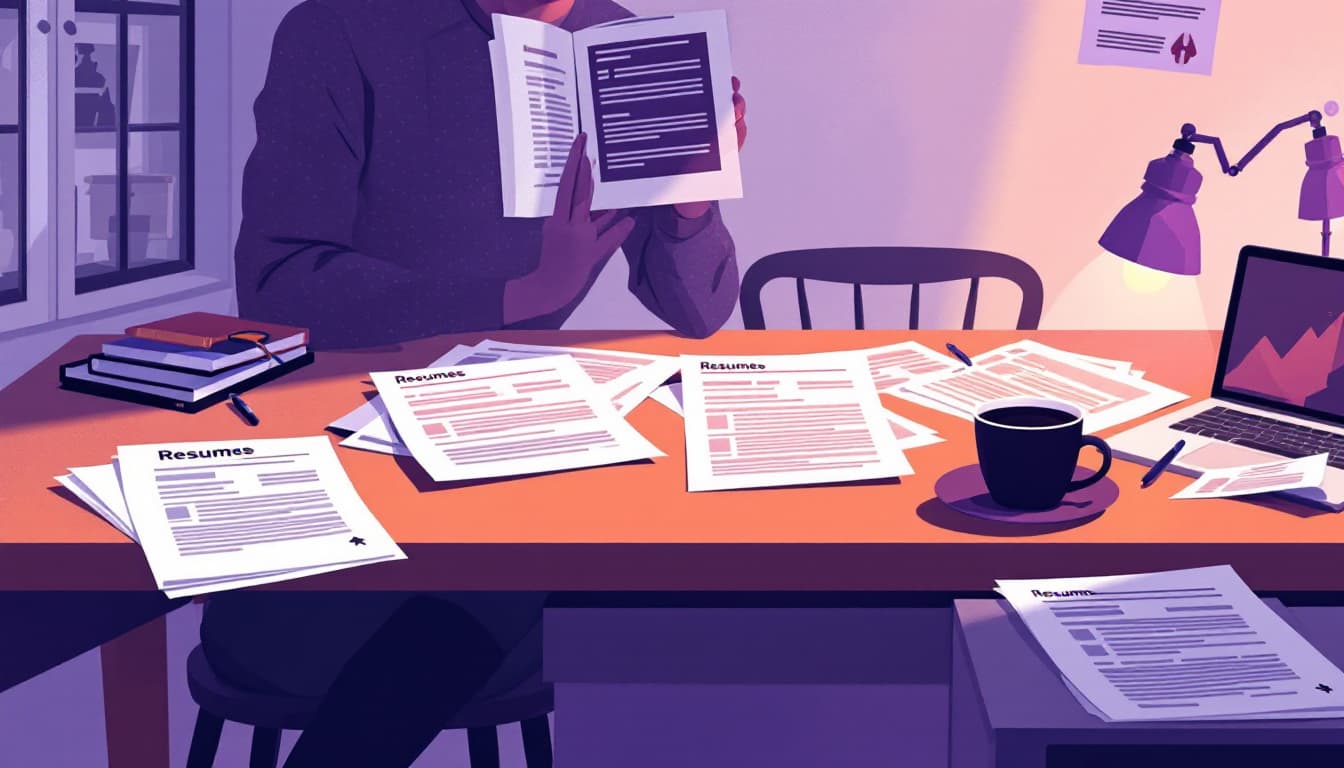
A plumber who understands why a building's water pressure behaves strangely after a freeze cannot be replaced by a chatbot. A nurse who can read a patient's affect and catch what the chart doesn't show cannot either. A paralegal who has spent eight years in maritime insurance law and knows which clauses actually get litigated — same story.
A post circulating on Hacker News this week makes a case that's been gestating in professional circles for months: domain expertise has always been the real career moat, and large language models are simply making that fact visible by consuming everything that isn't it. The argument isn't that AI is catastrophic. It's that the floor dropped out from under generalist knowledge work, and the ceiling on deep specialization got higher.
That distinction matters for households planning the next decade.
What's actually changing
Generic competence — writing a coherent memo, building a passable spreadsheet model, summarizing a legal document — was always a commodity. It just didn't feel like one because the tools to expose it hadn't arrived yet. They have now.
What AI cannot replicate, at least not without a human in the loop who can verify the output, is the judgment that comes from years inside a specific domain. Not just knowing the rules, but knowing when the rules are wrong, where the exceptions cluster, and what a bad outcome smells like before the data confirms it. That tacit knowledge is built slowly, usually in person, usually through failure.
Recent BLS data on occupational displacement shows the hollowing happening fastest in mid-skill, mid-wage roles — the administrative, clerical, and entry-level analytical jobs that traditionally served as on-ramps to professional careers. That on-ramp problem is underreported. If the junior roles that used to build domain knowledge disappear, the pipeline for senior expertise thins with a lag of five to ten years.
This is not a reason to panic. It is a reason to think carefully about how your household is building and protecting domain knowledge — your own, your partner's, and eventually your children's.
What we'd actually do
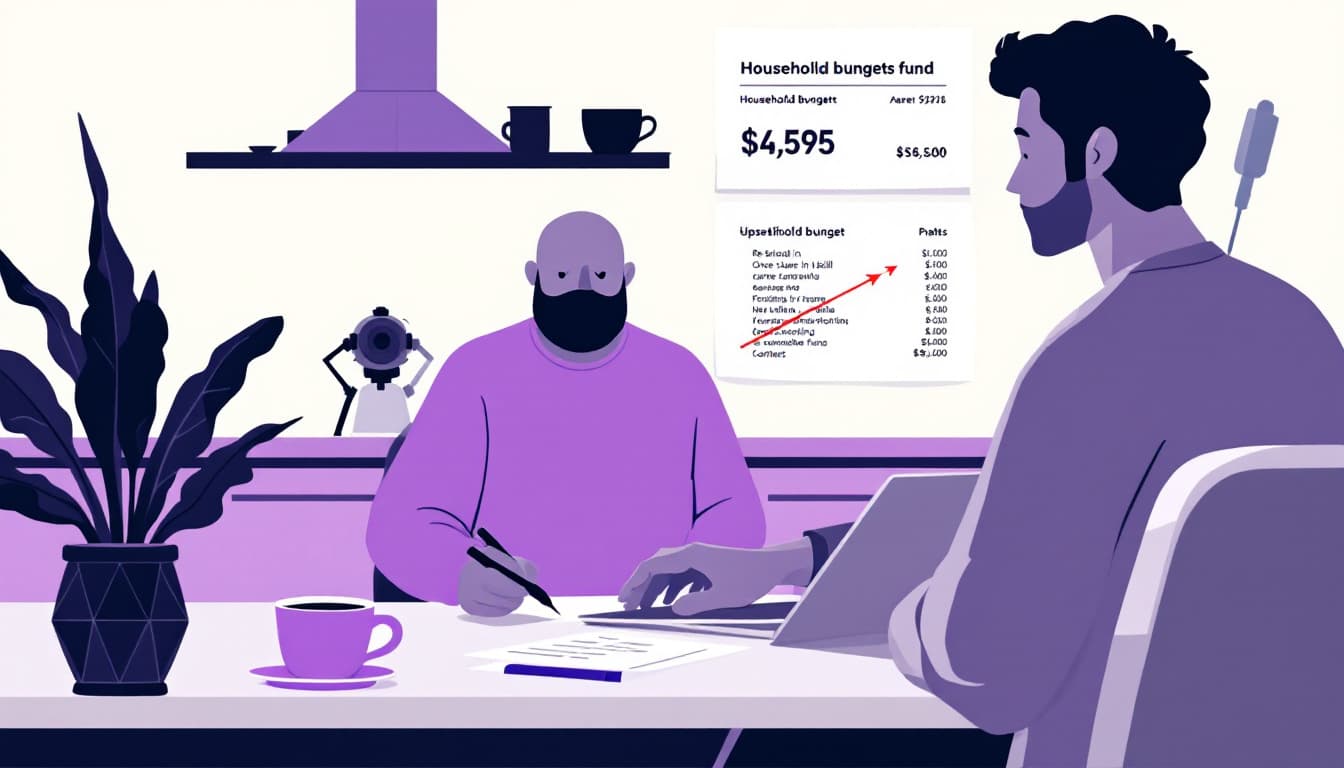
Audit every income-earning adult in the household for their actual domain depth. Not job title, not years of experience — actual irreplaceable knowledge. Write it down. What would take a competent outsider two years to learn just to be functional in your role? If the answer is "not much," that's signal worth taking seriously. Most people overestimate their replaceability once they sit down and list what they actually know versus what a sharp generalist could approximate in six months with a good AI assistant.
Identify one adjacent domain worth going deeper into over the next 18 months. Breadth is not the answer. Another online certification in a second generalist skill compounds the problem. Instead, look for the intersection between what you already know and something that requires physical presence, regulatory licensing, or long apprenticeship to access. Trades with technical complexity, specialized healthcare roles, niche legal or financial domains with real liability exposure — these share a common feature: the knowledge is hard to separate from the person who holds it.
Stop treating your children's extracurricular activities as résumé padding and start treating them as domain exploration. Kids who spend three years seriously engaged with something — a sport at a competitive level, a craft, a technical hobby — are building the habit of deep practice, not just the skill itself. That habit is more durable than any specific knowledge. It's worth protecting more than a balanced college application.
Build at least one physical skill into your household's functional repertoire. Not as a doomsday hedge. As an economic anchor. Basic electrical troubleshooting, plumbing repair, automotive maintenance, food preservation — physical skills have two properties that knowledge-work skills often lack right now: they require in-person execution and they produce immediate, verifiable results. A family that can handle minor repairs in-house also carries a meaningful cost buffer during economic turbulence.
Be skeptical of "learn to prompt" as a career strategy. Prompt engineering as a standalone skill is likely transient. What lasts is using AI tools to go deeper inside your domain, not to replace the domain knowledge itself. The framing matters: AI as a research accelerator for someone with real expertise produces compounding returns. AI as a substitute for developing expertise produces a fragile worker who's useful only as long as the specific tool configuration stays stable.
The bigger picture
The households that come through the next decade's labor market shifts in decent shape won't be the ones who panicked and hoarded credentials. They'll be the ones who identified what they actually know, deepened it deliberately, and didn't confuse familiarity with tools for knowledge that's hard to separate from a person.
Durability isn't about being AI-proof. It's about being the person in the room whose judgment the AI output still needs.