The Federal Reserve has spent two years telling households that higher rates are the price of taming inflation. Most families absorbed that logic, paid more on their credit cards, and waited for the pivot. A report this week from the Washington Examiner suggests the pivot is not coming as soon as many assumed — rate hikes remain likely even as the jobs outlook softens. That pairing matters more than either signal alone.
What's actually happening
The standard playbook says the Fed eases when unemployment rises, because a slowing labor market reduces wage pressure and gives inflation room to fall. What we're seeing now breaks that pattern. Inflation has not retreated enough to give policymakers comfort, so the argument for another hike survives even as job postings thin and hiring slows in rate-sensitive sectors like construction and finance.
For households, this creates a specific bind. A weakening job market means income risk — slower raises, fewer hours, thinner freelance pipelines. Higher rates mean the cost of carrying any variable-rate debt keeps climbing. Those two things compound each other. A family with $18,000 in credit card balances at a variable APR that's now four points higher than it was in 2023 is paying roughly $60 more per month in interest alone — money that no longer goes to savings, groceries, or the car repair fund.
The second effect is less visible but just as real: refinancing your way out gets harder. Home equity lines of credit, which many middle-income families used as a low-cost emergency buffer during lower-rate years, are now carrying rates that make them a poor substitute for actual savings. That buffer is effectively gone for anyone who hasn't already drawn on it and paid it down.
What we'd actually do
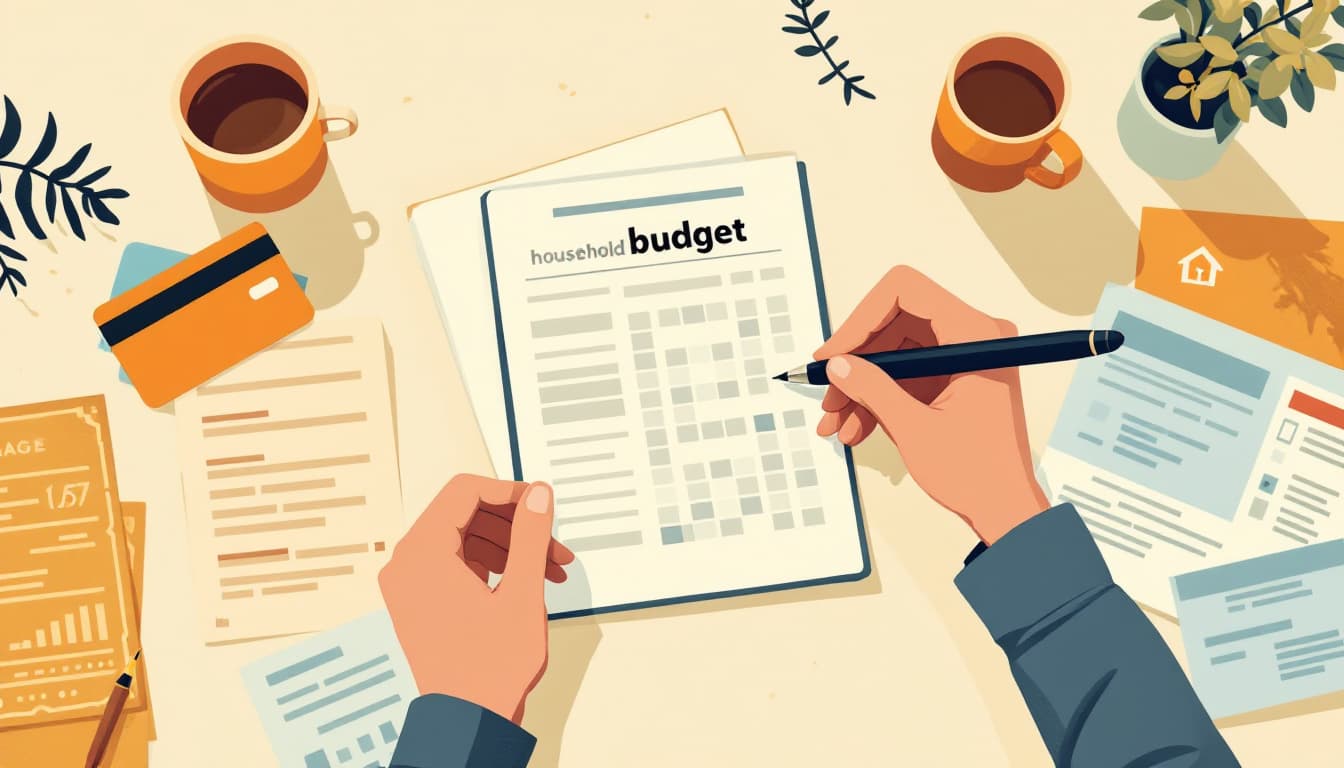
Audit every debt by rate type this week. Sit down and label each balance as fixed or variable. Variable-rate balances — most credit cards, HELOCs, some personal loans — are the ones that climb automatically when the Fed moves. Fixed-rate balances are not your urgent problem right now. Once you know which is which, you can sequence your payoff strategy correctly instead of paying down the wrong thing first.
The audit takes 20 minutes with your last statements. The goal is a simple two-column list: fixed-rate debts on one side, variable on the other. Variable balances should be treated as actively growing problems, not stable ones.
Build or protect three months of fixed expenses in cash, not in available credit. A HELOC or credit card is not an emergency fund. It's a liability with a variable rate attached. Recent BLS data on household savings rates suggests most families are running thinner cash buffers than they were two years ago. If your emergency fund has drifted below one month of fixed costs, getting it to three months is a higher priority than paying extra principal on a 4% fixed mortgage.
Park the cash somewhere it earns something — high-yield savings accounts at online banks are still paying meaningfully above zero. The goal is not yield; the goal is that the money does not disappear if someone in your household loses income for eight weeks.
If your employer offers a fixed salary review in the next six months, prepare for it now. A softening job market is a reason to lock in good standing at your current employer, not to assume the market will find you a better offer if things go sideways. Document what you've delivered in 2026. Know what your role pays at comparable firms. You may not need that information, but having it costs nothing and takes a Saturday afternoon.
Delay large discretionary debt if you can. A new car loan, a vacation financed on a card, a home renovation on a HELOC — anything that adds variable-rate balances in the next six months carries more risk than it would have two years ago. That's not a reason to freeze all spending; it's a reason to pay cash for smaller things you'd otherwise float and to postpone genuinely large variable-rate commitments until the rate picture clarifies.
The bigger picture
The Fed-hikes-plus-soft-labor scenario is uncomfortable precisely because it removes the two exits households usually count on: rates coming down, or income going up enough to outrun the interest. Neither is available on a reliable timeline right now. The families that come through this period in the best shape won't be the ones who predicted the Fed correctly. They'll be the ones who reduced their exposure to variable costs and held real cash reserves — not because they saw disaster coming, but because durability was already the plan.