A WPBF report this week flags simultaneous impact heat and incoming storms for South Florida — the kind of compound forecast that tends to get filed under "typical July" until it isn't. The problem isn't one threat or the other. It's that they pull household decisions in opposite directions at the same time.
What actually changes when heat and storms arrive together
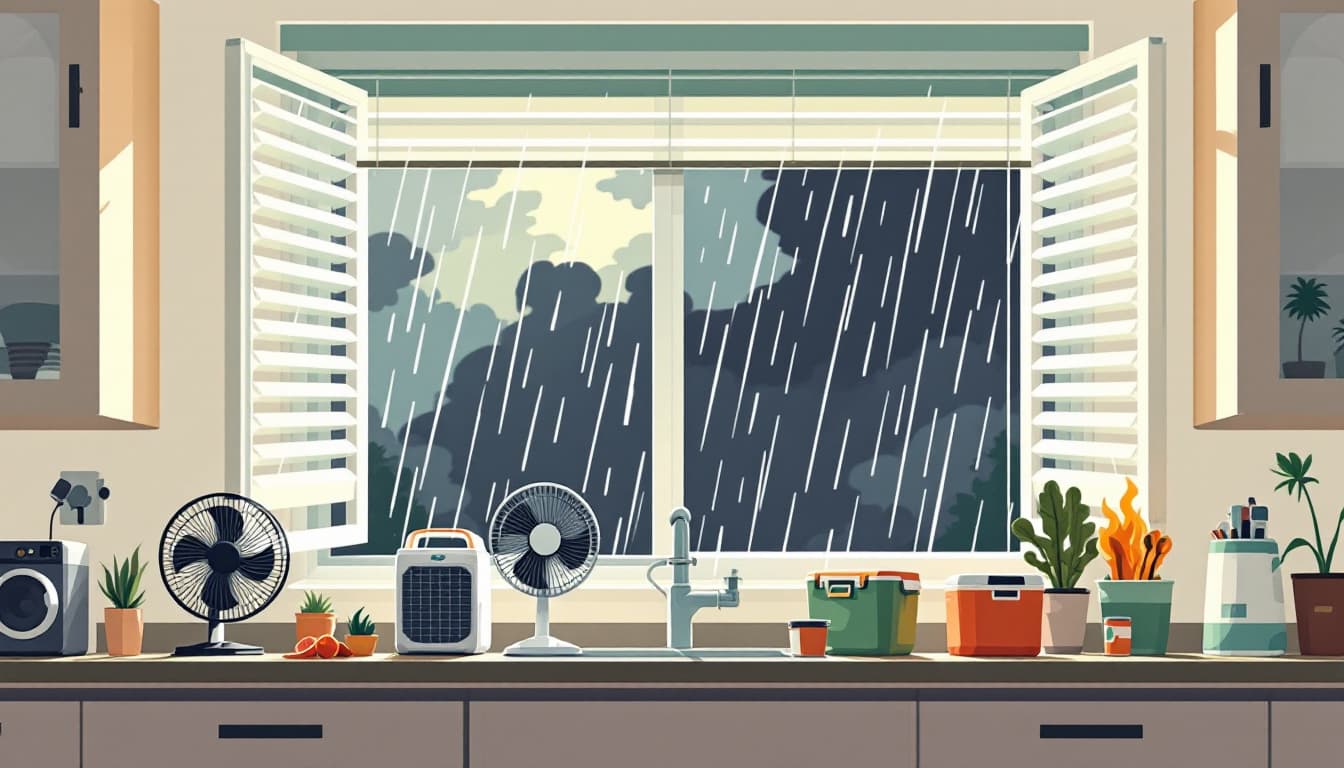
Storm prep logic says: close the house up, fill the bathtub, charge devices, park the car away from trees, stay inside once conditions deteriorate. Heat logic says: maximize airflow, keep the house cool before the grid buckles, stay hydrated, reduce any activity that raises your body temperature.
When both are in play, the window to act is compressed. You may have four to six hours where you can still run the AC hard before the storm makes opening windows dangerous — and that same window is when outdoor prep tasks (clearing debris, checking the generator, moving containers) are safest to do before the heat index climbs above 105°F.
South Florida households also face a third variable: post-storm power loss in July heat is genuinely dangerous, not inconvenient. The Florida Division of Emergency Management's historical outage data shows that summer storms — not hurricanes — account for a significant share of multi-day outages in Miami-Dade, Broward, and Palm Beach counties. You lose power at 4 p.m. in late July and the indoor temperature climbs past 90°F within two to three hours.
What we'd actually do
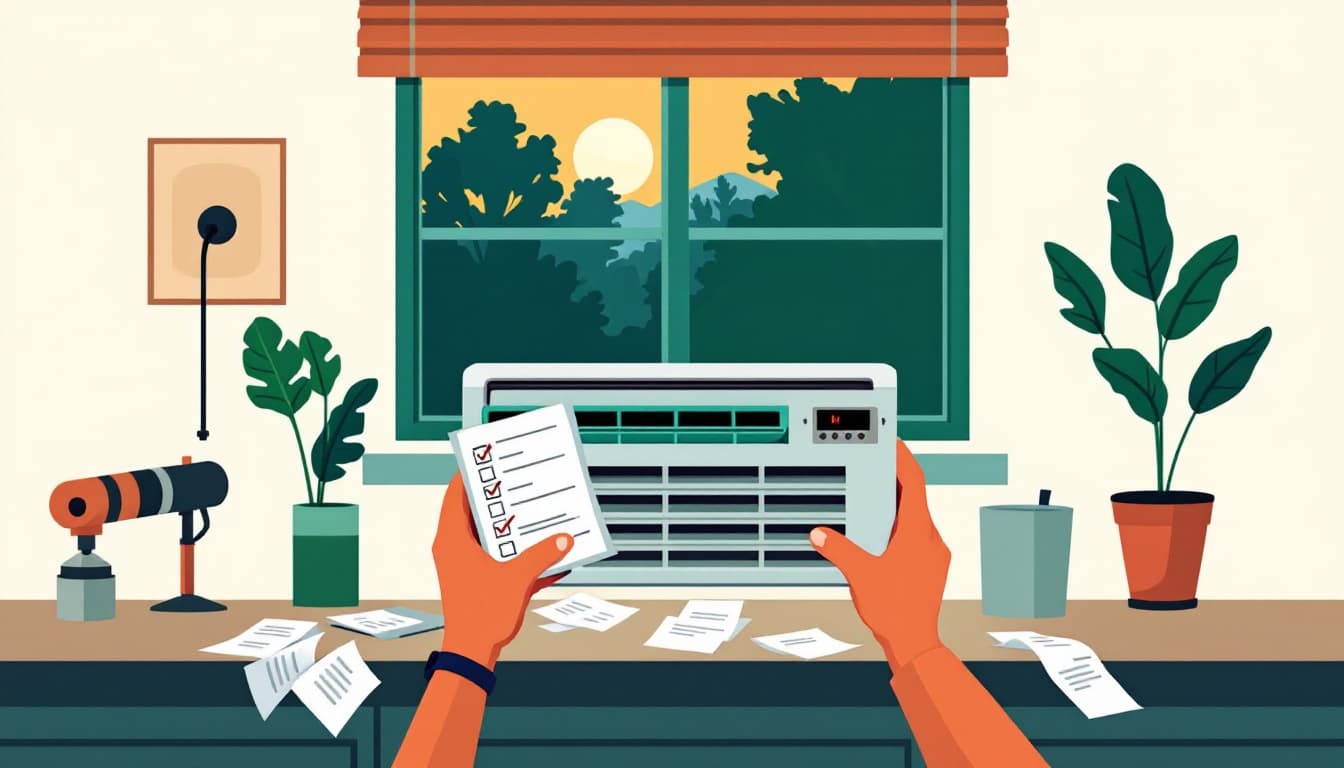
Pre-cool your house aggressively before the storm arrives. Set your thermostat four to six degrees lower than normal in the six hours before a forecast storm. Concrete block construction, common in South Florida homes built before 1990, holds heat — but it also holds cool. A well-chilled slab and walls buy meaningful time if you lose AC for 12 to 36 hours.
The goal is thermal mass. You're not just cooling the air; you're cooling the structure. Run ceiling fans in reverse to push cold air down. Close blinds on south- and west-facing windows now, not when the storm hits.
Do your outdoor prep in the early morning, not midday. A heat index above 103°F — a realistic midday reading for South Florida in July — creates exertional heat illness risk within 30 minutes of moderate work for adults who are not acclimatized. Moving furniture inside, clearing gutters, and testing your generator are all moderate-to-heavy work. Do them before 9 a.m. or after sundown. Not in the "I'll get to it" afternoon slot.
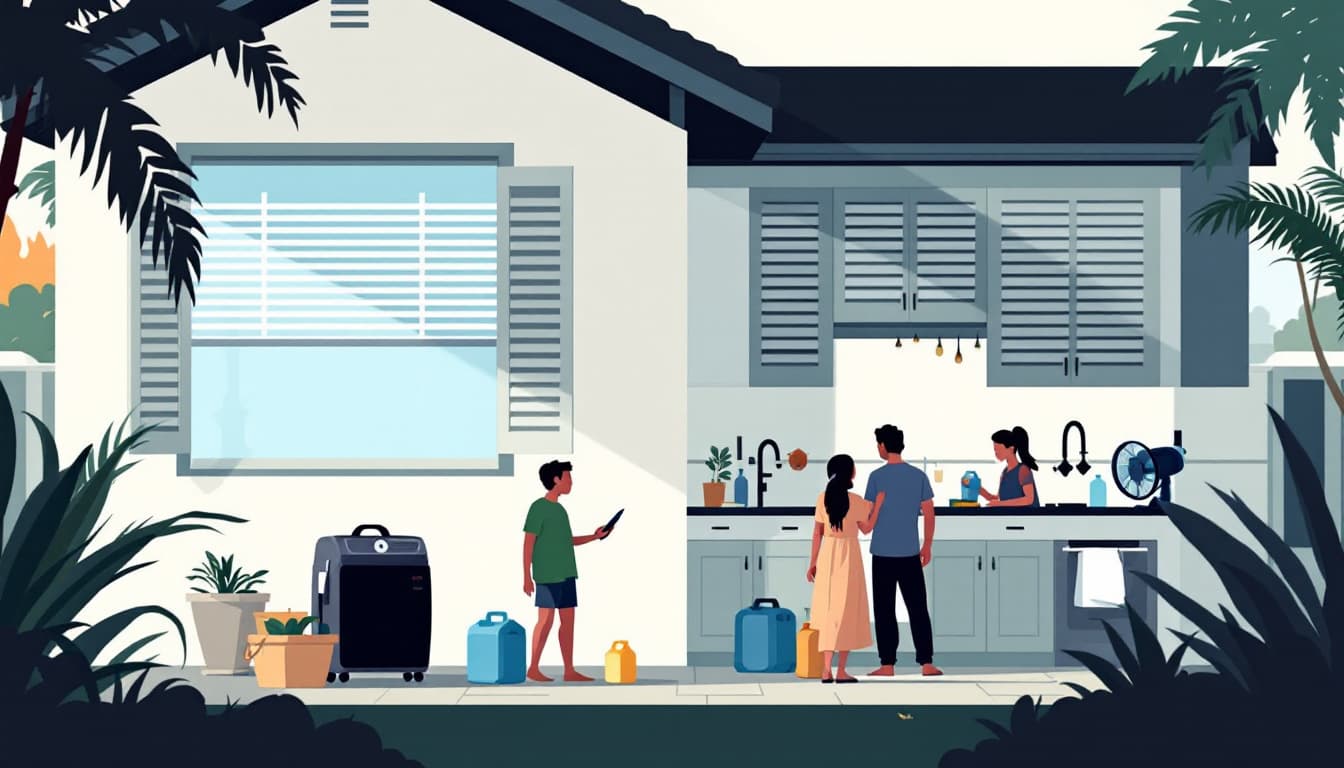
Know your cooling center before you need it. Miami-Dade, Broward, and Palm Beach counties all operate publicly listed cooling centers; addresses update seasonally on county emergency management sites. If you lose power for more than a day with elderly family members, young children, or anyone on medications that require refrigeration, your plan should include a specific address you're going to — not a vague intention to "figure it out."
Treat your generator fuel supply as a perishable. Ethanol-blended gasoline degrades in roughly 30 days in Florida's heat and humidity — faster than in cooler climates. If your generator is fueled with gasoline you stored in June, run the old fuel through small engines this week and replace it. A generator that won't start 18 hours after a storm is worse than no plan at all, because it delays the decision to leave.
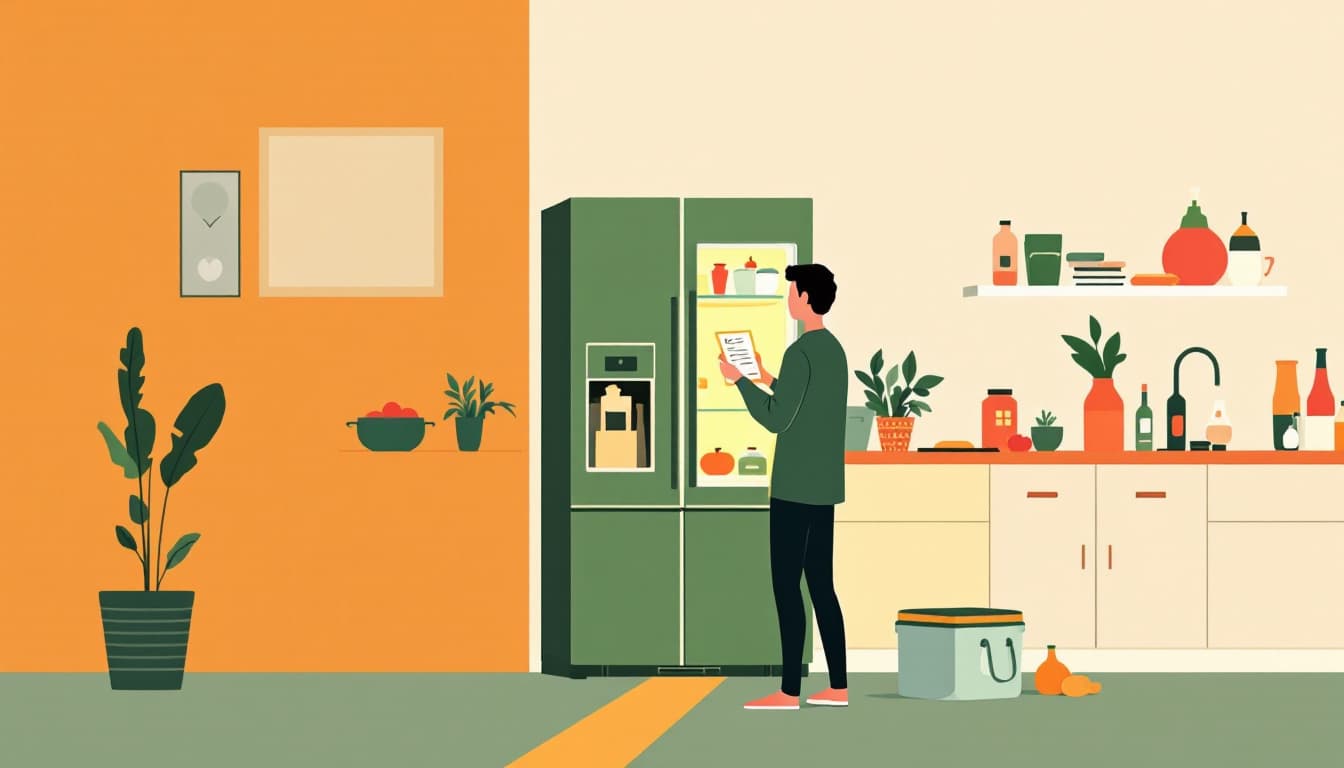
Audit your medication cold chain now. Insulin, certain cardiac medications, and some pediatric antibiotics have shorter viability windows once ambient temperatures rise above 77°F. A 24-hour cooler with a frozen gel pack is not a refrigerator. Know what each medication in your household can tolerate and for how long, and have a pharmacist's number saved — not just the pharmacy's general line.
The bigger picture
Florida households that have been here for a decade know that July is always like this. That familiarity is both an asset and a liability. The asset: you've likely lived through it. The liability: routine numbs preparation. The compounding of heat and storm isn't unusual — but it does mean that any one of your household systems failing (cooling, generator, medication storage, a family member with limited heat tolerance) lands harder than it would in October.
Durability isn't about surviving the worst case. It's about keeping ordinary July disruptions from cascading into emergencies. The households that manage that well usually have two things: a specific plan made before the event, and the habit of acting on it before conditions force them to.