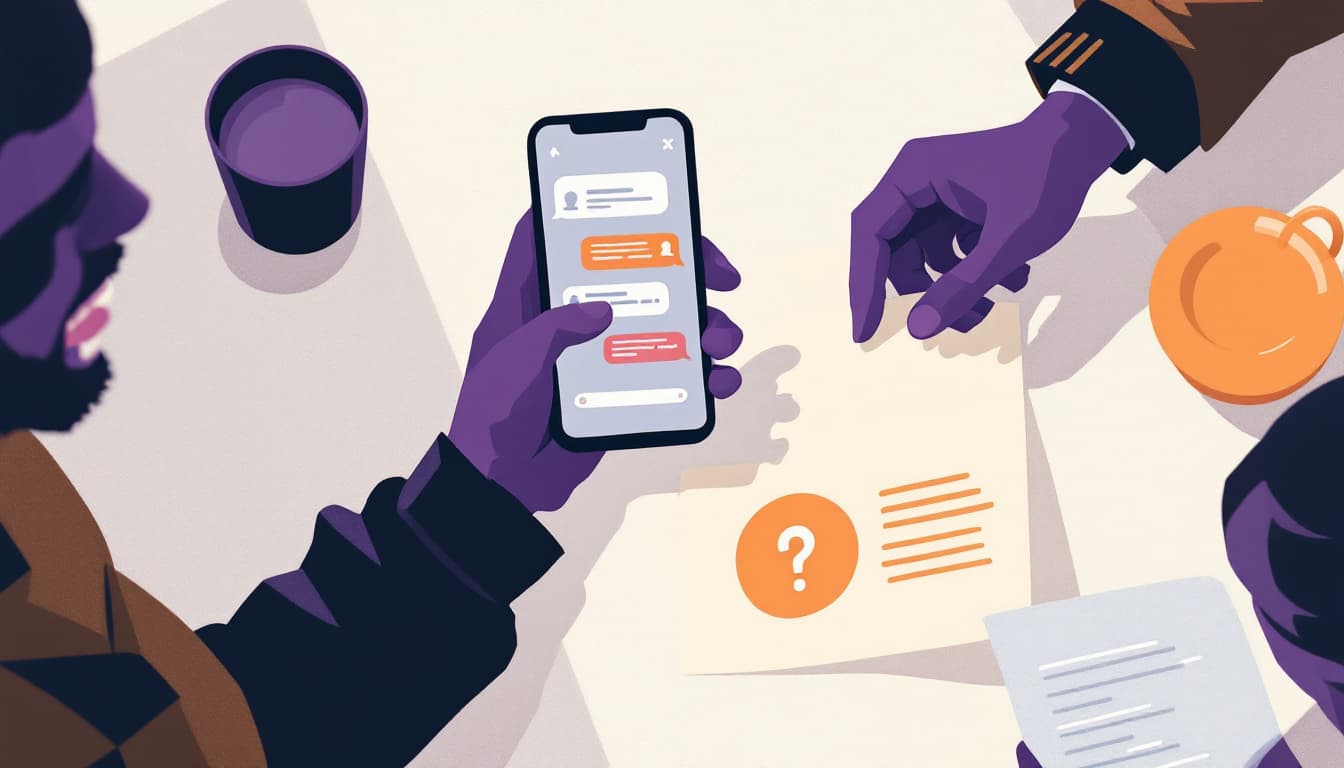
A report this week from This Week in Security (via Hacker News) confirmed what security researchers had been warning about for months: attackers found a way to abuse Meta's own AI chatbot to compromise thousands of Instagram accounts. The exact mechanics are still being detailed, but the pattern is familiar — a helpful automated system designed to reduce friction also reduced the friction for attackers.
This is not a story about a data breach in the traditional sense. No server was cracked. No database was exfiltrated in the night. The AI was used as intended. It was just intended by the wrong people.
What's actually changing
AI assistants embedded in major platforms are now a standard attack surface. That's new, and it matters.
For years, the mental model for account security was: protect your password, watch for phishing emails, use two-factor authentication. That model assumed the threat came from outside the platform. The Meta incident illustrates a different threat geometry — the attacker works through the platform's own tools, using the AI to accelerate account recovery manipulation, identity spoofing, or social engineering flows that would have taken far more effort manually.
The AI chatbot doesn't know your face. It doesn't know your history with the account. It knows what you tell it, and it's been trained to be helpful. Attackers are now fluent in what "helpful" responds to.
This is not unique to Meta. Every major platform — Google, Apple, Amazon, Microsoft — has embedded AI assistants with varying levels of access to account functions. The competitive pressure to make these assistants more capable means the attack surface will expand, not shrink. Recent reporting across multiple outlets this spring has noted that AI-assisted account takeovers are rising as a category distinct from credential stuffing or phishing.
For a household, the immediate exposure is real. A compromised Instagram account is more than embarrassing — it's often a gateway. People reuse usernames and passwords. Linked payment methods get probed. Family accounts connected to a parent's profile become targets. And recovery, once an account is taken, is genuinely hard. Meta's support for account restoration has been criticized as slow and opaque even before AI-assisted attacks became common.
What we'd actually do
Audit which accounts have AI assistants enabled and what those assistants can access. Most platforms quietly enable AI features by default. Go into your settings on Instagram, Facebook, and any Google or Microsoft product you use and look for AI assistant permissions. If the assistant can initiate account recovery flows, request email changes, or contact support on your behalf, treat it as an attack vector. Disable what you don't use.
Harden the email address that anchors your most important accounts. The email tied to your Instagram, your Apple ID, and your bank is the skeleton key. If an attacker can manipulate an AI into sending a recovery link to a spoofed or compromised inbox, the rest falls. Use a dedicated email address — not your everyday inbox — for critical account recovery. Enable the strongest available two-factor authentication on that address. A hardware key (a $30–50 device from a reputable vendor) on that email account alone would neutralize most AI-assisted recovery attacks.
Turn on login alerts for every account that offers them, and actually read them. This sounds basic because it is, but fewer than half of users enable login notifications even when the option is prominent. An alert doesn't stop an attack; it shortens your response window from days to minutes. Set these up today on Instagram, your email provider, and any financial account.
Do a family password audit with a real password manager. If someone in your household is reusing a password from a compromised Instagram account on anything financial or medical, that's the actual risk. A password manager (most have free tiers sufficient for household use) makes unique passwords for every account achievable without memorization. The audit takes an hour. It closes a wide-open door.
Know the manual recovery path before you need it. Before an account is compromised, look up the actual human support escalation path for your most important platforms. Screenshot it. Store it offline. Meta's automated recovery options are slow; knowing the escalation path — a verified ID submission process, for instance — can cut recovery time significantly if the worst happens.
The bigger picture
Every convenience feature added to a platform also adds a potential leverage point for someone who wants to abuse it. That's not a reason to avoid these tools — it's a reason to understand them with the same clear eyes you'd use for any other household security decision.
The goal isn't to opt out of modern platforms. It's to hold them at arm's length in the right ways: strong anchoring email, real two-factor authentication, and the discipline to audit what you've given automated systems permission to do.
Durability isn't about being unhackable. It's about being a harder target than the next person, and recovering faster when something does go wrong.