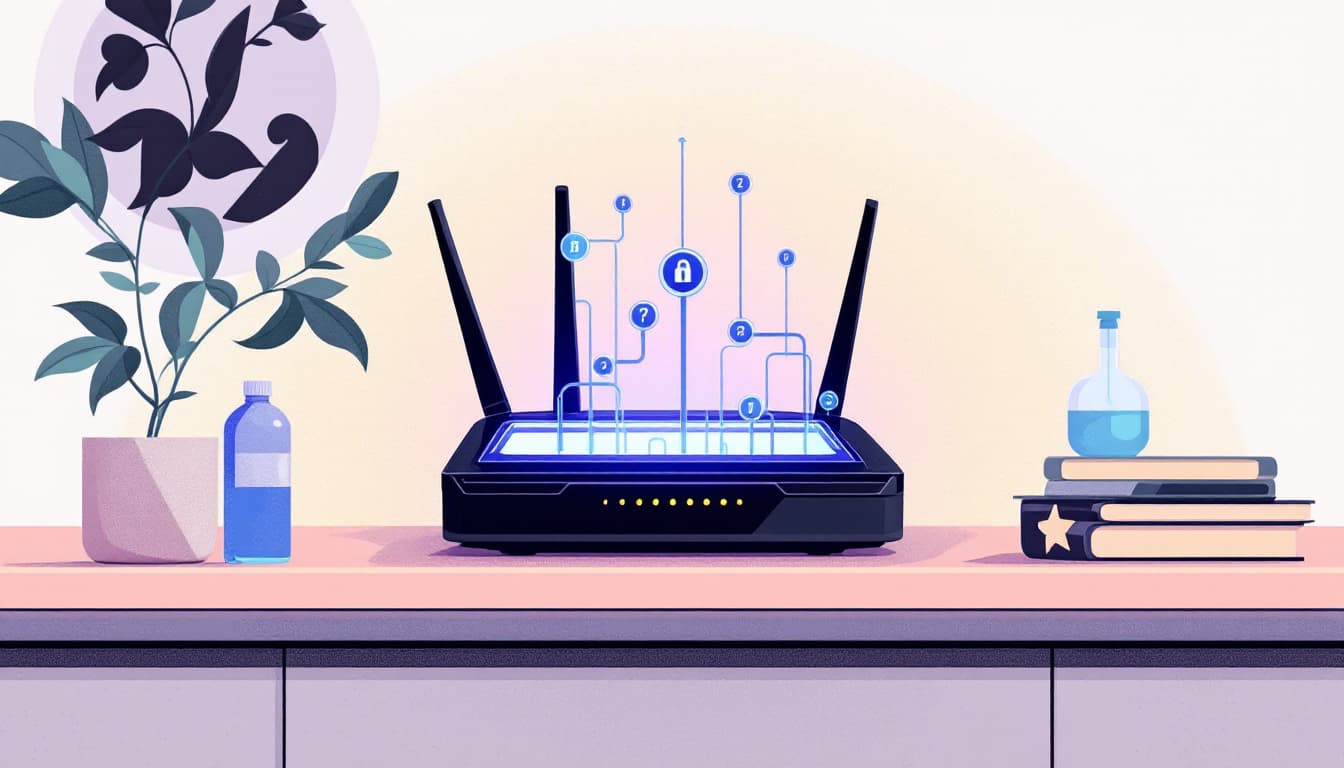
A Hacker News thread this week surfaced Meta's release of Muse Glimmer, a 30-billion-parameter open model explicitly designed to run as a persistent local agent — meaning it sits on your own hardware, watching for tasks, acting between prompts, and never routing your data to a remote server. The release is technically significant. It is also the clearest signal yet that always-on AI assistants are moving from cloud subscriptions into home networks, and most households are not ready for that shift.
What "local" actually means — and what it doesn't
"Local AI" has become shorthand for "private AI," and that equation is roughly correct but not completely so.
When Muse Glimmer runs on a home server or a capable desktop, your conversations and task logs don't leave your network. That is a genuine privacy gain compared to cloud-based assistants that train on or log your queries. If you're asking the agent to manage your grocery list or draft a letter, local processing is a reasonable choice.
The gap opens when people treat "local" as synonymous with "secure." A persistent agent running on your home network is a process with real permissions. Depending on how it's configured, it may read your file system, send emails, place orders, or access calendar data. It can be exposed to other devices on your network. It can be misconfigured. And if you installed it from an unofficial source, or if the model weights themselves were tampered with upstream, locality offers no protection at all.
This is not a hypothetical edge case. Security researchers have documented prompt-injection attacks against local LLMs — inputs embedded in documents or web pages that instruct the agent to take actions the user didn't authorize. A local agent that can read your files and send emails is a capable tool. It is also a capable attack surface.
The bigger pattern
Muse Glimmer is one data point in a faster trend. Model sizes that required data center hardware 18 months ago now run on consumer GPUs. Frameworks for building persistent agents have matured. The friction between "I want an AI assistant" and "I have an AI assistant running on my router" is dropping toward zero.
That's genuinely useful for household resilience. A local agent that doesn't depend on a subscription or an internet connection is more durable than one that evaporates when a company shuts down or raises prices. Families who learn to run these tools on their own hardware are building a real skill.
But adoption is outrunning literacy. Most people setting up local agents are following a GitHub README, not a security checklist. The result will be households with powerful, persistent software they don't fully understand, managing tasks that touch sensitive data.
What we'd actually do
Audit what permissions any AI agent actually needs before you give them. Before enabling a local agent's access to email, files, or smart-home devices, write down which specific tasks require which specific permissions. An agent that drafts replies to your email doesn't need the ability to send — only to compose. Least-privilege configuration is not a developer concept; it's a household habit.
For most families, this means spending thirty minutes reading the configuration documentation for whatever agent framework they're using. Default settings are often permissive. Turn off what you won't use. If the documentation doesn't explain what each permission does in plain language, that's a signal the tool isn't ready for casual household deployment.
Run local AI on a network segment that doesn't touch your most sensitive devices. Most consumer routers support a guest network or a second VLAN. Putting your local AI server on a segment separated from your financial laptop or NAS limits the blast radius if something goes wrong.
This costs nothing if your router already supports it. The setup takes under an hour with most modern firmware. It doesn't make the agent useless — it just means a compromised or misbehaving agent can't pivot to your tax documents.
Treat model sources the way you treat software sources. Model weights downloaded from unofficial mirrors carry the same risk as pirated software. Stick to model releases from the original publisher or a repository with a clear, verifiable provenance chain. Check that file hashes match the published values before running anything.
This step takes five minutes and is skipped by most people. Don't skip it.
Keep a plain-language log of what your agent does each week. Many agent frameworks produce logs. Read them. A weekly five-minute review of what actions your agent actually took is the fastest way to catch misconfiguration or unexpected behavior before it compounds.
The arrival of capable, open, locally-hosted AI agents is good news for households that value durability and independence from subscription infrastructure. The risk is not that the technology is inherently dangerous — it's that the adoption curve is steep and the literacy curve is shallow. Families who slow down enough to understand what they're running will get the benefits. Families who treat "local" as a synonym for "safe" and skip the configuration work are trading one set of risks for another.
Durability comes from understanding your tools, not just owning them.