The air temperature in Baton Rouge hit triple digits last week before the official start of summer. The asphalt along I-10 through the Atchafalaya Basin runs 20 to 30 degrees hotter than the ambient air. If your car breaks down out there — no shade, no shoulder wide enough to walk safely, cell signal that cuts in and out — the margin between uncomfortable and dangerous closes faster than most people expect.
A report this week from Louisiana First News covered general travel safety during extreme heat, the kind of guidance that applies anywhere. What it didn't cover is what Louisiana specifically puts on the table: a Gulf Coast humidity that makes wet-bulb temperatures feel nothing like the thermometer reading, long rural stretches between services, and a summer that now reliably starts in late May and runs through October.
What's actually different about heat risk in Louisiana
Heat index is the number to watch, not air temperature. When humidity sits above 70 percent — routine along the coast and in the river parishes — a 95°F day can register as 110°F on the human body. The Louisiana Department of Health tracks heat-related illness data and has historically flagged vehicle breakdowns as an underreported contributor to heat emergencies, particularly among elderly travelers and families with young children.
The other Louisiana-specific factor is road isolation. Stretching across the Atchafalaya, or driving the two-lane routes between Lafayette and the coast, or heading into the Florida Parishes on a Sunday afternoon means that AAA response times are measured in hours, not minutes. A car that overheats or a tire that blows is not a minor inconvenience. It is a heat exposure event.
What we'd actually do
Check your coolant and tire pressure before any drive over 45 minutes. Both fail more often and more consequentially in sustained high heat. Coolant levels and condition take two minutes to check when the engine is cold. Tire pressure drops approximately one PSI for every ten-degree temperature change — and asphalt heat will cook underinflated tires toward a blowout. A $10 gauge lives in the glove box.
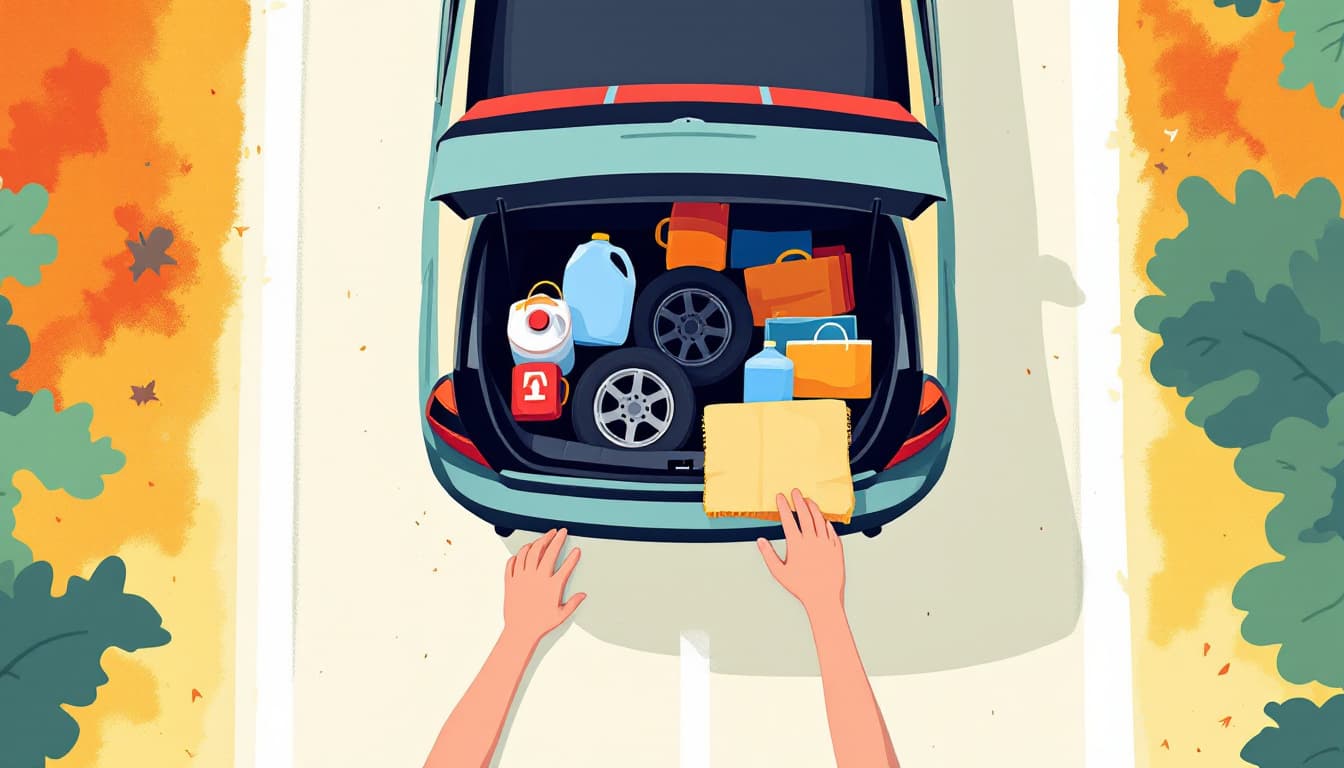
Build a vehicle kit sized for a two-hour wait in the sun, not a three-day survival scenario. The prepper internet will tell you to pack 72 hours of supplies. What Louisiana summer driving actually requires is simpler: one gallon of water per person, a reflective emergency blanket (blocks radiant heat through windows), a battery-powered or hand-crank USB fan, and a fully charged backup battery for your phone. That's under $40 total and fits in a grocery bag.
Download offline maps for your route before you leave. Cell service on LA-182 through Morgan City or on US-90 west of New Iberia is unreliable. Google Maps and Apple Maps both allow offline map downloads. If you break down and can't reach a dispatcher, knowing your exact milepost or parish road number lets you give accurate location information once you find a signal.
Tell someone your route and your expected arrival time. This is unglamorous and people skip it. A text that says "driving Shreveport to New Orleans, should arrive by 4 p.m." gives someone a trigger to check on you if you go quiet. Louisiana State Police can be reached at *LSP from most cell carriers. That number is worth having in your contacts before you need it.
If you break down, stay with the vehicle. Walking along Louisiana highway shoulders in direct sun is more dangerous than waiting inside a car with windows cracked and a reflective sunshade deployed. The exception is if the car itself becomes a heat trap — in that case, move to shade immediately and call for help. Emergency responders locate vehicles faster than they locate people on foot.
The bigger picture
Extreme heat is now the deadliest weather phenomenon in the United States, more lethal in most years than hurricanes or floods. Louisiana households spend enormous energy preparing for named storms — generator fuel, plywood, evacuation routes — and comparatively little preparing for the slow, steady, un-dramatic heat that kills people in cars and in homes without air conditioning every June through September. That asymmetry is worth correcting.
The goal isn't a truck full of survival gear. It's a family that doesn't end up stranded on a sun-blasted Louisiana highway without water, a charged phone, or a plan. Most of that costs less than a tank of gas.