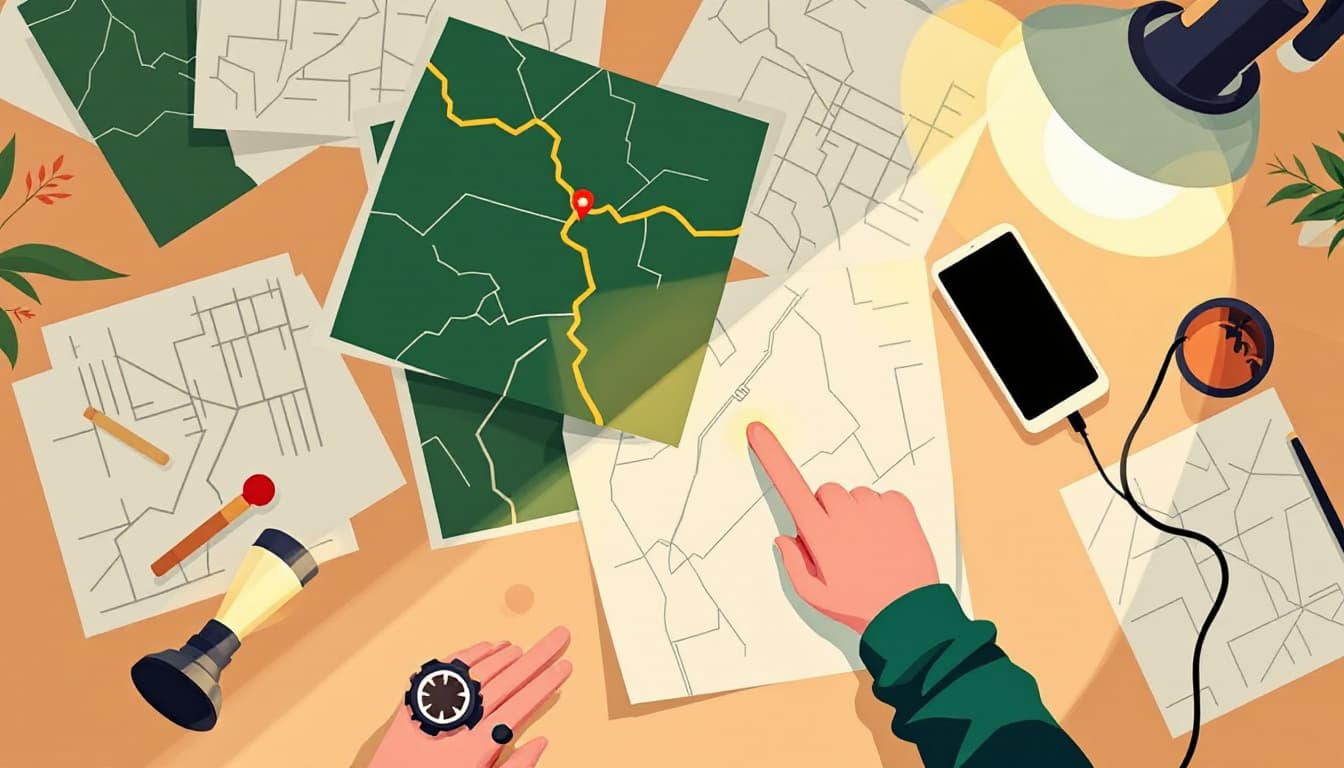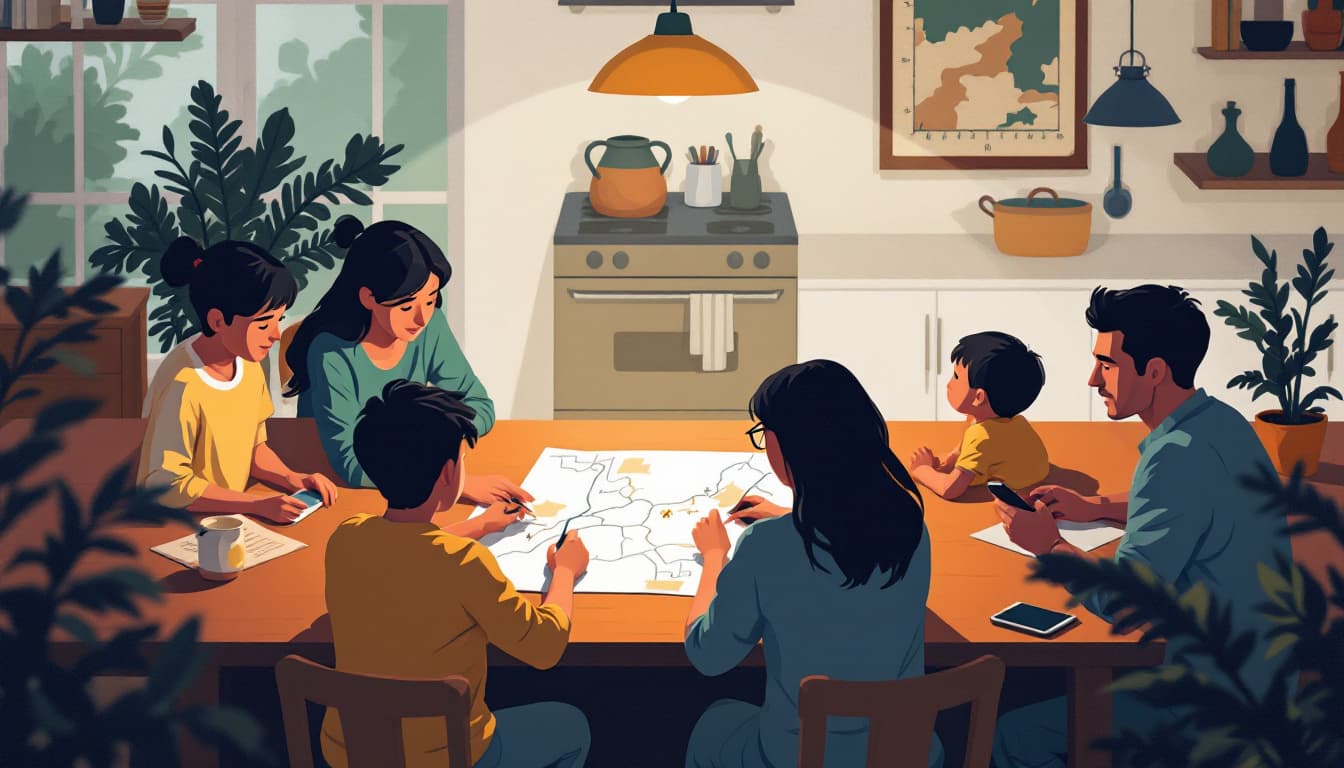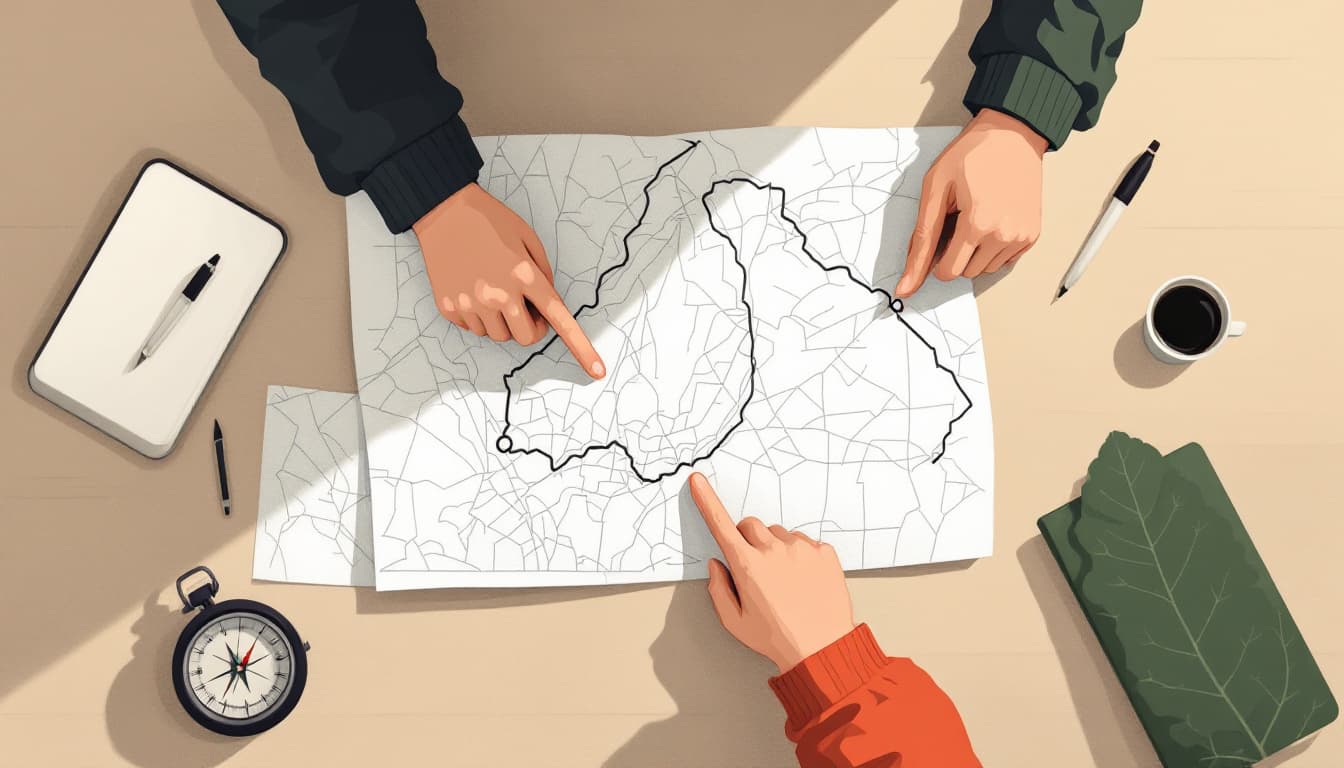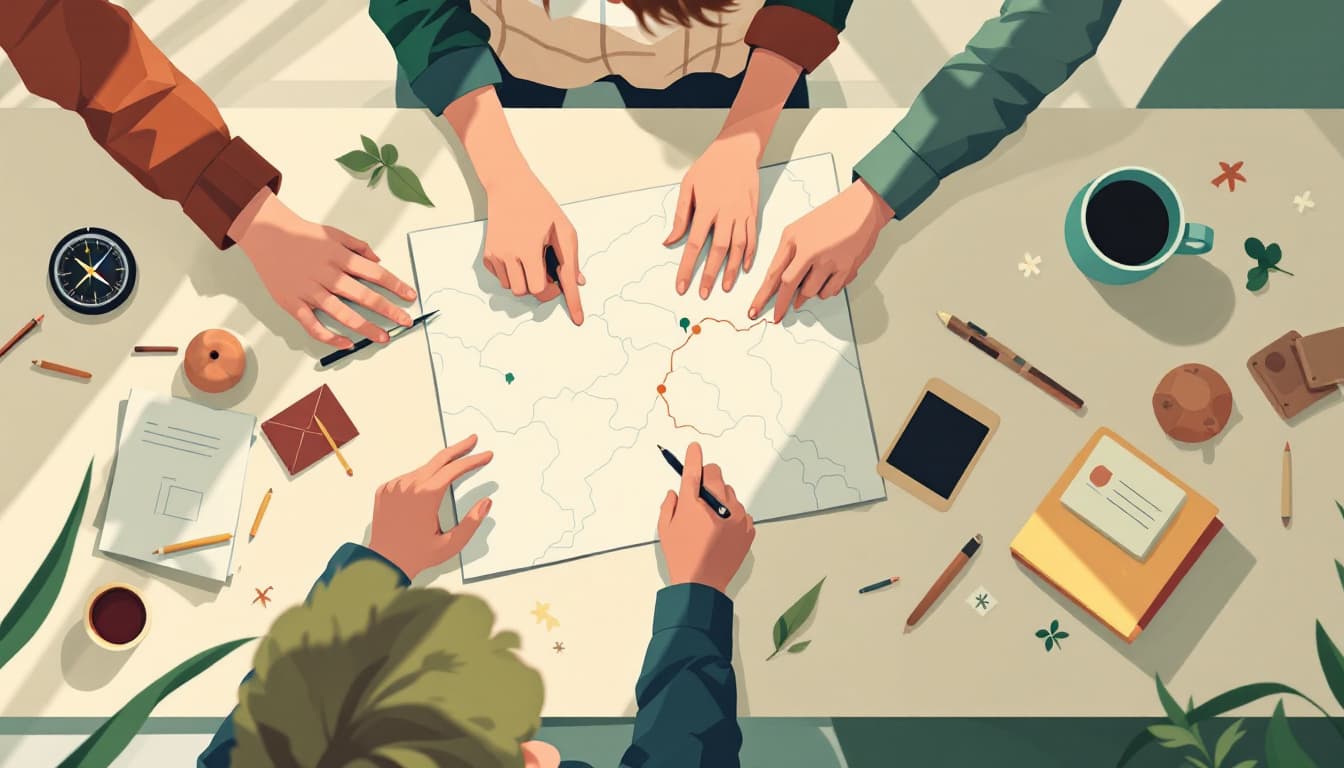
Somewhere between the third wrong turn and the dead cell signal, a family we know — competent, organized, the kind who keeps a first-aid kit in the car — spent forty minutes parked on a forest road in the Cascades last summer because nobody in the vehicle could read the paper map in the glove compartment. They had purchased it. They had folded it, badly, and stored it. They had simply never learned what the brown squiggly lines meant.
This is not a story about survivalists or catastrophists. It is a story about a skill that used to be ordinary, became unnecessary, and is now quietly rare — which means the gap between people who have it and people who don't is, for the first time in decades, meaningful again.
What atrophied and why
For roughly two decades, smartphone navigation has been so reliable that the muscle memory of orienting yourself from contour lines and a compass bearing has simply not been exercised. This is rational behavior. GPS navigation is faster, more accurate, and requires no training. The problem is not that the technology is bad. The problem is that skills we stop practicing don't stay at zero — they decay below zero, because we also lose the habit of uncertainty that once kept us from wandering confidently in the wrong direction.
When GPS fails — and it fails in exactly the situations where you most need it, which is to say remote terrain, dense urban canyons, or after a significant infrastructure disruption — people without map-reading skills don't just navigate poorly. They navigate confidently and poorly, which is worse. Recent search-and-rescue data from several western states consistently show that a meaningful share of backcountry rescues involve subjects who had a device that "stopped working." The device stopped working a long time before they called for help.
Why this is a life skill, not a prepper skill
Here is the counterintuitive part: the case for map reading is not primarily about emergencies. It is about the texture of ordinary competence.
People who can read topographic maps also tend to think spatially about drainage, elevation, and terrain in ways that turn out to be useful for everything from landscaping decisions to flood risk assessment to understanding why one neighborhood stays cooler than another in a heat wave. The skill is a lens, not just a tool. It trains a kind of attention — to physical relationships, to scale, to the difference between what a map represents and what the ground actually looks like — that transfers.
And then, on top of that ordinary usefulness, it compounds under stress. A person who navigates by paper map a few times a year for pleasure is genuinely better positioned in a disruption than someone who has never touched one. Not infinitely better. Not "survival" better. Just measurably, practically better, the way knowing how to cook from staples is better than not knowing when the delivery app is down.
What most people get wrong about learning it
The preparedness community tends to present map reading as a technical checklist: buy a USGS topo, learn to use a baseplate compass, practice taking a bearing. That framing is not wrong, but it is boring, and boredom is why most people who start this never finish.
The better framing is recreational. Go somewhere interesting — a state forest, a coastal headland, a river valley — and navigate it by paper map before you look at your phone. Do it with a child if you have one, because children are genuinely fascinated by the moment a contour line becomes a visible hill. The skill builds fast under those conditions, because you are getting feedback from the terrain itself, not from a quiz.
The technical foundation is modest. Understanding how contour intervals work, how to orient a map to north, and how to triangulate your position from two landmarks takes an afternoon to learn at a basic level and a few outings to make habitual. The compass adds precision but is honestly secondary to learning to read terrain first.
The larger point
Navigation competence is a small example of a broader truth about resilience: the skills that matter most in disruptions are the ones that were already paying dividends before the disruption arrived. Nobody keeps up a skill that only applies to emergencies. People keep up skills that make their ordinary life richer, more capable, or more interesting — and those skills happen to compound when things get hard.
A paper map and a compass together cost less than a restaurant lunch. If you want to think about it in terms of household readiness rather than recreation, our water and food calculator is a reasonable place to start on the supply side, but supply without orientation is a different kind of vulnerability. At some point the map in the glove compartment needs to be read by someone in the car.