A sheriff's emergency alert, drivers trapped, roads underwater. A Charlotte Observer report this week described "significant flooding" in North Carolina serious enough to trigger an official county-level warning. The headline sounds dramatic. The underlying pattern is not unusual — and that's the problem.
North Carolina sits at a geographic intersection that makes it uniquely flood-prone year-round. The western mountains funnel rainfall into creeks that rise in minutes. The Piedmont's developed clay soils shed water fast. The coastal plain's flat topography holds it. The state has recorded more federally declared flood disasters over the past three decades than most of its neighbors, and the events increasingly happen outside the traditional hurricane season window.
What's actually changing
Flash flooding is not new to North Carolina. What's shifting is the frequency of high-intensity, short-duration rain events that overwhelm drainage systems designed for older precipitation norms. The state's mountain and Piedmont communities — not just the coast — are seeing this most acutely.
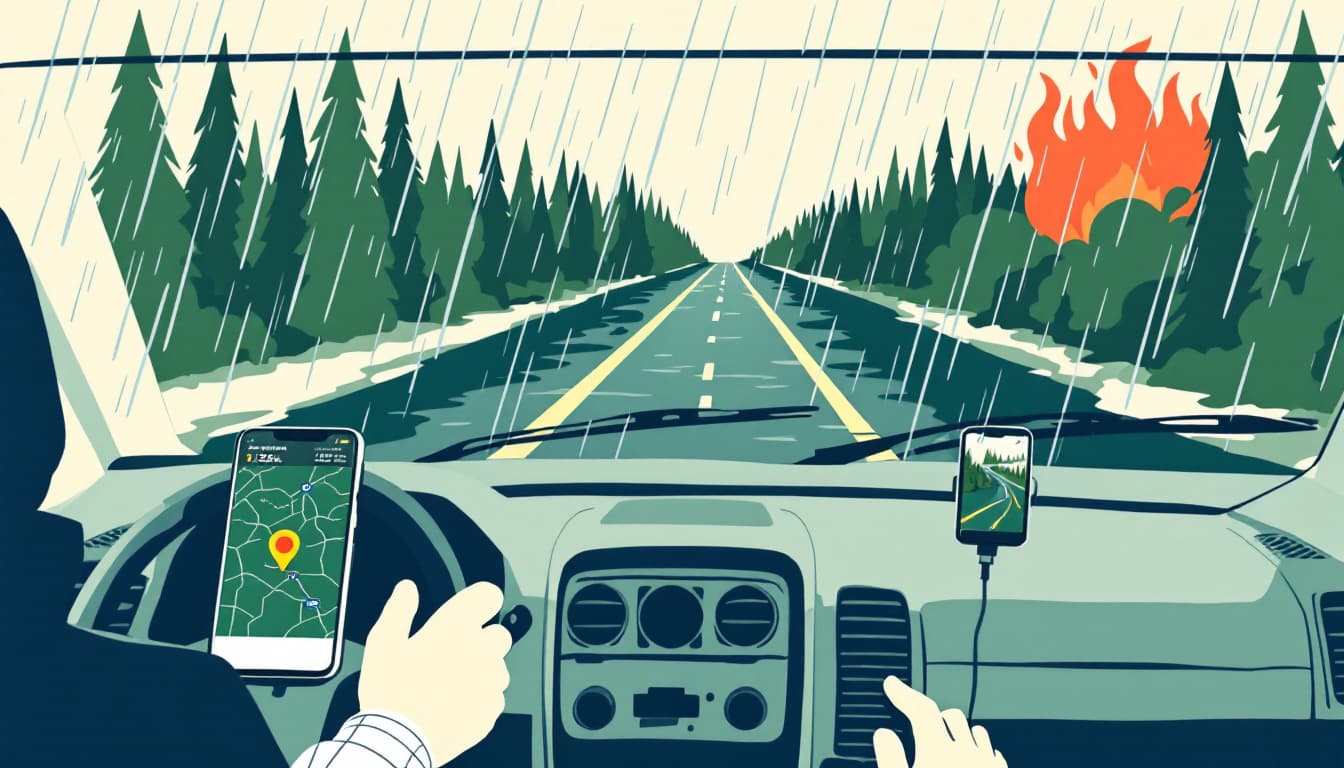
The specific danger in the Charlotte Observer report is one that kills people every year nationwide: drivers entering flooded roadways. NCDOT and local emergency managers repeat the "turn around, don't drown" guidance constantly. People ignore it constantly. The reasons are mundane: they're late, the water doesn't look deep, they've driven that road a thousand times. Twelve inches of moving water can knock a person off their feet. Two feet will float most vehicles. Neither depth is easy to judge from inside a car.
The sheriff's alert in this case worked the way the system is supposed to work. But alerts depend on cell service, on people having Wireless Emergency Alerts enabled, and on those people being close enough to the event to receive the correct county-level message. All three of those can fail simultaneously.
What we'd actually do
Program the NCDOT 511 number into your phone and check it before driving during any active rain event. NCDOT's 511 service (call or visit 511nc.org) provides real-time road condition reports, including closures from flooding. It takes thirty seconds. Most North Carolina drivers have never used it. During a flash flood event, NCDOT and county emergency management update 511 faster than Google Maps reflects actual closures.
Confirm that Wireless Emergency Alerts are enabled on every phone in your household. On both Android and iPhone, WEA can be toggled off, and it sometimes gets switched off during software updates. Go into your settings now — not during the next storm. Make sure your partner's phone and your teenagers' phones are checked too. County-level flood alerts come through this system.
Identify one alternate route out of your neighborhood that doesn't cross a bridge or low-water crossing. Get in your car on a dry day and drive it. In the Piedmont and mountain regions especially, many residential areas have only one practical exit, and it crosses a creek. Know your backup before you need it. If you live in a flood-prone area of Mecklenburg, Buncombe, Catawba, or any county with documented repetitive-loss zones (FEMA's flood map service at msc.fema.gov will show you), this is not optional homework.
Keep a basic vehicle emergency kit that includes a window-breaking tool. If a vehicle stalls in rising water, the pressure differential makes doors nearly impossible to open once water reaches door-handle height. A spring-loaded window punch costs under $15 and fits in a cup holder or glove box. Add a seatbelt cutter. These two items together weigh four ounces and address the specific mechanics of vehicle flood entrapment.
Follow your county's emergency management office on whatever platform you actually check. Most North Carolina counties maintain active social media accounts through their emergency management or sheriff's office that push flood and road closure information faster than local TV stations during active events. Mecklenburg, Wake, Buncombe, and Guilford counties all have these. Find yours, follow it, and make sure the notifications are not muted.
The bigger picture
North Carolina is a state that will flood again — in the mountains after a slow-moving storm, in the Piedmont after a fast-moving line of thunderstorms, near the coast during any active hurricane season. The goal isn't to become anxious about rain. The goal is to build the kind of household situational awareness that makes a sheriff's emergency alert unnecessary, because you already saw the conditions developing and adjusted accordingly.
Durability looks like knowing your county's flood history, having a charged phone with WEA enabled, and never assuming you can judge water depth from a car window. None of that costs much. All of it is within reach this week.