A report this week from WXII confirms what anyone stepping outside in the Piedmont or Foothills already knows: North Carolina's heat is climbing, and it's arriving alongside the kind of scattered severe storms that don't cool anything down — they knock out power, drop hail, and leave humidity sitting even heavier than before.
That combination — sustained heat plus storm-driven outages — is the specific scenario most households in this state are least prepared for. A single factor is manageable. Both together, for 24 to 72 hours, is when refrigerators turn into compost bins and people end up in emergency rooms.
What's actually happening
North Carolina summers have always been humid and volatile, but the August window has become reliably harder to navigate. The mountains through the Asheville corridor, the Piedmont corridor from Charlotte to Raleigh, and the coastal plain around Wilmington and New Bern each face slightly different risk profiles this week: the coast holds humidity longest after storms, the Piedmont sees the most frequent severe cells, and the mountains funnel storms in ways that can isolate rural households on washed-out roads.
The WXII forecast pattern — heat ramping up alongside scattered severe cells — typically means Duke Energy and Dominion North Carolina Power are both managing elevated grid load at the same moment lines are most vulnerable to wind and lightning. Duke Energy's outage map has historically shown its most concentrated cluster events in exactly these late-summer combined-stress periods. Outages that start mid-afternoon in 95-degree heat are a different emergency than a winter ice storm. You have less time before food spoils, less time before indoor temperatures become dangerous for elderly family members or infants, and less social cover — most neighbors are also sweltering and can't absorb extra people.
What we'd actually do
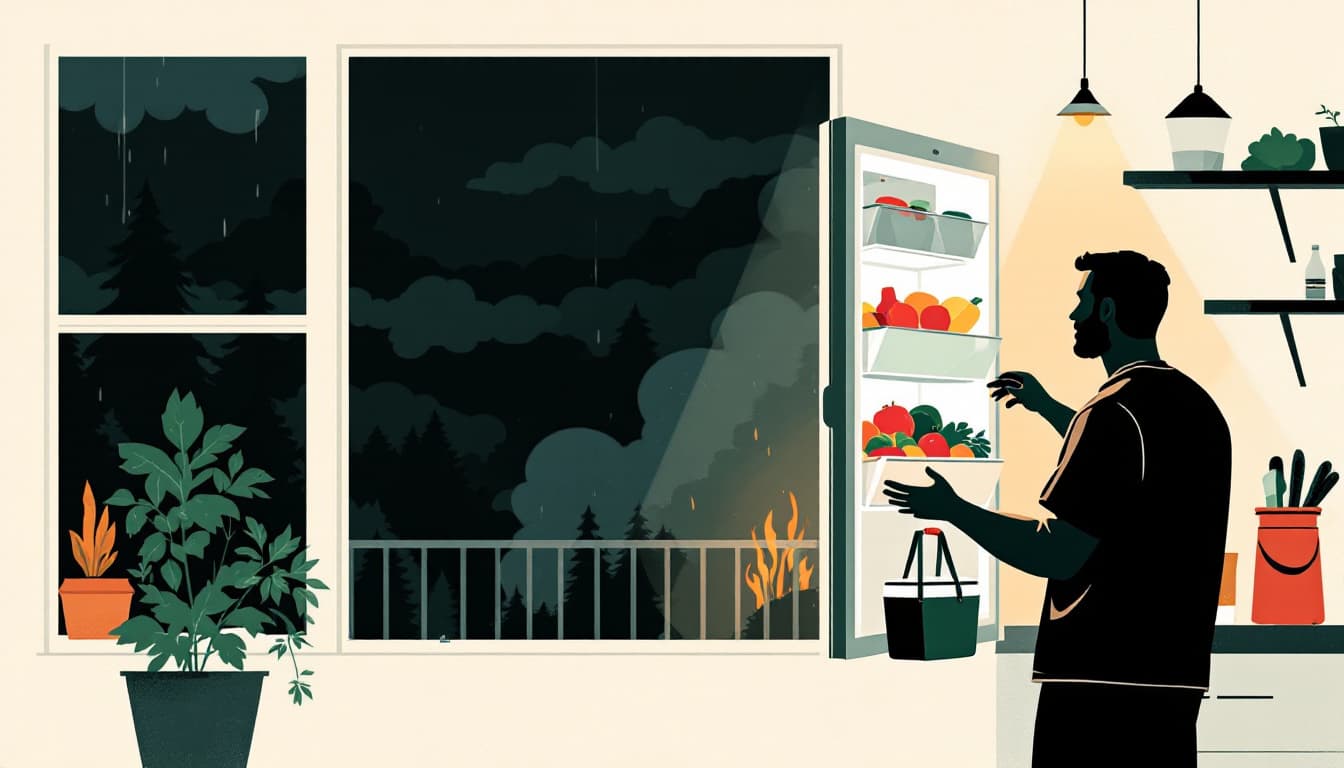
Check your refrigerator and freezer temperatures right now, before any storm. Set your fridge to 37°F and your freezer to 0°F. A full freezer holds safe temperature for roughly 48 hours after power loss; a half-empty one, closer to 24. If your freezer is less than two-thirds full, fill the gaps with gallon zip-lock bags of water. This costs nothing and extends your food-safe window meaningfully.
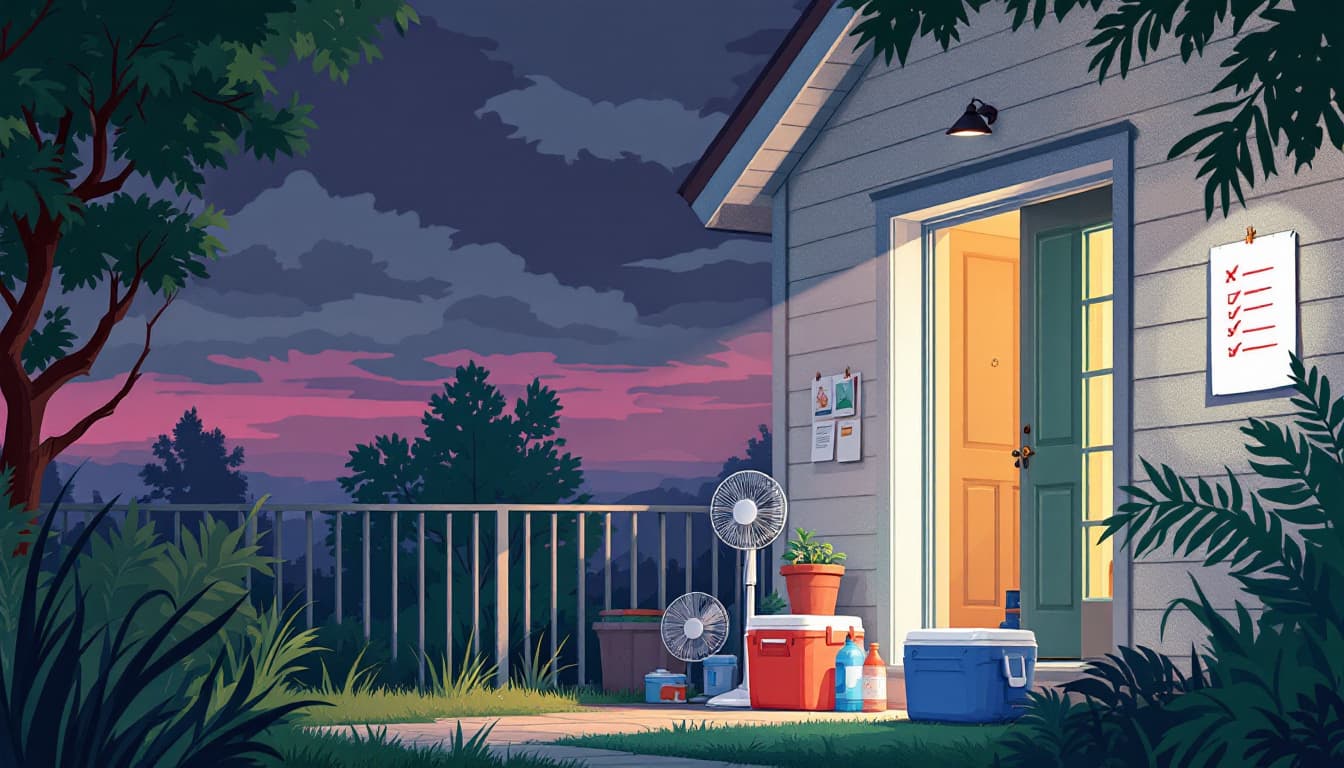
Fill a cooler and know your nearest cooling center before Thursday. North Carolina's county emergency management offices — Wake, Mecklenburg, Guilford, Cumberland, and others — maintain cooling center lists updated in real time during heat events. Locate yours at your county's emergency management page today, not after the power goes out. A $30 bag of ice and a pre-staged cooler means your insulin, your breast milk, or your deli drawer survives the first 24 hours without requiring a crisis decision.
Audit who in your immediate network is most exposed. Elderly neighbors, households without central air, anyone on a fixed income running the AC sparingly — these are the people most likely to be in trouble 18 hours into an outage. A text or a knock on the door before the storm costs two minutes. NC 2-1-1, the statewide social services line, can also connect vulnerable individuals to county resources if you identify a need you can't personally address.
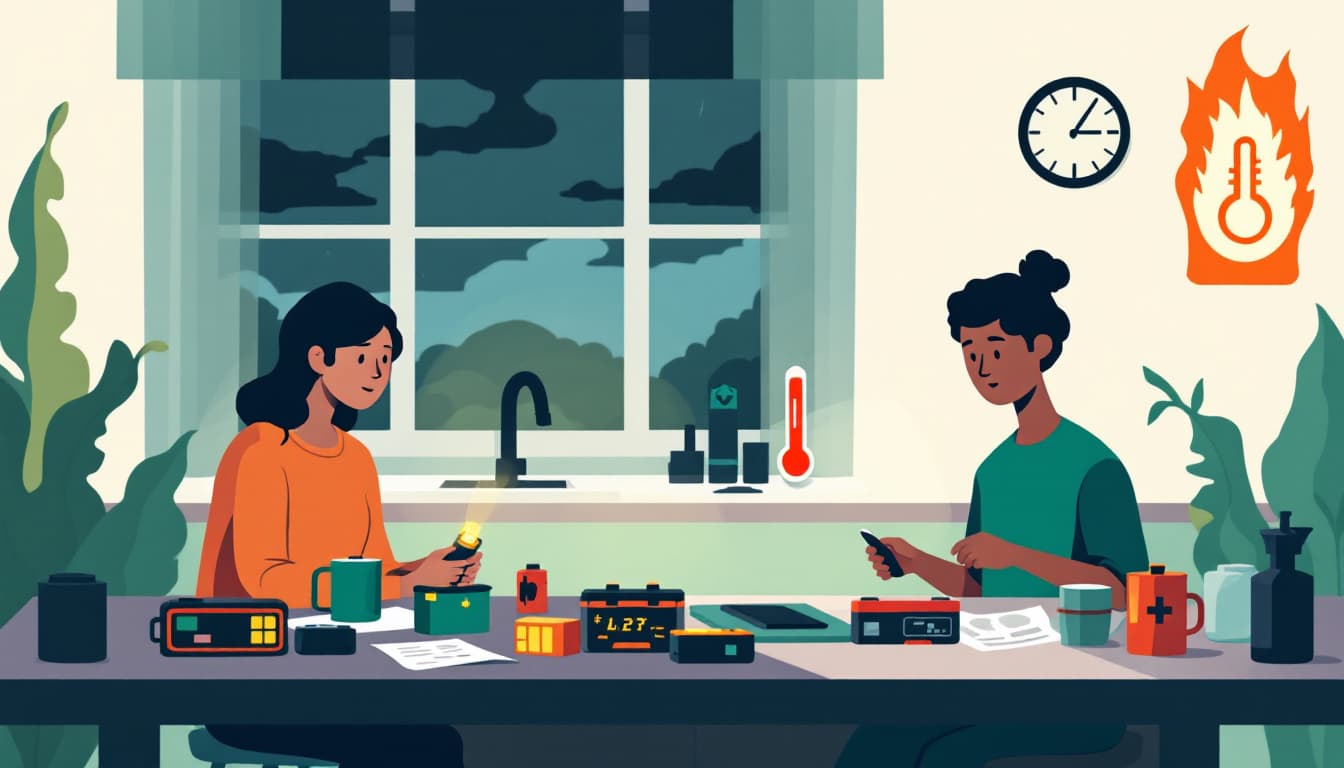
Charge every device and portable battery bank tonight. This is the easiest action on this list and the one most households skip. A charged phone is your weather radio, your outage-report tool, and your communication line. If you own a portable power station, top it off. If you don't, a $25-40 USB battery bank handles phones and a small fan for the first 12 hours.
Know your generator's carbon monoxide risk if you have one. Each summer, NC emergency management reports at least a handful of CO poisoning cases from generators run too close to homes or in garages. The rule is 20 feet from any door, window, or vent — not 10, not "near the side of the house." This is a death-prevention reminder, not a gear upsell.
The bigger picture
North Carolina is not experiencing an unprecedented crisis. It is experiencing a predictable August in a state where the grid, the housing stock, and the household preparedness baseline haven't fully caught up to what late summer now reliably delivers. The goal isn't to bunker against catastrophe. It's to build enough slack — in your food supply, your cooling options, your communication plan — that a 36-hour outage is an inconvenience instead of an emergency.
Durable households are not the ones with the most gear. They're the ones that made three or four boring, low-cost decisions before the storm arrived.