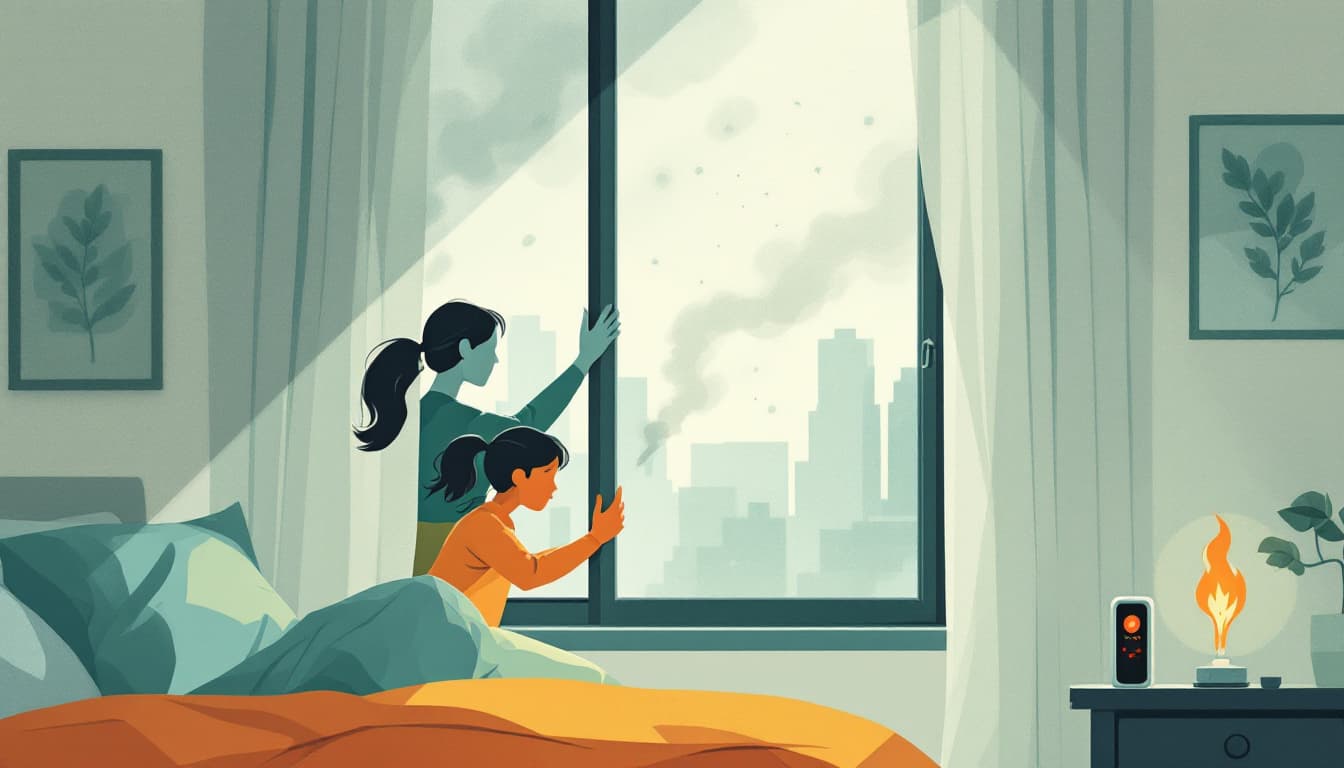
A "remain indoors" advisory sounds like the kind of thing that happens somewhere else. This week, it happened in North Carolina.
A report from Newsweek this week placed North Carolina alongside California in a wave of air quality warnings serious enough to prompt officials to urge residents to stay inside. That combination — two states separated by 2,500 miles, both under the same advisory language at the same time — is worth pausing on. It reflects a pattern that North Carolina households have been slowly absorbing since the western part of the state began seeing more wildfire smoke, and coastal and Piedmont areas have dealt with ozone and particulate spikes during hot, stagnant weather systems.
What's actually changing
North Carolina sits in an awkward geography for air quality. The western mountains channel and concentrate smoke from both local burns and long-range transport from fires in Tennessee, Georgia, and further west. The Piedmont's mix of heavy traffic corridors and industrial areas around Charlotte and the Triad generates ozone conditions that can tip into unhealthy ranges during summer heat. Even eastern NC, where agricultural burning and pollen loads are high in spring, gets pushed into advisory territory more often than residents realize.
The North Carolina Department of Environmental Quality runs an air quality forecast tool and participates in the EPA's AirNow network. When those systems issue a Code Orange or Code Red day, the guidance is the same language Newsweek reported: limit outdoor activity, keep sensitive populations inside, close windows.
Most households are not ready for that last one. Closing windows in a leaky house doesn't do much. Running a central HVAC system without a quality filter actively pulls outdoor air in and distributes it. And the guidance to "remain indoors" assumes your indoors is actually cleaner than outside — which it may not be.
The science here is settled enough to act on: fine particulate matter (PM2.5) is the primary threat during smoke events, and it penetrates standard 1-inch HVAC filters without difficulty. The data on portable air purifiers with HEPA filtration is robust. The question is whether NC families have thought through this before the advisory hits.
What we'd actually do
Check your HVAC filter rating and replace it before summer. Most homes run MERV-8 filters, which catch large particles but let fine smoke particulates through. Upgrading to MERV-13 — which fits most standard residential systems — meaningfully improves filtration during smoke events. The cost difference is around $10-15 per filter. Check your system's manual first; some older units can't handle the airflow restriction of higher-rated filters, and running one that's too dense strains the blower motor.
Build one "clean room" in your home with a portable HEPA purifier. You do not need to purify the whole house. Pick the bedroom or room where your household spends the most time during an advisory and get a portable air purifier sized for that square footage. Units from established manufacturers run $80-200 and are widely available. During a Code Red day, close that room off from the rest of the house, run the purifier on high, and treat it as your refuge. This is the approach NC State Extension and the EPA both outline for wildfire smoke events.
Download the AirNow app and set it to your county. North Carolina's DEQ publishes daily forecasts through the AirNow network. The app sends alerts before conditions deteriorate, which matters because you want to close windows and start filtering before the smoke or ozone peaks — not after. The app is free and takes two minutes to configure. Set it for your county and for any county where your kids go to school.
Keep N95 masks accessible for necessary outdoor time. "Remain indoors" is guidance, not a lock-in. People walk dogs, get kids into cars, make pharmacy runs. A box of N95s stored in a kitchen drawer costs around $15-20 and filters the same fine particulates that cause the advisory in the first place. Cloth masks and surgical masks do not filter PM2.5 at useful rates. This is one preparedness item with a clear, evidence-backed use case.
Know your household's sensitive members and have a plan before the next event. Children, adults over 65, and anyone with asthma, COPD, or cardiovascular conditions face the highest risk during air quality events. If that describes someone in your home, the time to figure out where they'll spend a Code Red day — and whether your clean room setup works for them — is now, not the morning the advisory hits.
The bigger picture
North Carolina is not becoming California overnight. But the state's air quality picture is changing at the margins: more smoke transport events, hotter summers that bake ozone into the Piedmont air, and burn conditions in the mountains that weren't common two decades ago. The "remain indoors" advisory this week is not a one-time anomaly to explain away.
The goal here is not a bunker. It's a house that handles a bad air day the way a good roof handles rain — without drama, because you prepared when the weather was fine.