The Cape Fear River is running low. A report this week from the Wilmington Star-News describes drought conditions tightening around the Wilmington area, with the situation potentially worsening as summer heat compounds the problem. For coastal North Carolina residents, this is not abstract weather news — it's a direct pressure on municipal water supply, well yields, and the kind of slow-burn infrastructure stress that doesn't make emergency alerts until something actually breaks.
What's actually changing
Wilmington draws heavily from the Cape Fear River for its municipal supply. When river levels drop, the utility's intake capacity shrinks and treatment costs rise. If you're on city water in New Hanover, Brunswick, or Pender counties, you are downstream — literally — of whatever the drought does to that watershed.
Inland, the picture is different but not better. The Piedmont and Sandhills rely on a patchwork of reservoirs and shallow aquifers that recharge slowly. Recent data from the U.S. Drought Monitor has shown abnormally dry to moderate drought conditions across large portions of North Carolina through late spring. Shallow residential wells in the Sandhills and the coastal plain are particularly sensitive to extended dry periods.
None of this is catastrophic yet. That's exactly why it's worth paying attention.
The drought-to-disruption timeline tends to move in stages: first lawn watering restrictions, then car wash and irrigation bans, then appeals to voluntary indoor reduction, and finally mandatory cuts or supply interruptions. Most households don't start thinking about water until stage three or four. By then, the grocery store shelves have been cleared of jugs and the hardware store is out of filtration gear.
There's also a wildfire risk layer here that North Carolina residents sometimes underestimate. The Croatan National Forest and the longleaf pine flatwoods of the coastal plain are legitimate fire terrain when conditions are dry. The N.C. Forest Service tracks fire danger daily, and it's worth checking that index if you live near wooded areas.
What we'd actually do
Audit your actual water storage right now. Most households have essentially zero stored water. The general guidance is one gallon per person per day for three days minimum. For a family of four, that's twelve gallons. That's three standard water jugs from a grocery store, bought today, stored in a cool closet. Start there. If you're on a private well, understand where your pressure tank is and whether your pump has a backup power source.
Most well pumps run on standard household current and stop working in a power outage. A drought paired with a summer storm outage — common in North Carolina from late June through September — is exactly the scenario where that gap bites. A small generator or a hand pump adapter appropriate to your well depth gives you options.
Call your municipal utility and ask specifically about current reservoir or intake levels. Cape Fear Public Utility Authority and Brunswick County Utilities both publish water quality and supply updates. Calling takes five minutes and tells you which stage your utility is actually in — not which stage the news is covering.
Replace any leaky fixtures this week. A slow drip from a toilet flapper wastes thousands of gallons per month. During voluntary conservation appeals, that waste is yours to defend. During mandatory cuts, that waste is genuinely costly. A replacement flapper costs about four dollars at any hardware store and takes ten minutes to install.
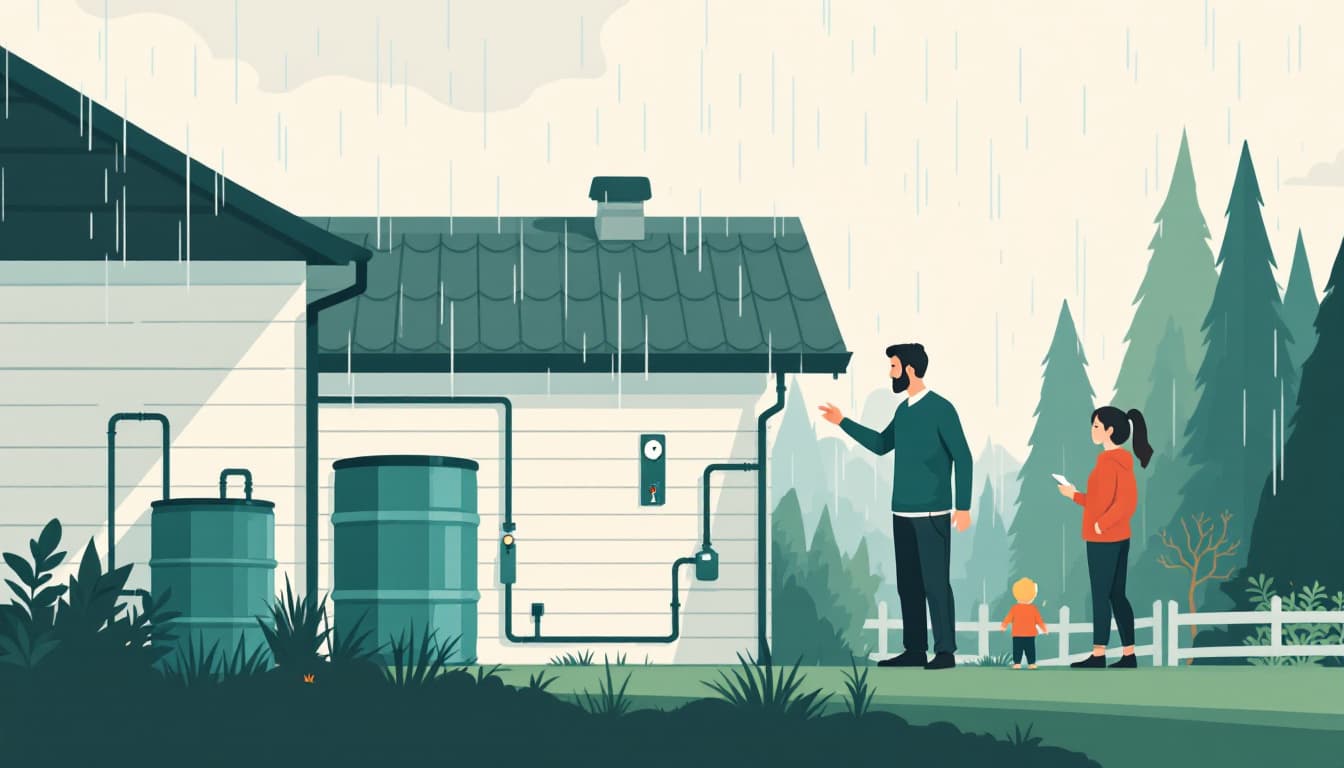
Check your gutters and downspouts for a rain barrel connection point. North Carolina allows residential rainwater collection — it's legal statewide. A 55-gallon food-grade barrel under a downspout costs roughly $30 to $80 depending on source, and during dry summers can collect meaningful volume from the occasional storm cell that does push through. This is not a primary supply. It's a supplement for outdoor plants, toilet flushing, and reducing municipal draw.
The bigger picture
North Carolina is not Arizona. The state has genuine water resources. But the coast — Wilmington in particular — sits on a narrow margin between abundant rainfall years and dry ones, and that margin has been shrinking in recent summers. The infrastructure wasn't designed for back-to-back stress years.
The households that weather this well are not the ones who panic-bought fifty cases of water in 2020. They're the ones who quietly maintain a modest buffer, know their utility's contact number, and fix the slow toilet leak before it costs them anything. Durable, not dramatic.