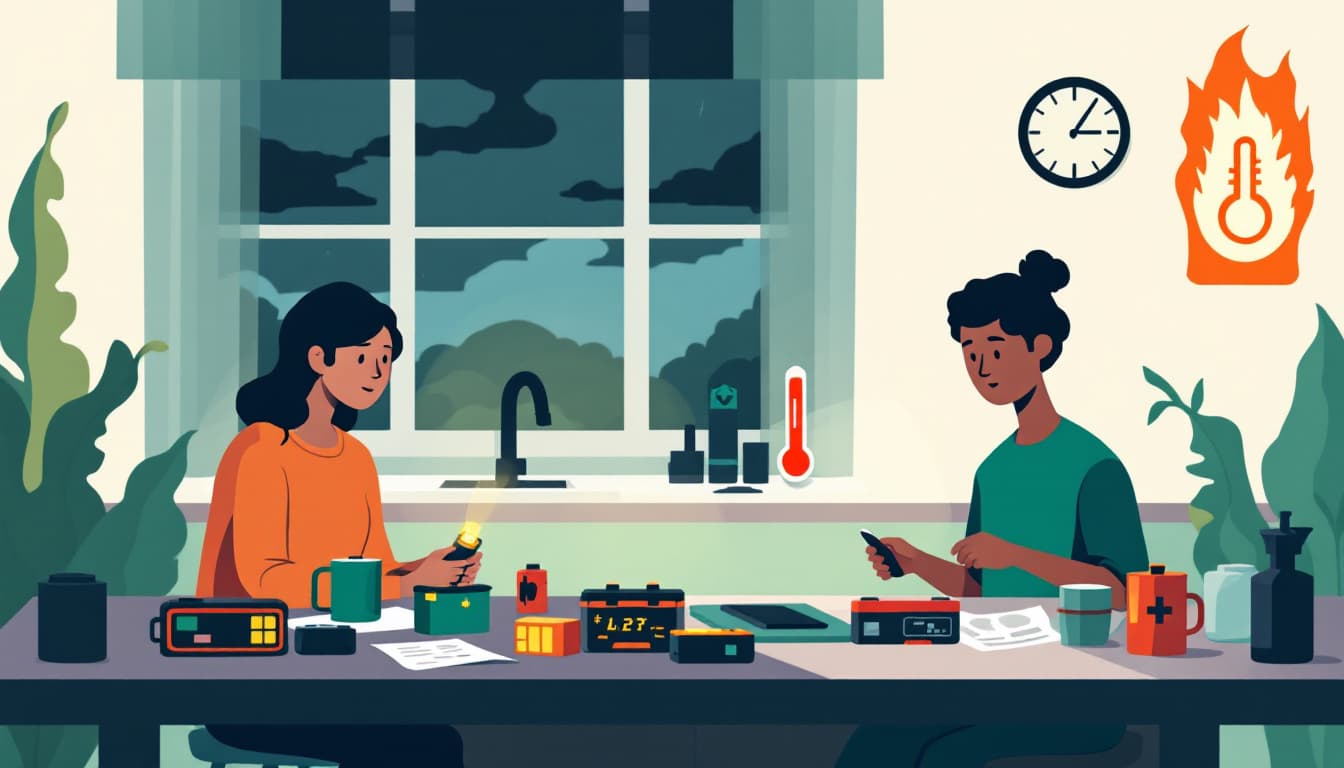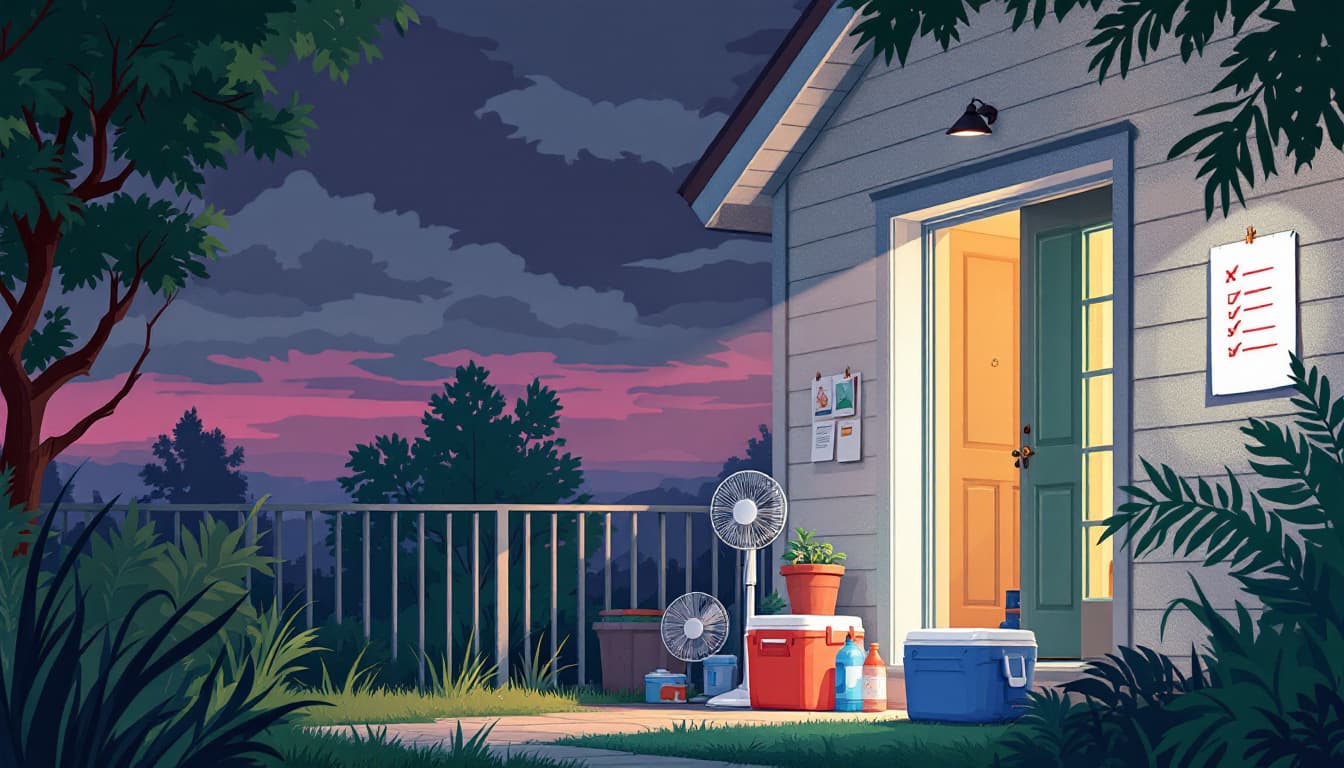
A report this week from WXII puts temperatures in the low-to-mid 90s across Winston-Salem, Greensboro, and High Point — and it's only mid-May. The Triad isn't new to heat, but an event this early in the season is a useful stress test: if your household isn't ready now, July will be worse.
This is not a disaster article. Ninety-degree heat in the Carolina Piedmont is ordinary. What makes it worth writing about is the gap between "ordinary heat" and "household that has thought through ordinary heat." Most families haven't.
What's actually changing
Heat in the Piedmont arrives earlier than it used to, and cooling degree days — the metric utilities use to forecast grid load — are trending upward over multi-decade spans. Duke Energy and Dominion both serve large portions of North Carolina, and peak demand events in May catch the grid before summer maintenance cycles are complete and before utilities have activated all demand-response capacity.
The other factor is medication. A meaningful share of households in this age bracket includes someone on a drug that affects heat tolerance: beta-blockers, diuretics, antihistamines, antipsychotics, and several blood pressure medications all impair the body's ability to regulate temperature. This is rarely flagged on the label and almost never discussed at the pharmacy counter. It doesn't require a heat dome to become dangerous — a week of 93-degree afternoons and a house that climbs to 85 overnight is enough.
Early-season events also catch households before they've replaced the window unit that died last September, before they've checked on elderly neighbors, and before they've thought through what happens if the power goes out for six or eight hours during the hottest part of the day.
What we'd actually do
Check every medication in the house against a heat-sensitivity list this week. The FDA and several pharmacology databases maintain lists of drug classes that impair thermoregulation. If anyone in your household takes a daily medication, spend fifteen minutes cross-referencing. If you find a match, the action isn't to stop the medication — it's to know, so you can respond faster if someone shows confusion, stops sweating, or spikes a temperature. Print the list and tape it inside a cabinet.
Set a specific grid-watch threshold, not a vague one. Duke Energy's outage map is public and updates in near-real time. Decide in advance: if your neighborhood loses power and the temperature inside reaches 85°F, where does your household go? Name the place — a family member's house with a working AC, a library branch, a specific hotel within ten miles. The Forsyth County and Guilford County library systems both maintain cooling hours, though you should confirm current schedules directly with each branch. The decision-making overhead during a power outage, when you're already hot and frustrated, is higher than you expect. Resolve it now.
Audit your water supply and your electrolyte situation, not just your bottled water count. A household that loses power for eight hours in 93-degree heat will go through water faster than it does on a normal day. Three gallons per person per day is the standard FEMA guidance for emergencies; in active heat, that number runs higher for anyone doing any physical activity or anyone on a diuretic. More practically: know where your nearest store with backup generator power is, and keep a week's worth of electrolyte packets (not sports drinks — the sugar content is counterproductive in true heat stress) in a kitchen drawer.
Do a five-minute check on one neighbor who lives alone. The demographics of heat mortality are consistent across events: people over 65, people who live alone, and people without air conditioning die at higher rates. In the Triad's older neighborhoods — parts of Winston-Salem's West End, Greensboro's Fisher Park area, High Point's older mill corridors — housing stock is mixed and AC penetration is not universal. You don't need an organized program. A text or a knock on the door during the first hot week costs you three minutes and might matter considerably.
The bigger picture
Heat is the deadliest weather hazard in the United States by most annual mortality measures — not tornadoes, not hurricanes. It's also the most preventable at the household level, because the interventions are cheap, fast, and don't require specialized gear. The goal here isn't to build a bunker against climate change. It's to spend thirty minutes this week so that a 95-degree afternoon in July is uncomfortable rather than dangerous.
Durability means your household handles the ordinary stresses of living in the Carolina Piedmont — heat, the occasional grid hiccup, a medication interaction nobody flagged — without it becoming a crisis. That's the standard we're aiming for.