The Willamette Valley had a dry spring. So did much of eastern Oregon. The Cascades didn't bank the snowpack that carries the state through July and August. Now, heading into summer, a report this week from NPR for Oregonians confirms what the U.S. Drought Monitor has been showing for weeks: drought conditions are spreading statewide, and Oregon water officials are in public guidance mode.
Official tips — shorter showers, fix your leaks, water at dawn — are not wrong. They're also not enough if you live in a rural county on a well, run a large vegetable garden, or are renting a home where the landlord controls the irrigation system. Here's what the guidance leaves out.
What's actually changing
Oregon's water stress isn't uniform. Western Oregon cities tied to large municipal systems — Portland Water Bureau, which draws from the Bull Run watershed, and Eugene's MWMC — have more buffer than small towns and rural households on shallow wells or surface water rights. Eastern Oregon, the Rogue Valley, and the coast's smaller systems are more exposed. When drought talk starts at the state level in late May, that's early. Historically, Oregon drought advisories this time of year signal a high-probability summer of curtailments, meaning junior water-rights holders — including many agricultural users and some rural domestic wells — can be told to reduce or stop drawing.
If your household is on a municipal system, your near-term risk is Stage 1 or Stage 2 voluntary or mandatory restrictions, typically prohibiting lawn watering on certain days or banning ornamental irrigation. If you're on a well, you're watching your water table, not a reservoir.
The deeper issue: Portland-area residents think of Oregon as water-rich because the west side usually is. Eastern and southern Oregon operate under a fundamentally different hydrology, and the drought maps don't separate those realities in the headlines.
What we'd actually do
Know your system before you need to. Find out right now whether you're on a municipal system, a water district, or a private well — and if municipal, which one. Oregon's Water Resources Department maintains public records on water rights and system status. This tells you how quickly curtailment decisions could affect you and at what trigger point.
The distinction matters for planning. A Portland Bureau of Water Works customer has different timelines than someone drawing from a small district in Jackson County. If you're on a well, call a local well driller or your county extension office and ask what the current water table looks like for your area. Oregon State University Extension has offices in most counties and often publishes drought-year well guidance worth bookmarking.
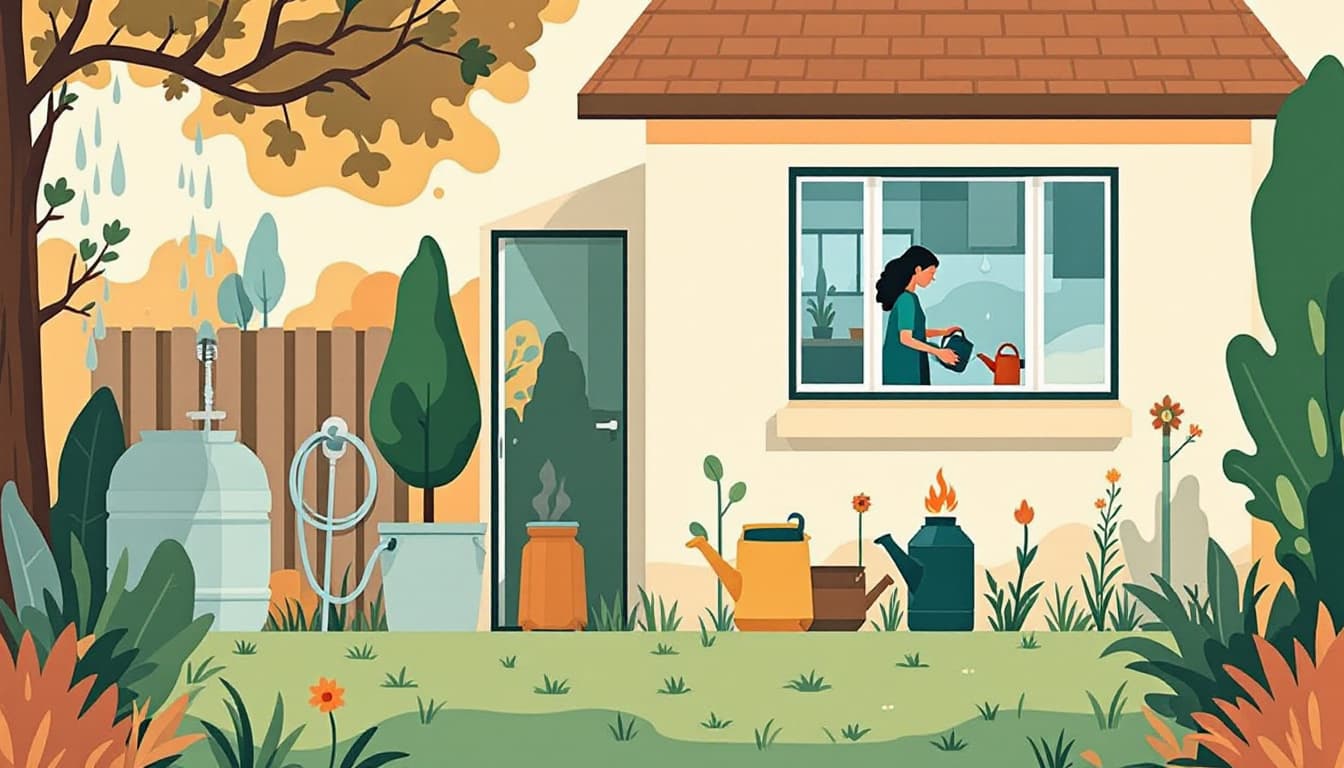
Build a two-week non-potable buffer for outdoor tasks. Rainwater harvesting is legal in Oregon for residential use — this is not true in every state. A 250-gallon intermediate bulk container (IBC tote, available used for $50–$100 from farm suppliers or Craigslist) connected to a downspout gives you a gravity-fed outdoor water source for garden beds, livestock, and toilet flushing if pressure drops. Do this before summer hits; the rain is done by July most years west of the Cascades.
Audit your garden's water demand now, not in August. Oregon vegetable gardeners running drip irrigation on timers have a meaningful advantage over overhead sprinkler setups. If you're still using a sprinkler to water a food garden, switching to soaker hose or drip tape before July cuts water use by roughly half. Oregon's drought years have reliably shown that households with established drip systems maintain food gardens without meaningful yield loss even under Stage 2 restrictions. The hardware investment is under $60 for most home gardens.
Identify your household's actual daily water number. Pull your last three utility bills and calculate your average daily gallons. Oregon Water Resources publishes per-capita baseline benchmarks useful for comparison. If your household is running well above the regional average, you have a target. If you're already lean, you know your baseline and can communicate that to your water district if tiered pricing or allocations come.
If you have storage capacity, fill it now. Under municipal systems not yet under restrictions, topping off any water storage — including camping containers, bathtub bladders, or dedicated food-grade barrels — is legal and reasonable. FEMA's minimum of one gallon per person per day is inadequate for Oregon summer heat. A more realistic planning figure is three gallons per person per day for drinking, basic hygiene, and minimal cooking. A family of four needs 84 gallons for two weeks. That's two standard 55-gallon food-grade drums.
The bigger picture
Oregon has managed drought before and will again. The state's water law system — prior appropriation in the east, a hybrid in the west — means curtailments follow rules, not chaos. What breaks households isn't a single dry summer; it's the combination of no stored water, no drip irrigation, a lawn they feel obligated to keep green, and no knowledge of what their water district's Stage 3 rules actually say.
The goal is durability through an ordinary drought year, not preparation for civilizational collapse. That means knowing your system, lowering your baseline demand before you're forced to, and having a short-term buffer in place. None of this is expensive. All of it can be done before the Fourth of July.