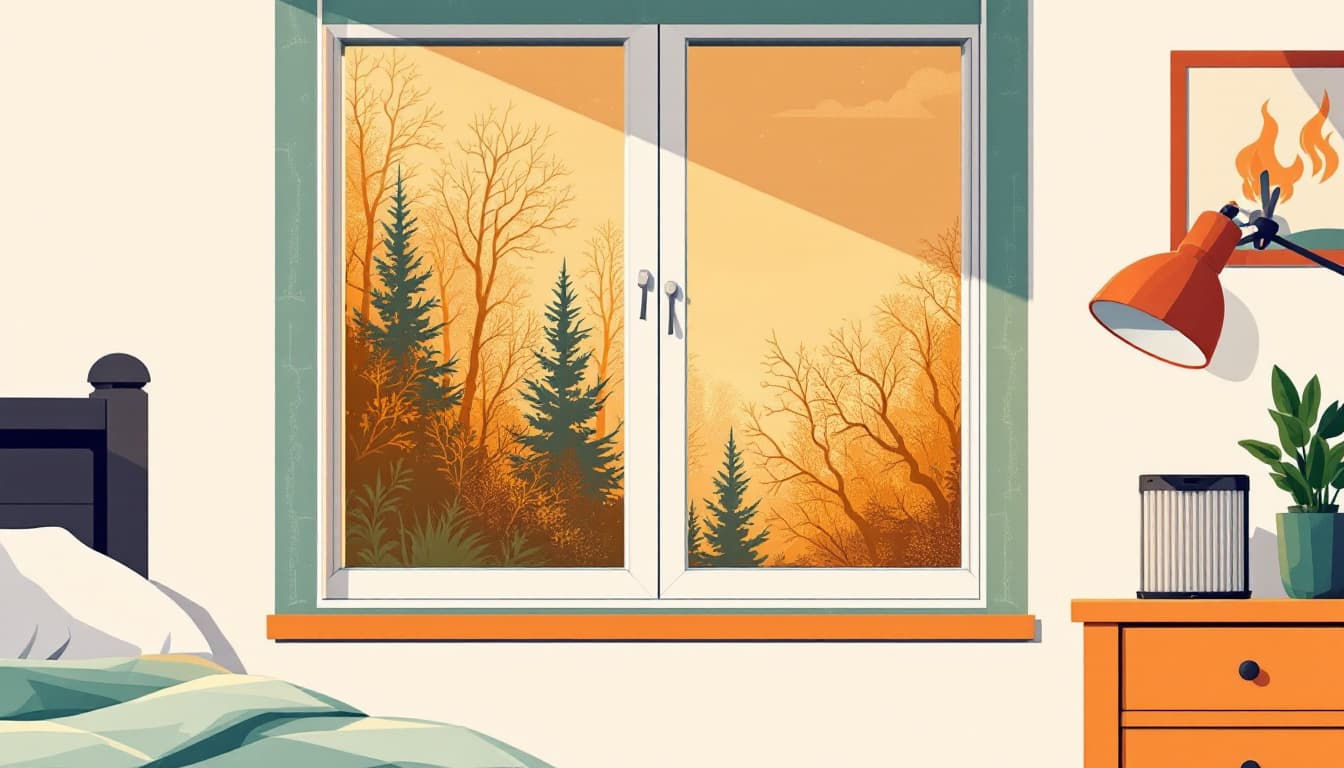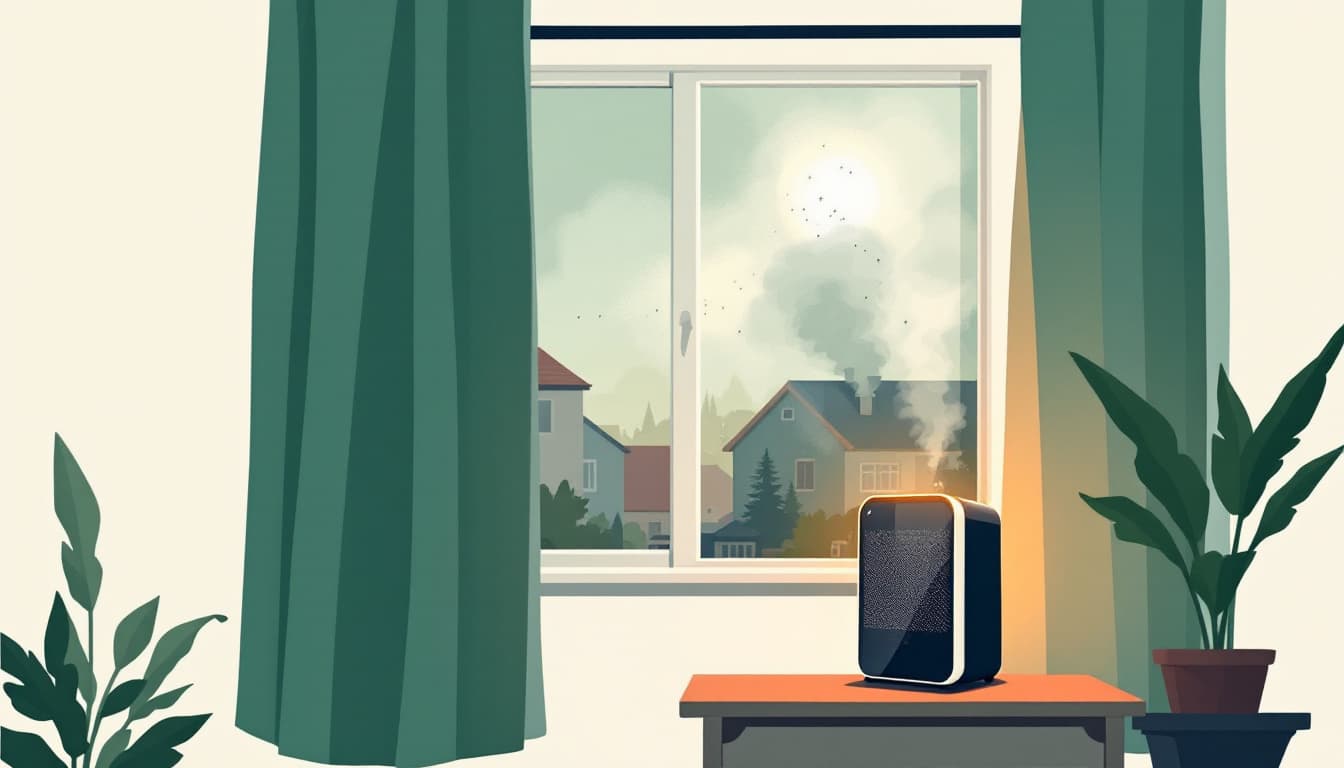
A KTVL report this week documented Canadian wildfire smoke pushing south and east into the northeastern United States, turning skies yellow and pushing air quality indexes into the unhealthy range across multiple states. The Northeast got the headlines. Oregon has been through this before and will be again — the state's own wildfire season typically peaks between late July and September, and smoke from fires in British Columbia and Alberta has reached the Willamette Valley and the coast in each of the last several summers.
The difference between the Northeast's experience and Oregon's is mostly one of frequency and proximity. Oregon households are closer to the ignition zones. The smoke tends to linger longer at ground level here due to valley geography. And many Oregon families still do not have the basic indoor air infrastructure in place when the first red AQI days hit.
What's actually changing
The pattern is not new, but the scale has expanded. Fires burning in Canada are now large enough, and frequent enough, to affect air quality thousands of miles away — which means Oregon's smoke season is no longer just a local fire event. It is the downstream consequence of a continent-wide fire regime that activates every summer.
Oregon DEQ runs an air quality monitoring network that publishes real-time data at oregonair.org. The state also participates in AirNow, the federal network managed by EPA. What these tools cannot do is tell you what your indoor air quality is. Most Oregon homes — including newer ones — cycle outdoor air through HVAC systems with filters that were not designed to capture fine particulate matter (PM2.5), the specific hazard in wildfire smoke. A standard MERV-8 filter, common in residential furnaces, removes a fraction of the PM2.5 that a MERV-13 or better removes.
The Oregon Health Authority typically issues guidance during smoke events recommending people shelter indoors, but that advice only holds if the indoors is actually cleaner than outside. In a home with a leaky envelope or a low-grade filter, it may not be.
What we'd actually do
Check and upgrade your furnace filter before the next smoke event, not during it. Hardware stores in Portland, Eugene, and Bend tend to sell out of MERV-13 filters within 24 to 48 hours of a major smoke event. Order two or three online now, store one, and swap in a MERV-13 or MERV-11 at minimum. If your HVAC system can only handle a lower-rated filter (some older units restrict airflow at higher ratings — check the manufacturer spec), a standalone HEPA air purifier for the main living space is the next best move.
Build at least one clean air room in your home. Pick the room where your family spends the most time — typically a bedroom or living room — and make it the one room you seal and filter aggressively during smoke events. Tape window gaps with painter's tape, close the door, run a HEPA purifier. The EPA's published DIY box-fan-and-filter design (a box fan with a MERV-13 filter taped to the intake) costs under $40 to build and works well enough in a pinch. Oregon State University Extension has published guidance on this approach specific to the state's smoke season.
Know your household's AQI threshold for action. The federal AQI breakpoints place "Unhealthy for Sensitive Groups" at 101 and "Unhealthy" for the general population at 151. Oregon DEQ recommends limiting outdoor activity above 101 for children, elderly adults, and anyone with asthma or cardiovascular conditions. Decide in advance at what number you pull kids inside, close windows, and run filtration — don't make that call in real time when you're already uncomfortable.
Stock N95s for necessary outdoor exposure. Cloth and surgical masks do not filter PM2.5 meaningfully. N95s rated by NIOSH do. Keep a box in the car and a handful in the home. This is not about doomsday scenarios — it's about walking the dog, getting groceries, or commuting when smoke settles in the valley for several days running, which Oregon households in the Willamette Valley, Rogue Valley, and Bend area have experienced in recent years.
Bookmark oregonair.org and set up AirNow notifications. The AirNow app allows ZIP-code-specific alerts when AQI crosses thresholds you set. This takes three minutes to configure and removes the need to check manually.
Smoke season is not a catastrophe to prepare for. It is a recurring seasonal condition — like ice on Portland roads in January or heat in the interior valleys in August — that households can manage with modest, one-time preparation. The families who struggle most are the ones who start improvising when they can already smell the smoke. The families who do fine are the ones who stocked filters and masks in June and already know what their plan is.
That's the whole game here: durability through ordinary readiness, not panic buying when the sky turns orange.