On a clear August morning in the Willamette Valley, you can see Mount Hood from the Hawthorne Bridge. This week, you cannot. Oregonlive.com reported this week that smoke has returned to Portland, raising the familiar question of how long residents will need to stay inside or mask up before the air clears.
The question of duration matters less than most Portland households think. Whether a smoke event lasts two days or ten, the first few hours are when people make the choices that determine how much particulate matter they actually breathe. And most households in Oregon are making those choices with equipment that hasn't been checked since last summer.
What's actually happening this season
Wildfire smoke over Portland arrives from multiple directions depending on the fire complex and wind patterns. Some years it originates in eastern Oregon or the Cascades; other years it's smoke from northern California or even British Columbia drifting south. The AQI readings that appear on Oregon DEQ's real-time monitoring map can move from "moderate" to "very unhealthy" in under three hours when winds shift, which is faster than most people's mental model of the hazard.
Fine particulate matter (PM2.5) — the fraction that lodges in lung tissue — doesn't follow a schedule. A Monday morning commute, a kid's soccer practice, an open window left cracked overnight: those are the exposures that accumulate. Oregon DEQ publishes hourly air quality data at oregonair.deq.state.or.us, updated frequently enough to be genuinely useful if you check it before opening windows rather than after.
The other thing the duration question obscures: smoke season in western Oregon is no longer a single episode. Recent fire seasons have produced multiple distinct smoke events separated by days of clear air, meaning households that wait for "the big one" before acting are unprepared for the pattern that actually keeps repeating.
What we'd actually do
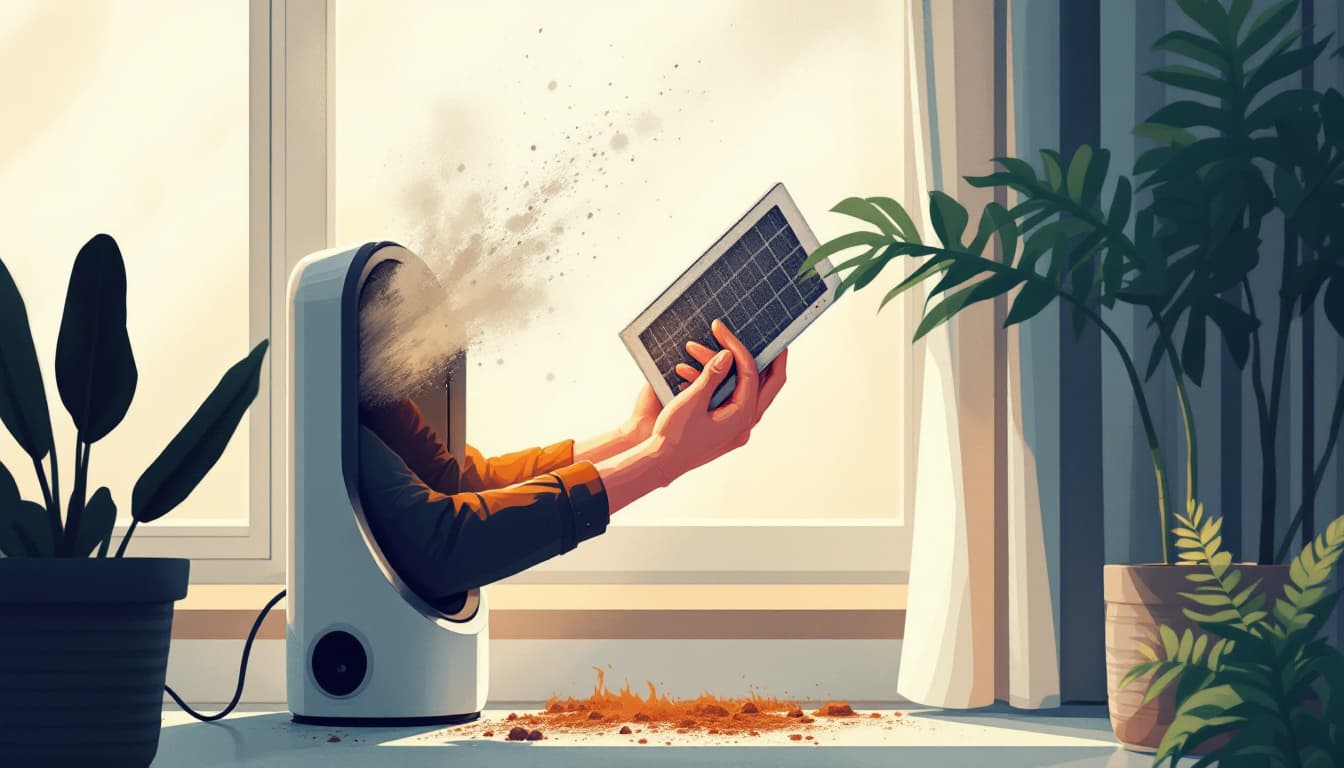
Check and replace your HVAC filter today, not when the next advisory hits. A MERV-13 or higher filter in a forced-air system will catch a meaningful fraction of PM2.5 particles. Filters rated lower — the standard blue fiberglass kind — do almost nothing for wildfire smoke. Check the slot size of your furnace, order the correct MERV-13 filter now (they're widely available at hardware stores for $15–$30), and swap it in before the smoke thickens. A clogged or undersized filter reduces air quality and strains the blower motor.
Build a DIY box-fan air cleaner for around $30. A standard 20-inch box fan with a MERV-13 or higher furnace filter taped flush against the intake side creates a functional room air cleaner researchers have documented filtering PM2.5 reasonably well in single rooms. Run it in the bedroom where you sleep. This is not a substitute for a HEPA room unit in a severely contaminated home, but it is far better than nothing and costs a fraction of a commercial air purifier. Replace the filter when it turns visibly gray.
Identify your lowest-infiltration room now, before you need it. Every house has a room that stays slightly less smoky than the others during a smoke event — typically an interior room with fewer windows, or one on the lee side of the building. Spend fifteen minutes thinking through which room that is, and whether it has enough outlets for a fan and phone charging. Families with young children or elderly members should treat that room as the designated refuge and know how to seal window gaps with damp towels or painter's tape quickly.
Stock N95 or KN95 masks in a known location. Oregon households learned during the 2020 fire season that masks disappear from store shelves within 24 hours of a smoke emergency. A box of 10 N95s costs roughly $15–$20 and lasts multiple seasons if stored properly. The key detail: surgical masks and cloth masks do not filter PM2.5 effectively. Only masks with a tight face seal and the right filtration rating matter for smoke exposure. Keep them where you keep your keys, not in a bin in the garage.
Download the Oregon DEQ AirNow widget or app and set an AQI alert threshold. AirNow allows notifications when local AQI crosses a threshold you define. Set it to alert at AQI 100 (the boundary of "unhealthy for sensitive groups") so you have advance notice before conditions deteriorate. This replaces the reflex to check social media for news and gives you actionable lead time.
The bigger picture
Smoke over Portland is a recurring condition, not a crisis requiring crisis-level response. The households that navigate it best are not the ones with the most gear; they're the ones who have made three or four low-cost decisions before August that reduce their daily PM2.5 exposure without reorganizing their lives. A good filter, a room you can retreat to, masks you can find in the dark, and an alert on your phone: that's most of the protection available to a private household, and it's achievable this weekend for under $75.
The goal isn't to never breathe smoky air. It's to meaningfully reduce cumulative exposure across a season that now reliably delivers multiple events. That's a durability problem, and durability doesn't require drama.