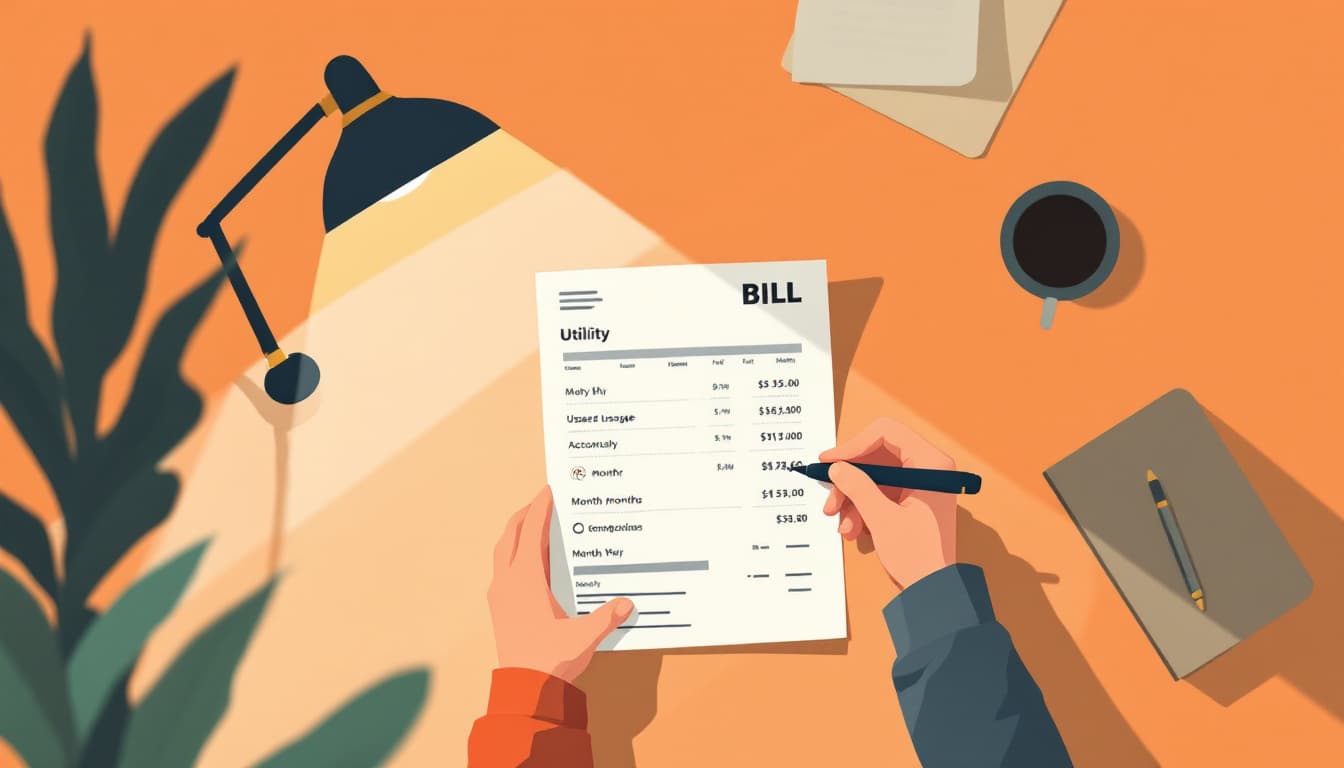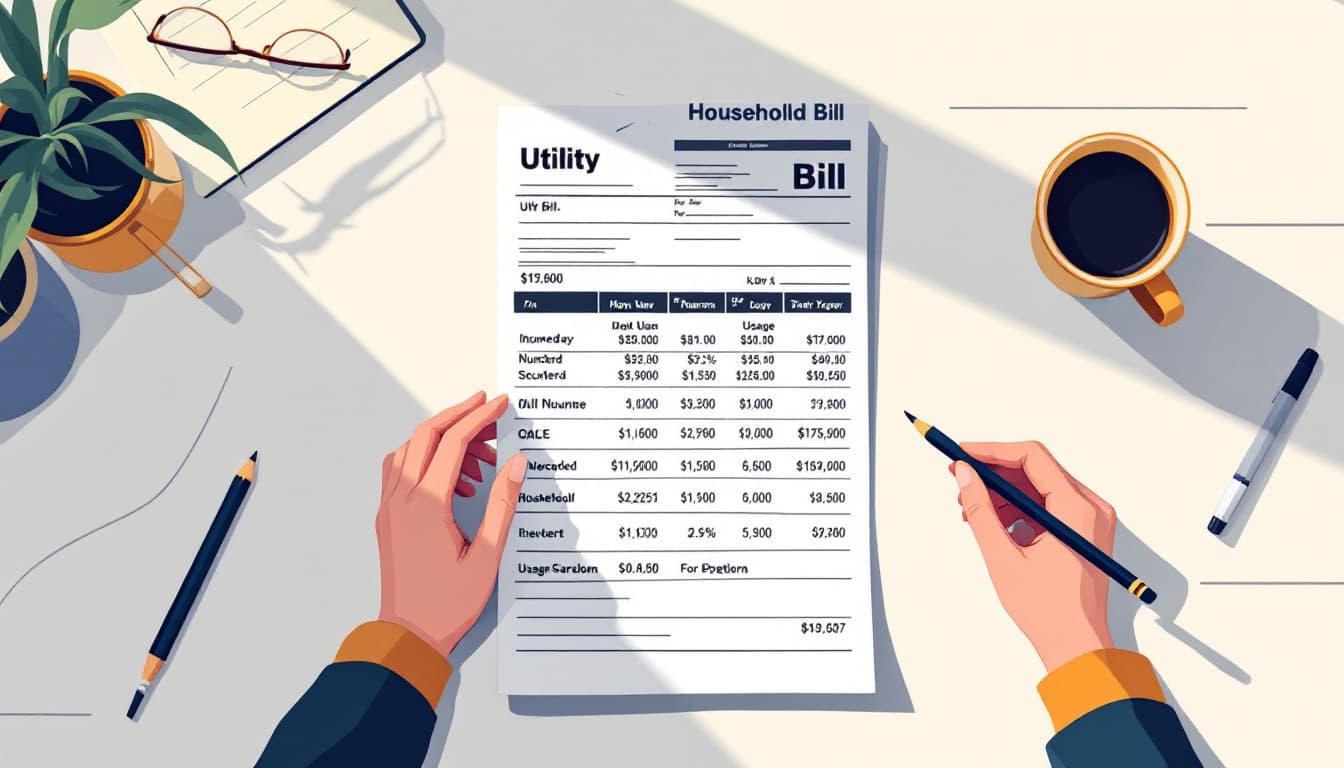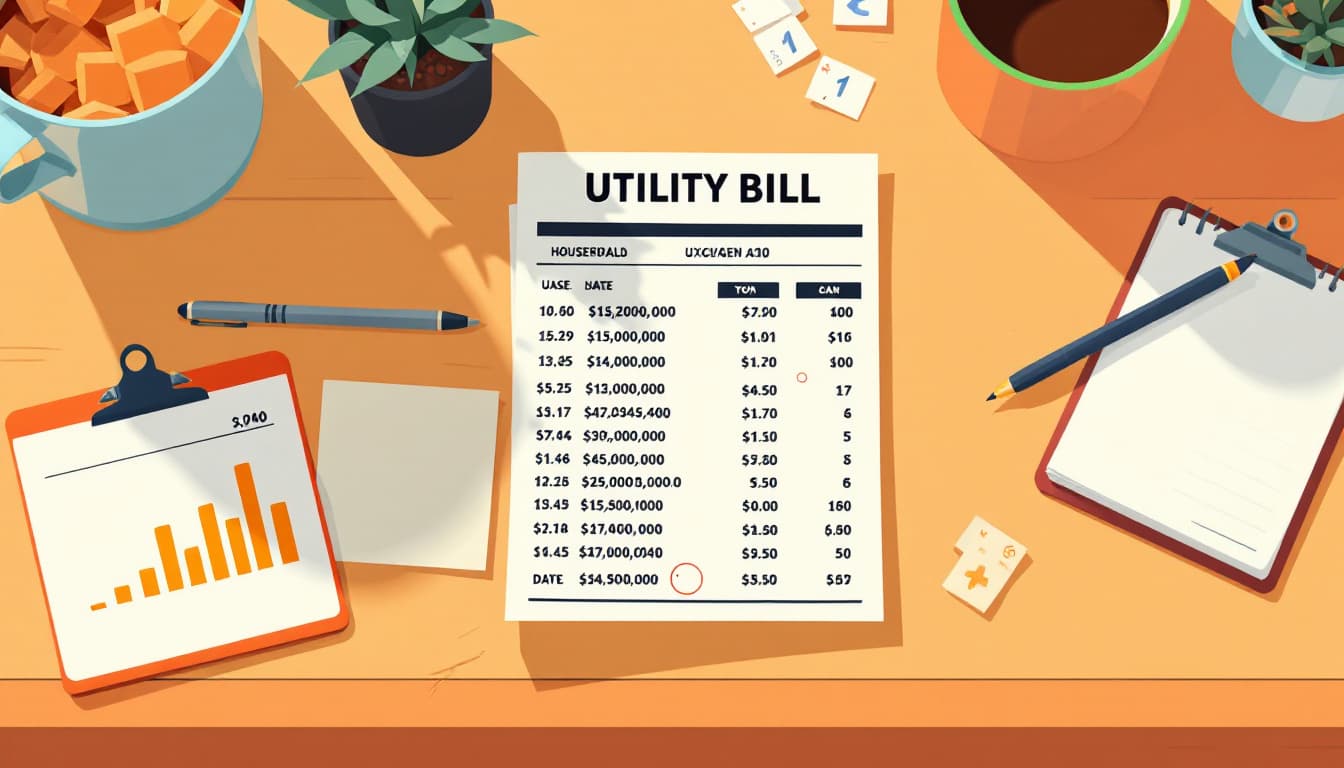
Somewhere around page three of a typical residential electricity bill is a chart that almost nobody reads. It's usually labeled something like "Your Usage History" — twelve months of kilowatt-hours, rendered as a bar graph, sitting quietly between the payment stub and a paragraph about paperless billing.
That chart is one of the most useful pieces of emergency preparedness information your household generates, and you're probably recycling it.
This isn't an argument about conservation. It's an argument about literacy — specifically, the kind of practical numeracy that compounds in value whenever systems get tight. Knowing how to read a utility bill fluently, across both electricity and water, is a household skill that pays dividends in ordinary times and becomes structurally important when supply or pricing comes under pressure.
What fluency actually looks like
A household that reads its utility bills with any depth knows three things most households don't: their baseline consumption, their rate tier structure, and where their usage spikes.
Baseline consumption is the floor — what you use on a neutral month with no guests, no extreme weather, no appliance anomalies. It's your reference point. Without it, you can't distinguish a problem from a pattern.
Rate tier structure is where money and resilience intersect. Most residential electric and water utilities in the U.S. use tiered pricing — you pay one rate for the first block of usage, a higher rate once you cross a threshold, and sometimes a sharply higher rate for heavy use. Those thresholds aren't arbitrary; they're calibrated to local supply conditions. Understanding where your household sits relative to the tier boundaries tells you not just what you're paying, but how close to the margin your consumption habits actually are. During a drought year or a grid stress event, those tiers often shift, and utilities are required to notify customers — in the bill. In text that almost no one reads.
Usage spikes are the third layer. A month where your water consumption jumped 30 percent over baseline isn't just a billing surprise; it's a diagnostic. Maybe it was house guests. Maybe it was the lawn. Maybe it was a running toilet you hadn't noticed. Learning to read the spike as signal rather than noise — and then trace it to a cause — is a skill. It requires practice on quiet months so it's available on stressful ones.
Why this doesn't feel like preparedness
Preparedness culture has a gear problem. The mental image of emergency readiness tends to involve physical objects — stored water, a go-bag, a generator — and that framing crowds out the skills that are harder to photograph but often more durable. Knowing how to interpret your household's consumption data doesn't look like preparedness. It looks like being a slightly nerdy bill-payer.
But consider what you can actually do with that fluency when conditions change. When a utility announces drought-stage water restrictions — as several Western utilities did last summer, moving households to mandatory conservation targets — the families who already knew their baseline were able to calculate their required reduction immediately. They knew which usage categories had slack. They weren't starting from zero.
The same holds for electricity. When time-of-use pricing expands — and most utility analysts expect it to, as grid management gets more complicated — households that already understand their consumption shape can shift load intentionally. Households that don't will pay the higher rate and feel confused about why.
None of this requires an engineering degree. It requires one hour, twice a year, sitting with three months of bills and a calculator, building the habit of looking at the numbers as data rather than demands.
The compounding part
Skills that are useful in ordinary times and more useful under stress are the ones worth developing. That's the principle underlying everything we write here. Cooking from staples is more valuable than knowing how to use a specific emergency food kit, because it's practiced constantly. Basic carpentry is more valuable than owning every tool, because it's a capability rather than an inventory.
Utility literacy fits that pattern exactly. The bill arrives every month. The data is already there. The practice is low-stakes. And the skill transfers: someone who can read their electric bill fluently can also parse a water bill, a gas bill, or — with a bit of adjustment — a solar production report. The underlying numeracy compounds.
There's a reasonable next step here for households who want to make this concrete: our water and food calculator uses household size and baseline consumption to size storage recommendations, which means knowing your actual baseline makes those outputs meaningfully more accurate than the generic defaults.
The chart on page three has been waiting for you. It's not dramatic. It's just useful, which is the best thing a skill can be.