Walk into any mid-size grocery store and the shelves look full. That's the part that makes this hard to take seriously. But a survey published this month by Global Trade Magazine asked shipping industry professionals to name their single biggest threat, and geopolitical tension came out on top — ahead of fuel costs, port congestion, and labor disputes. That ranking is worth sitting with.
What's actually changing
The survey reflects something that has been building for several years but has not resolved: the world's main cargo routes pass through or near contested zones. The Red Sea disruptions that began in late 2023 pushed container ships onto longer routes around the Horn of Africa, adding transit time and cost. Strait-of-Hormuz risk has never disappeared. Tensions in the Taiwan Strait affect not just semiconductors but the entire web of East Asian manufacturing that supplies North American retail.
Each individual chokepoint is a separate story. Together they represent a structural change in how predictable global shipping is. Carriers and importers used to price in occasional disruption. What shipping insiders are now telling Global Trade Magazine is that disruption has become the baseline, not the exception.
For households, the mechanism works like this: longer transit times mean retailers hold more safety stock, which costs money. Insurance premiums on cargo passing through risk zones have risen substantially since 2023, according to Lloyd's market reporting. Those costs move through the supply chain and surface as higher retail prices, thinner product variety, or both. The lag between a shipping disruption and a price change at a grocery store or hardware retailer is typically three to six months — long enough that most families don't connect the two.
One more thing to name honestly: the survey reflects industry perception, not a confirmed escalation. Shipping executives have incentives to highlight risk. The data is real; the framing deserves some skepticism.
What we'd actually do
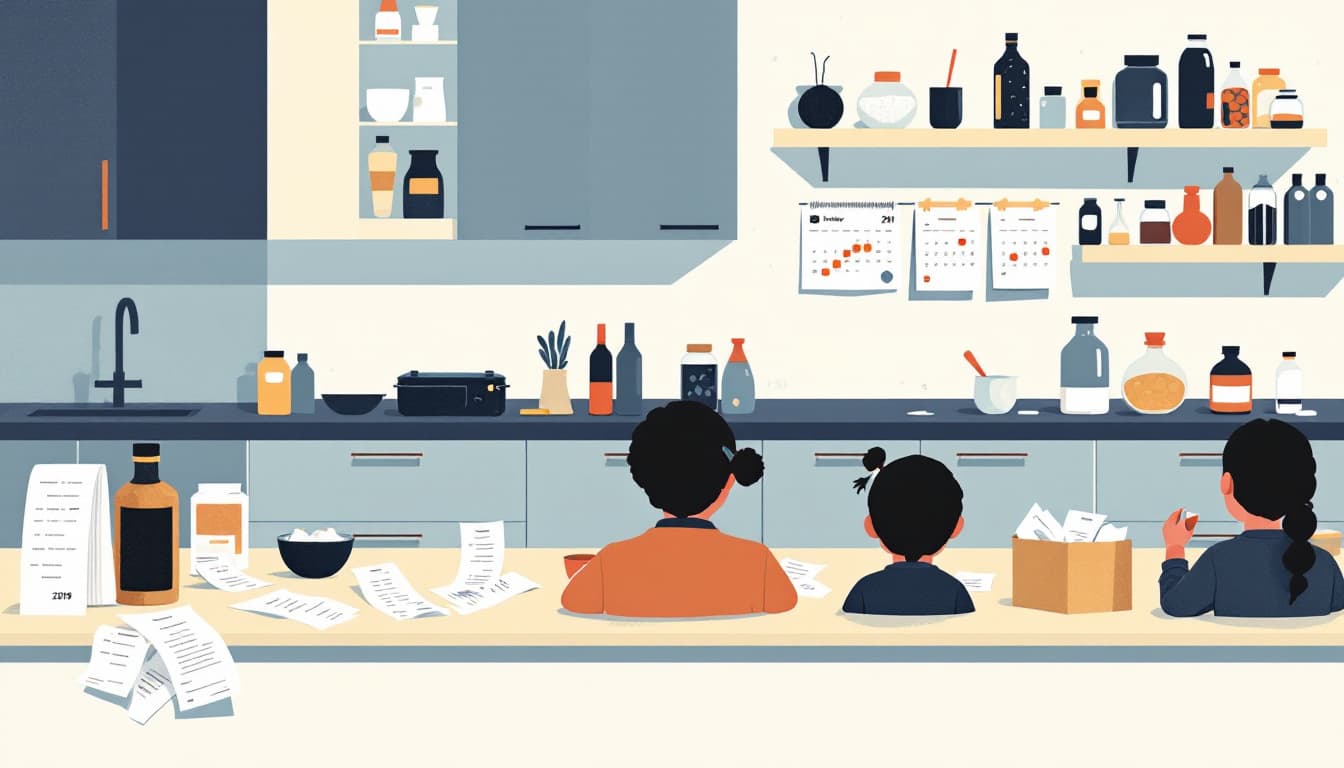
Treat your pantry as a buffer stock, not a just-in-time system. Most American households keep roughly three to five days of food on hand. That matches a supply chain that always works. A supply chain with structural fragility calls for four to six weeks of staples — rice, dried beans, canned protein, cooking oil — bought incrementally over several months, not panic-purchased in a weekend. The goal is absorbing price spikes and brief shortages without changing how your family eats.
Identify the two or three appliances or household items you'd be worst off without, and price their replacements now. The categories most exposed to shipping disruption are electronics, small appliances, and anything with a complex component supply chain touching East Asia. If your water heater, chest freezer, or home router is aging, the calculus for replacing it before it fails changes when lead times are uncertain and prices are trending up. You don't need to buy everything today — you need to know what you'd buy and approximately what it costs.
Build a small foreign-exchange and price-volatility buffer into your household budget. This doesn't mean speculating on currencies. It means keeping two to three months of non-food household expenses in a liquid savings account, specifically earmarked for the scenario where a category of goods gets meaningfully more expensive in a short window. Families who had this buffer in 2021 and 2022 absorbed inflation without going into debt. Families who didn't often did.
Check where your critical medications are manufactured. The FDA maintains a database of drug facility registrations, and a meaningful share of generic active pharmaceutical ingredients still flow through supply chains with geopolitical exposure. If you take a maintenance medication, ask your pharmacist whether a 90-day supply is available and covered. That's not hoarding — it's the same logic your insurance company uses.
The bigger picture
Global shipping has not broken. It has become less predictable, and less predictable is the condition your household needs to be prepared for. The families who handle this well are not the ones who stockpile the most. They're the ones who have reduced their dependence on the assumption that everything will always be available at last month's price. That's a durable posture regardless of whether any specific tension escalates or fades.
The goal is not to outrun a supply shock. It is to be boring and stable while one passes through.