A Facebook weather report circulating this week describes what forecasters and longtime South Florida residents already know in their bones: a stalled frontal boundary combining with deep tropical moisture can turn the region into a slow-motion flood zone for days at a stretch. No named storm required. No dramatic landfall. Just rain, more rain, and saturated ground that has nowhere to drain.
June 1 is the official start of Atlantic hurricane season. This current pattern arrived almost on cue.
What's actually happening
A stalled front means the normal atmospheric machinery that pushes weather systems through has temporarily stopped. Tropical moisture from the Atlantic or Gulf streams northward into that stalled air and dumps on the same geography repeatedly. South Florida's canal-dependent drainage system — managed largely by the South Florida Water Management District — is engineered for heavy rain, but it has limits. When soils are already saturated from prior days of rain, even a moderate additional storm can back up canals, overwhelm storm drains, and sheet-flood streets that don't appear on any FEMA flood map.
That last point matters. Roughly a quarter of flood insurance claims nationally come from properties outside high-risk flood zones, according to FEMA's own public guidance. Many Florida homeowners in Zones X or shaded X believe they're fine. Sometimes they are. Sometimes three days of a stalled front proves otherwise.
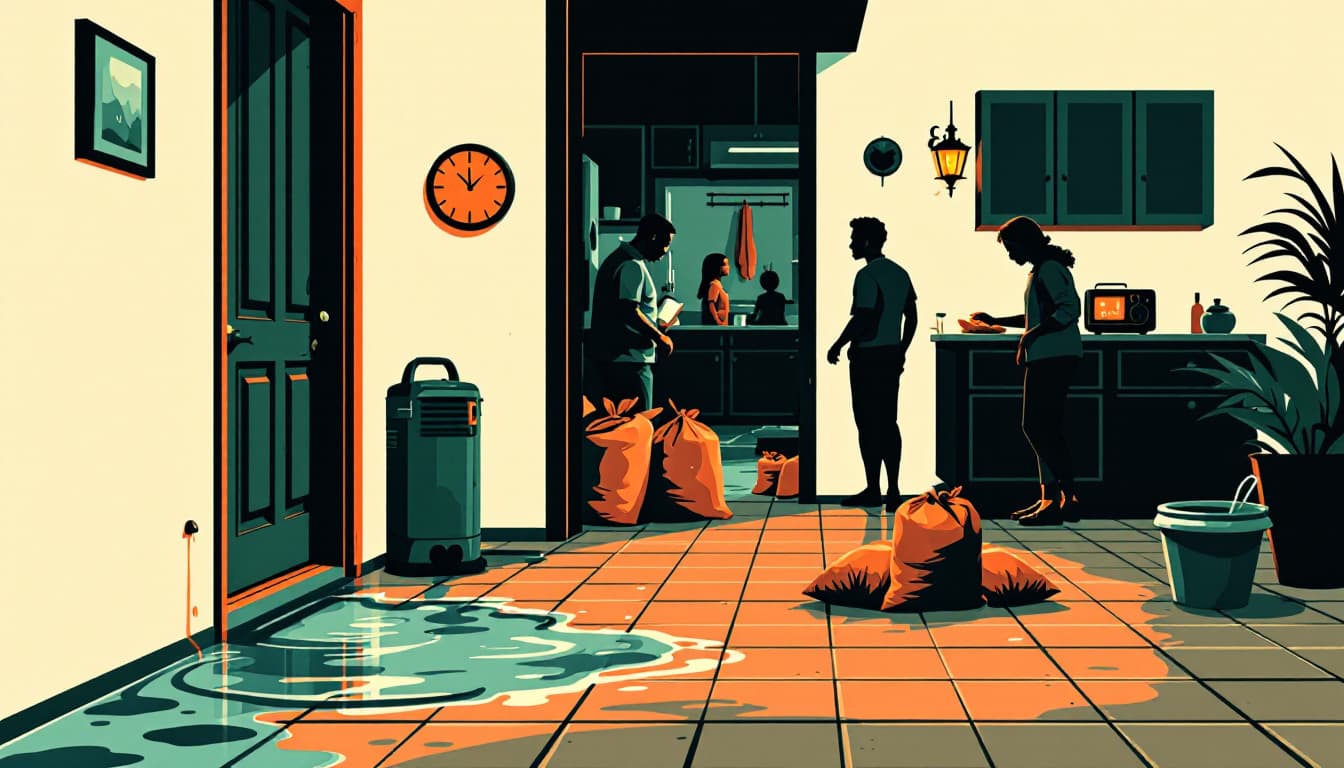
The other exposure is power. Extended wet weather in Florida means extended lightning exposure, transformer trips, and extended outages — often measured in hours rather than days, but enough to spoil a refrigerator and disable a sump pump at exactly the wrong moment.
What we'd actually do
Check your specific address on the SFWMD basin map, not just FEMA. The South Florida Water Management District publishes basin and canal maps that show how your neighborhood drains. FEMA flood zone ratings tell you about storm surge and riverine flood risk; they don't tell you what happens when a C-canal backs up behind your subdivision. Spend fifteen minutes on the SFWMD website this week.
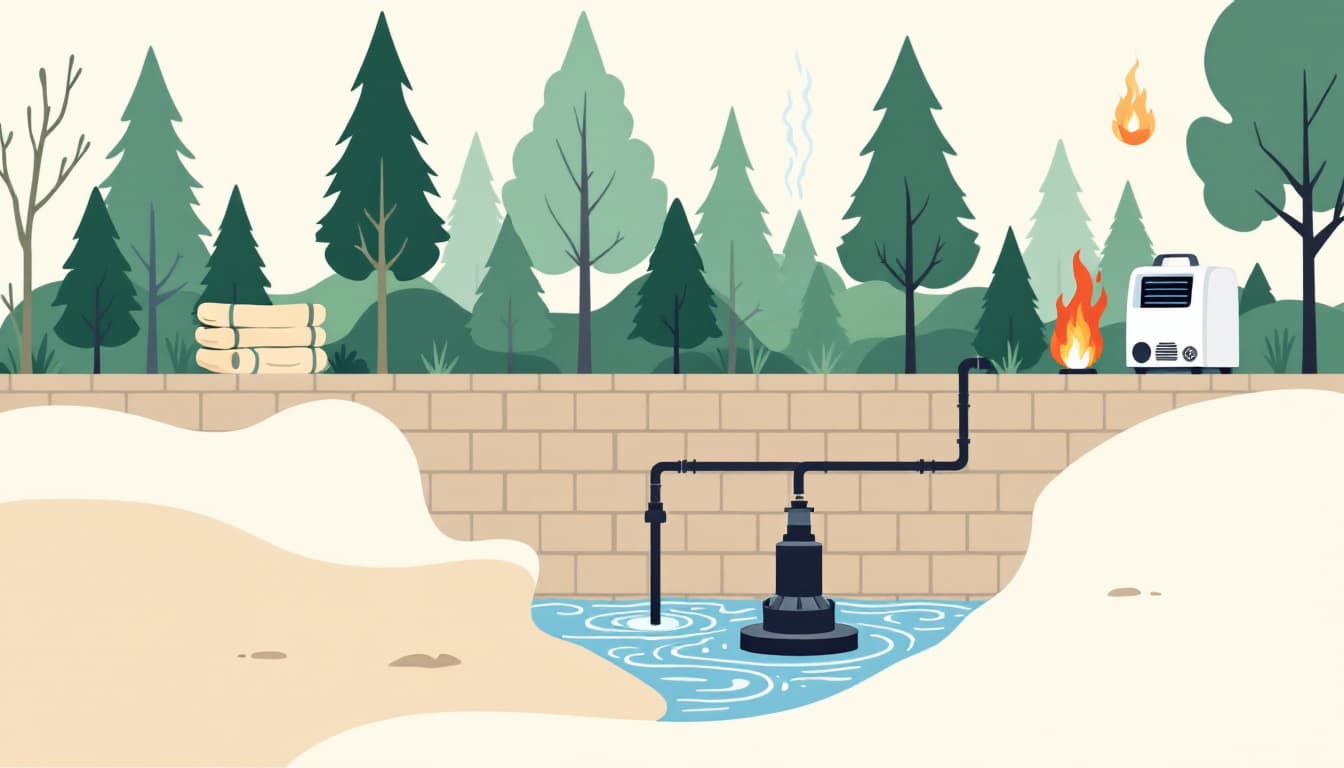
Put a $30 water alarm on your lowest interior floor. These plug-in sensors alert your phone when water contacts the sensor. Place one in the garage near the door, one near any interior HVAC air handler, and one near the water heater. They won't stop flooding, but they give you twenty minutes of warning that the garden-variety power alarm doesn't.
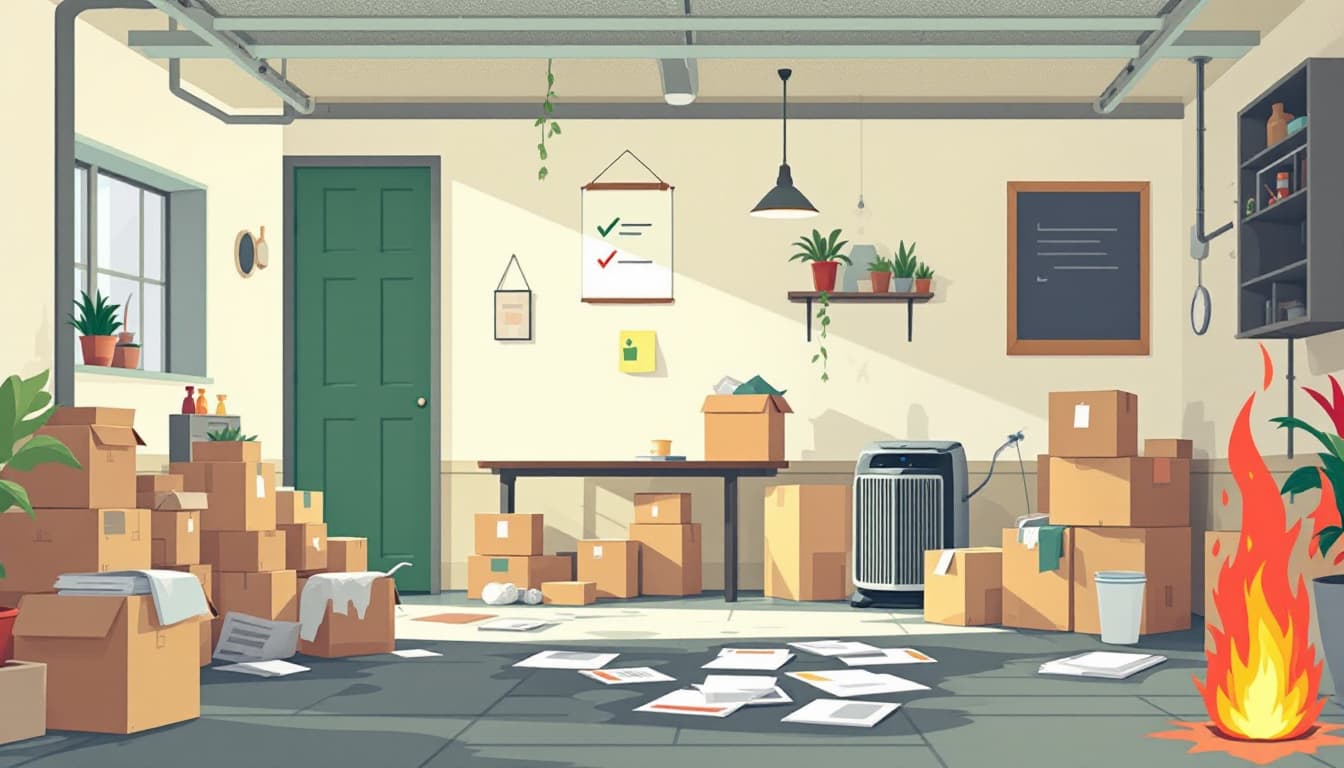
Inventory what's in floor-level storage right now. The boxes of documents, holiday gear, and photo albums sitting on a garage floor are the first casualties of a minor flood event. Move anything irreplaceable to a shelf at least eighteen inches off the ground. Paper documents go into a waterproof tote or a zip-lock bag inside a tote. This takes an afternoon and costs nothing.
Test your generator or battery backup under load, not just idle. Wet-season outages tend to cluster, and the first one reveals whether your generator starts and whether your transfer setup works. Run it for thirty minutes with real loads — the refrigerator, a window unit, the sump pump if you have one. If it stumbles, you want to know now, not during the second week of August.
Know your flood insurance policy's waiting period. Standard National Flood Insurance Program policies carry a 30-day waiting period before coverage takes effect. If you don't have flood coverage and you're watching canal levels climb, you're already past the point where buying a policy helps you this week. But if you've been meaning to add it, the time to act is a calm, dry day — not during a stalled front.
The bigger picture
South Florida gets roughly 60 inches of rain a year, the majority of it between June and October. A stalled front in early June isn't a catastrophe; it's a preview. The households that weather hurricane season with minimal drama are almost always the ones that used the quiet, pre-peak weeks to close small gaps: the unlabeled breaker panel, the generator that hadn't been run in fourteen months, the flood policy that lapsed.
Durability isn't about preparing for the worst imaginable scenario. It's about not being surprised by the entirely predictable ones.