The thermometers across the Los Angeles Basin and Inland Empire stayed manageable over the Fourth of July weekend. AOL.com reported this week that Southern California avoided the extreme heat that has defined recent summers during the holiday stretch. Residents grilled, hiked, and slept without the particular misery of a 108-degree overnight.
That's genuinely good news. It's also temporary.
What the reprieve actually tells us
A cooler holiday weekend doesn't mean the season is broken. California's heat events don't follow a calendar — they follow atmospheric patterns that historically compress into late July through September. The National Weather Service San Diego and Los Angeles forecast offices track these ridging events, and the data from recent years points consistently toward late-summer intensification rather than early relief.
The more important number is not this weekend's high temperature. It's the baseline: California's urban heat islands — particularly the San Fernando Valley, the Inland Empire, and the Central Valley — now regularly record overnight lows above 80°F during peak events. That's the figure that kills people. Heat mortality is almost entirely a nighttime problem, driven by bodies that cannot cool down between noon and 6 a.m.
A pleasant July 4th is not a signal to stop preparing. It's a signal that you have time to prepare.
What we'd actually do this week
Check whether your household has a working cooling plan that doesn't depend on a functioning grid.
Most California households lean on central air or a window unit, which is fine — until a heat event coincides with a grid stress event, which CAISO has documented happening in the same windows. Know your nearest public cooling center before you need it. Los Angeles County, San Diego County, and the Inland Empire all maintain county-level heat relief center locators that get updated each summer. Bookmark the one for your county now, not on the first 110-degree afternoon.
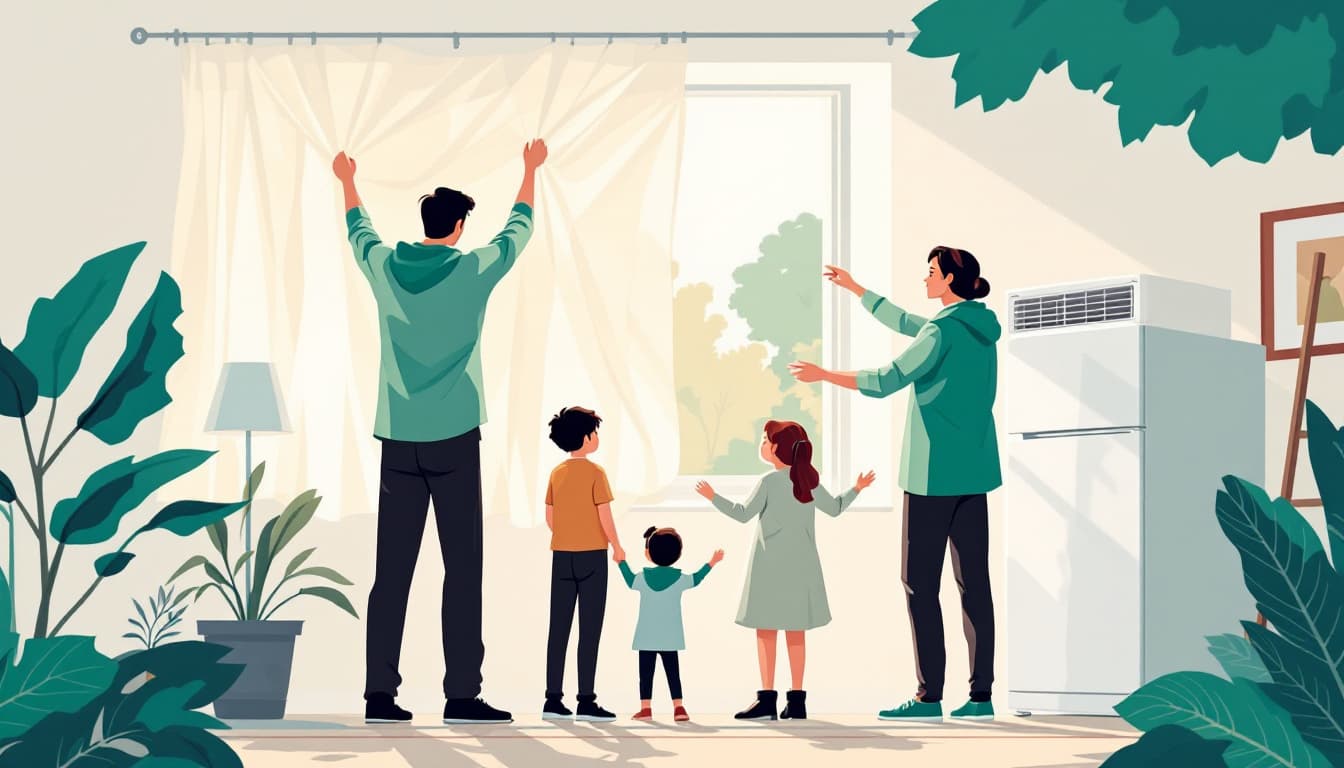
Audit your window coverings today, while the house is cool enough to move around comfortably.
Reflective window film or exterior solar shades on west- and south-facing windows can cut indoor temperature meaningfully without any electrical draw. These run $20–60 per window at most hardware stores. The installation is a two-person, 30-minute job. It's miserable to do when it's already 95 degrees inside. Do it this week.
Build a 72-hour water buffer that accounts for heat-specific consumption.
Standard emergency water guidance (roughly one gallon per person per day) was calibrated for shelter-in-place scenarios, not high-exertion heat survival. In extreme heat, that figure roughly doubles for active adults. If your household has three people, a 72-hour heat-event buffer is closer to 18 gallons than 9. Fill, date, and store food-grade containers in a shaded interior space — not the garage, which will become an oven.
Identify the one household member most vulnerable to heat stress and build a specific plan around them.
This sounds obvious. It is rarely done. Adults over 65, children under five, anyone on diuretics, beta blockers, or antipsychotics, and anyone with cardiovascular disease all have reduced thermoregulation. If that person is in your household, the plan is not "we'll drive somewhere cool." The plan is: at what temperature threshold does this person leave the house, go where specifically, with whom, and how will you communicate if cell service degrades during a grid event?
Test your battery backup or generator now, not in August.
If you own a portable power station or a generator, run it under load today. Check that your window unit or box fan actually draws within its rated capacity. Replace the battery or fuel that has been sitting since last year. A unit that fails its first test in a heat emergency is a unit that failed its owner.
The bigger picture
Southern California's heat pattern is not a gear problem or a doom-prepper scenario. It's a logistics problem with a known annual window. The households that struggle in heat emergencies are not the ones that failed to buy expensive equipment — they're the ones that assumed a comfortable spring meant an easy summer.
Durability means staying functional when conditions shift. A cool Fourth of July weekend is one of the better opportunities this season to close the gaps that a brutal August will otherwise expose.