In the Texas Hill Country this spring, rivers that ran bone-dry in April were sending rescue teams into floodwaters by May. That is not a contradiction. It is the pattern — and a PR Newswire report this week lays out why it is accelerating.
The report points to three overlapping crises converging on Texas: drought conditions that have persisted across large portions of the state, flash flood events of growing intensity, and a heat season that is arriving earlier and running hotter than historical averages. Each one alone is manageable. Together, they strain the same infrastructure simultaneously.
What is actually changing
The phrase "drought and flood" used to describe a pendulum — bad years alternated. What Texas is seeing now is more like a drum machine: rapid, repeated swings between moisture extremes within the same season. Soil that has been baked hard during drought sheds water instead of absorbing it, which is why a one-inch rainfall event on parched West Texas or Central Texas ground can flash-flood a wash that was dry the week before.
For households, this creates a specific problem: the tools you need for drought and the tools you need for flooding are different, and the window between those two conditions is shrinking.
Heat is the third leg. The Electric Reliability Council of Texas (ERCOT) manages power for about 90 percent of the state's load, and heat-driven demand spikes remain its most acute stress point. Recent summers have produced rolling conservation appeals. There is no guarantee of a grid failure, but there is also no guarantee of uninterrupted power when afternoon highs run above 105°F for extended stretches across the I-35 corridor and beyond.
These three conditions — drought, flash flooding, and peak heat — do not require a catastrophe to disrupt a household. They require only that two of them arrive at once, which is increasingly the baseline.
What we would actually do
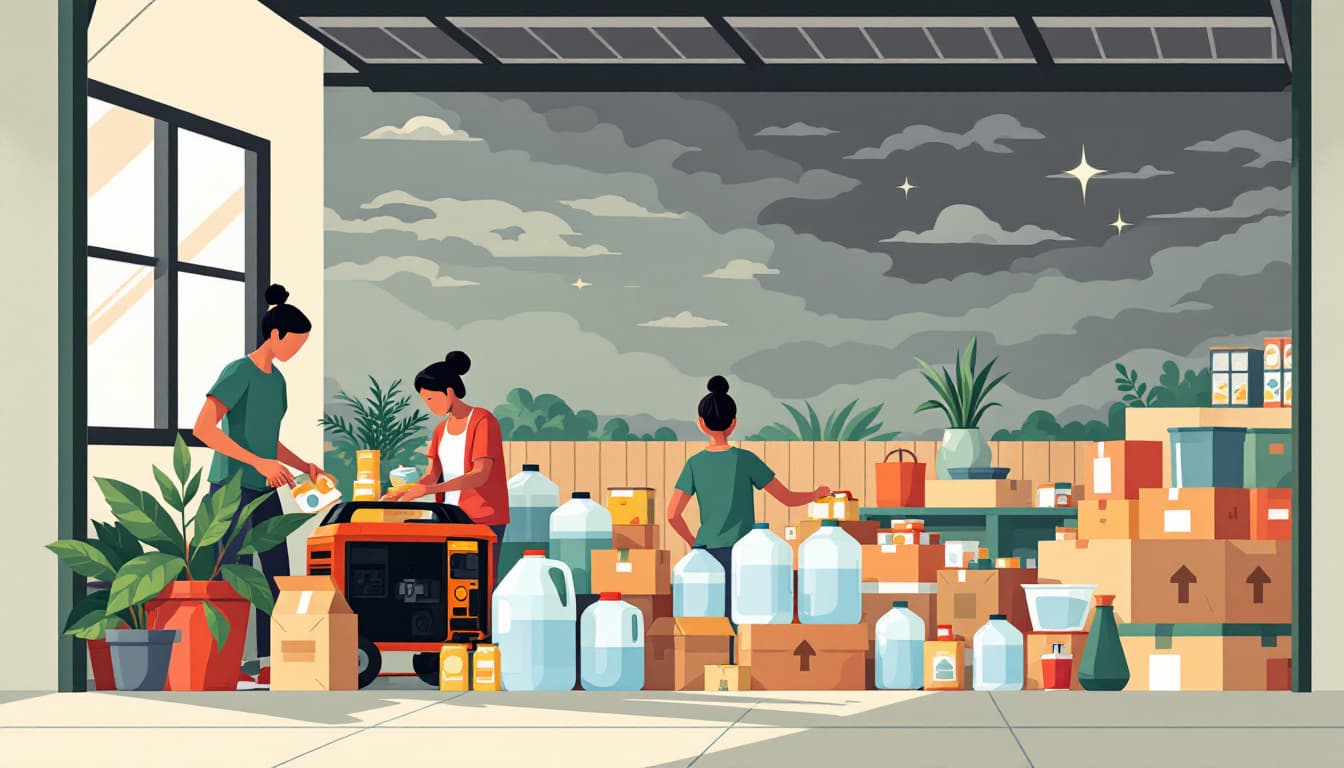
Store more water than you think you need, and store it now. Texas drought conditions can degrade municipal water quality and pressure before they produce outright shortages. The standard guidance of one gallon per person per day is a floor, not a target. For a family of four in a Texas summer — where sweat loss is real, cooling requires water, and pets need water too — two to three gallons per person per day is more honest. Filling a few food-grade five-gallon jugs and rotating them every six months costs under $30 and takes an afternoon.
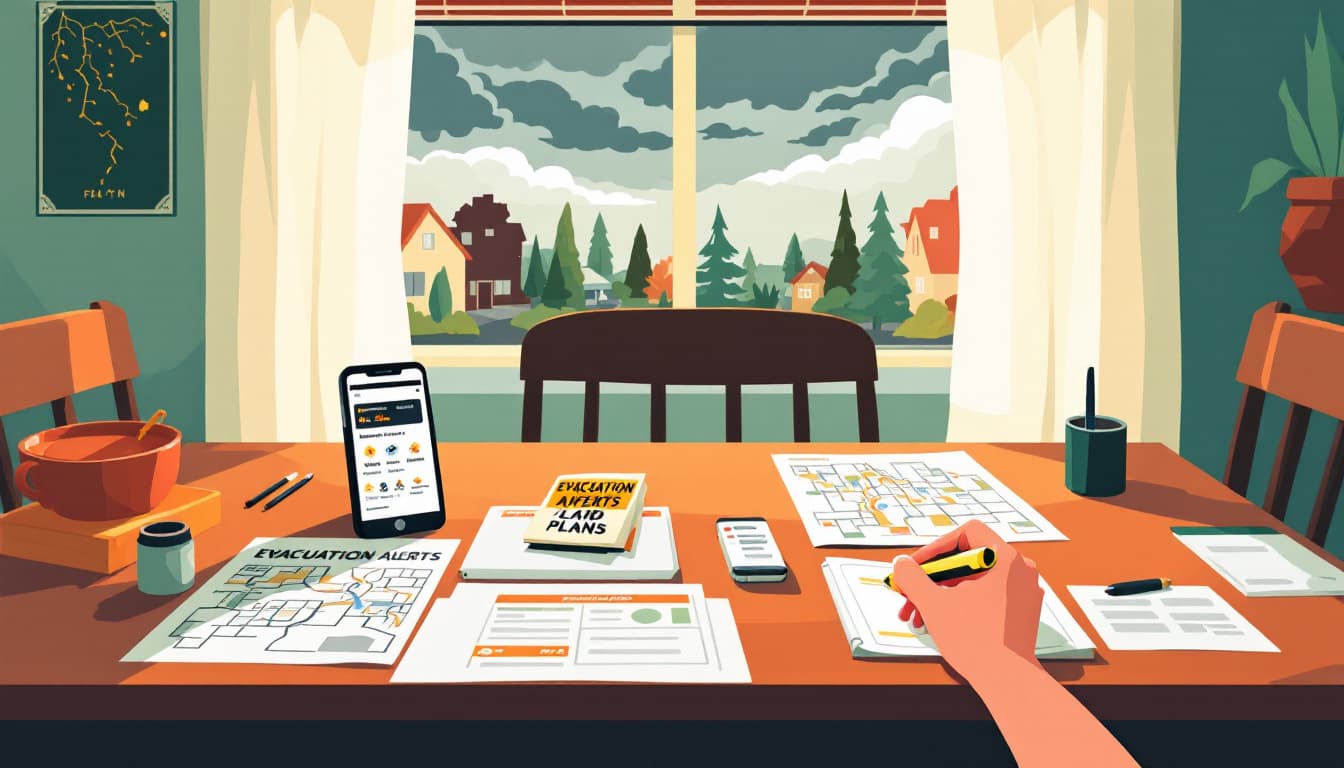
Map your flood risk before the next rain event, not during it. FEMA's Flood Map Service Center (msc.fema.gov) lets you enter your Texas address and see whether you are in a designated flood zone. Equally useful: the Harris County Flood Warning System and the Texas Water Development Board's flood planning tools cover more local geography than national maps. If your address is near a creek, a low-water crossing, or any drainage easement, note the evacuation route now. Low-water crossings kill people every year in Central Texas. The sign that says "Turn Around, Don't Drown" is not decorative.
Treat your home's cooling capacity as infrastructure, not comfort. An $18 indoor-outdoor thermometer tells you what temperature your home reaches when the power is uncertain — most Texas households do not know this number. If your house reaches 95°F indoors within three hours of losing AC on a 105°F day (a reasonable estimate for an older, poorly insulated home), you have a medical emergency timeline, not just a discomfort problem. Identify your nearest cooling center now through your county's emergency management office before you need it.
Build a 72-hour water and food buffer designed for heat, not just scarcity. Pantry staples that require boiling water or generate oven heat are wrong for a Texas grid outage in July. Shelf-stable foods that are ready-to-eat or need only cold water — oats, peanut butter, canned goods with pull tabs — are right. Electrolyte packets cost almost nothing and matter a great deal when a family is sweating through a 90°F night.
Check your renters or homeowners policy for flood exclusions this week. Standard homeowners insurance does not cover flood damage. In Texas, that gap has cost families everything. The National Flood Insurance Program (NFIP) has a 30-day waiting period before coverage activates, which means buying it during a flood watch is too late. If you are in a mapped flood zone or even near one, a call to your insurance agent this week is the highest-leverage 15 minutes on this list.
The bigger picture
Texas has always been a weather-extreme state. What is shifting is the simultaneity — drought, heat, and flood are no longer taking turns. The households that come through these seasons intact are not the ones who panicked and bought gear. They are the ones who, in a calm June week, checked their flood map, filled their water jugs, and learned where the nearest cooling center was.
Durability is not built in emergencies. It is built right now.