A Q&A published this month by the Texas Water Resources Institute with NOAA drought specialist Joel Lisonbee puts a sharper point on what Texas households should already be sensing: the state is heading into summer with significant drought conditions in place and no strong signal that relief is coming soon.
That's not a prediction of catastrophe. It is a planning signal, and most Texas families aren't acting on it yet.
What's actually changing
Texas drought is not new. What shifts the calculus this year is where the dry conditions are concentrated and how little soil moisture buffer exists going into the hottest months. The Edwards Plateau, much of West Texas, and parts of the Hill Country are already in moderate-to-severe drought according to the U.S. Drought Monitor. When summer heat arrives on top of depleted soil and low reservoir levels, the stress compounds fast.
The Lisonbee interview, as summarized by TWRI, emphasizes that La Niña-influenced atmospheric patterns have reduced the odds of meaningful precipitation for much of the state through at least mid-summer. That's the same pattern that drove the brutal 2011 drought. We're not saying 2026 is 2011. The point is that the seasonal setup has structural similarities, and households that waited until August 2011 to think about water paid a steep price.
Municipal water systems in Texas are not about to fail. But outdoor watering restrictions, higher tiered water rates, and pressure drops during peak demand hours are all realistic near-term outcomes in many Texas cities and suburban districts. Rural households on private wells face a harder constraint: the water table doesn't negotiate.
What we'd actually do
Check your municipality's current drought stage and watering schedule now, before restrictions tighten. Most Texas water utilities — from San Antonio Water System to smaller MUDs in the DFW suburbs — publish drought contingency plans with specific Stage 1, 2, and 3 restrictions online. Find yours, read it, and adjust your irrigation controller before you get a violation notice. Watering at 2 p.m. in July is both wasteful and, in many districts, already prohibited during drought stages.
Audit your household water use by category, not just total gallons. Pull your last three water bills and look for the month-over-month jump between April and June — that spike is almost entirely outdoor irrigation. In Texas, outdoor use can account for 50 to 60 percent of summer household consumption according to TWRI's own published research. A simple audit of drip lines, sprinkler heads, and irrigation schedules often reveals 20 to 30 percent savings with zero lifestyle change.
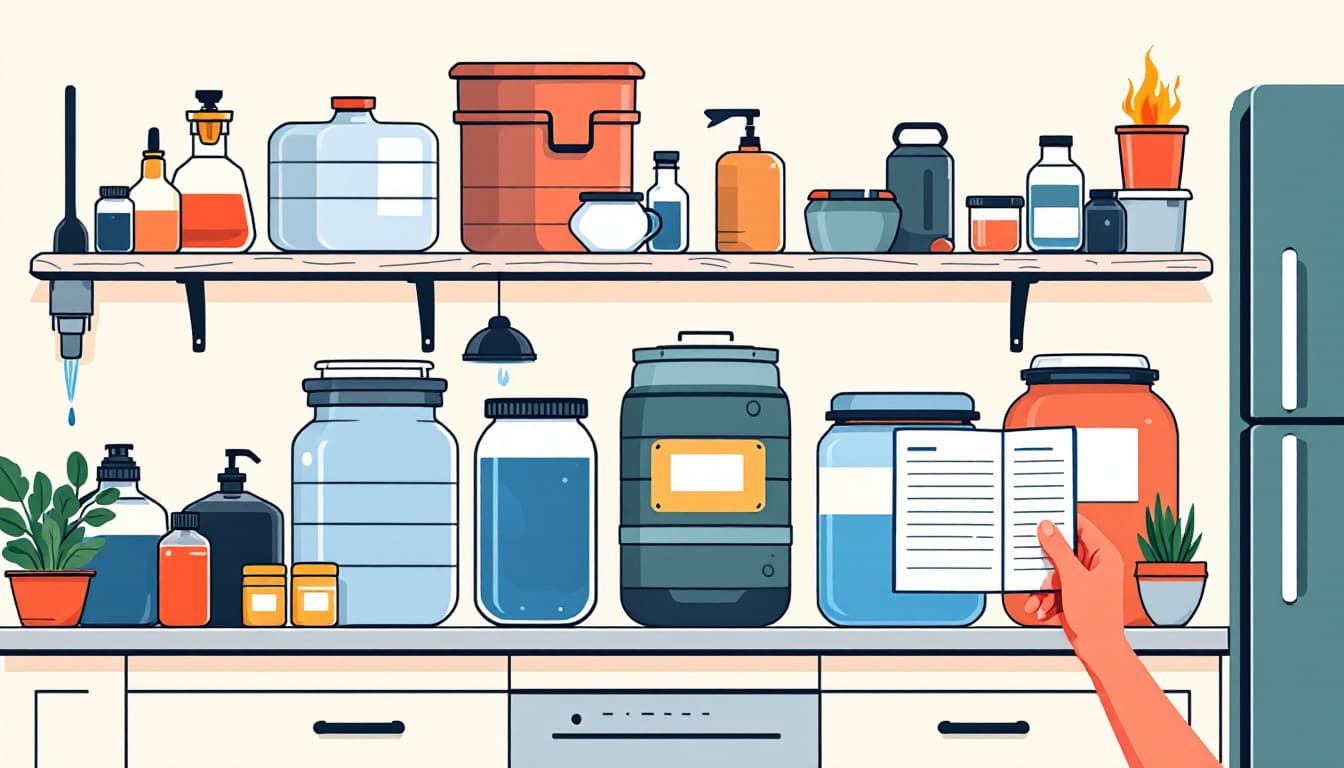
Store a two-week supply of drinking water if you're on a private well or in a rural area. This is the one action rural Texas households consistently skip. A standard recommendation is one gallon per person per day. For a family of four, two weeks is 56 gallons — about four to five food-grade 5-gallon containers stored in a cool, shaded spot. This isn't about grid collapse; it's about the realistic scenario where a well pump fails, a rural water co-op issues a boil notice, or a drought-related pressure drop makes your tap unreliable for a few days.
Plant one drought-tolerant replacement this season for whatever died last summer. Texas A&M AgriLife Extension publishes a free list of regionally adapted, drought-tolerant plants by ecoregion. Cenizo, native grasses, and most salvias can survive on rainfall alone once established. Every square foot of your yard that doesn't need irrigation is a hedge against both water bills and restrictions.
Talk to your neighbors who are on the same water system or co-op. Collective water use patterns matter. In many smaller Texas water districts, one or two heavy irrigators during peak hours can cause pressure drops that affect the whole street. This isn't about policing your neighbors — it's about knowing your system's vulnerabilities and whether your district has a leak reporting line worth using.
The bigger picture
Texas has lived with drought cycles for as long as it's been settled. The families that come through them without serious disruption are not the ones with the biggest water tanks — they're the ones who adapted their habits before the restrictions hit, who knew their system, and who didn't wait for a crisis to start paying attention.
Durability doesn't require a bunker. It requires a few hours of attention applied at the right moment. This is that moment.