A Wego Travel Blog report this week flagged what Texans already feel stepping outside: a 2026 heat wave is driving sustained triple-digit temperatures across the state, and the question hanging over every household is the same one it was in February 2021 — how long will the lights stay on.
The short answer is: probably fine, but "probably fine" is not a plan.
What's actually changing on the grid
ERCOT, the Electric Reliability Council of Texas, manages roughly 90 percent of the state's electricity. It is an islanded grid — it does not freely import power from neighboring states the way the Eastern or Western Interconnections can. When Texas demand spikes, Texas has to cover it from Texas generation.
Peak demand during a major heat event can push into the 80,000–85,000 megawatt range. ERCOT has added significant solar and battery storage capacity since 2021, but solar output peaks in the afternoon and drops precisely when residual demand stays high into the evening. The grid is most stressed between roughly 4 p.m. and 9 p.m. on the hottest days, not at noon.
Voluntary conservation notices — the ones that ask you to raise your thermostat and avoid running major appliances — are ERCOT's first lever. They are not a sign of imminent blackout. But they are a signal that reserve margin is thin, and thin margins can become rolling outages if a large generator trips unexpectedly.
The households most vulnerable are those running on municipal electric co-ops or smaller utilities that rely heavily on purchased ERCOT market power. If you are in unincorporated areas of the Hill Country, East Texas, or along the Coastal Bend, your utility's dispatch situation is different from CPS Energy in San Antonio or Oncor in DFW. It is worth a five-minute call to your co-op to ask about their load-shedding protocol.
What we'd actually do
Sign up for ERCOT and your utility's conservation alerts right now, today. Go to your utility's website and opt into text alerts. ERCOT posts conservation notices at ercot.com, but your utility translates that into action — you want both signals. Knowing a notice is active at 3 p.m. gives you two hours to pre-cool your house before the evening crunch.
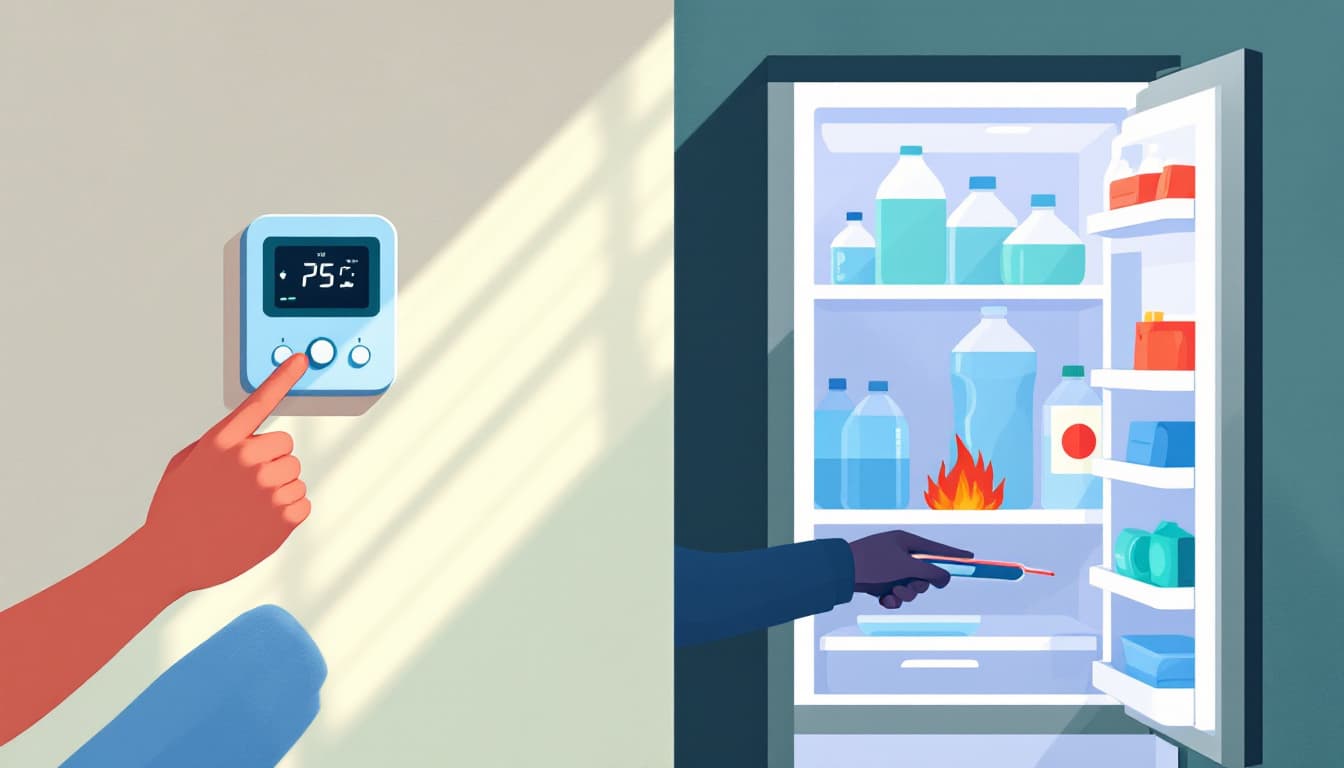
Pre-cool aggressively during off-peak windows. Set your thermostat to 72–74°F between 6 a.m. and 2 p.m. on extreme heat days. A well-insulated house holds that temperature buffer for two to three hours after you raise the setpoint to 78–80°F during peak hours. This is free. It costs nothing beyond intention. Thermal mass — tile floors, brick walls, a full refrigerator — helps hold cold. If your house is poorly insulated (common in older Houston or San Antonio homes built before modern energy codes), thick curtains on west-facing windows make a real difference from about 1 p.m. onward.
Identify one cool refuge outside your home. Libraries, HEB grocery stores, large chain pharmacies, and most community centers in Texas run serious commercial HVAC. Know the two closest ones, their hours on weekends and holidays, and whether they have parking. This matters most for households with elderly relatives, infants, or anyone with heat-sensitive medications that require refrigeration. A two-hour afternoon visit during a conservation alert is not paranoid; it is sensible load management for your body.
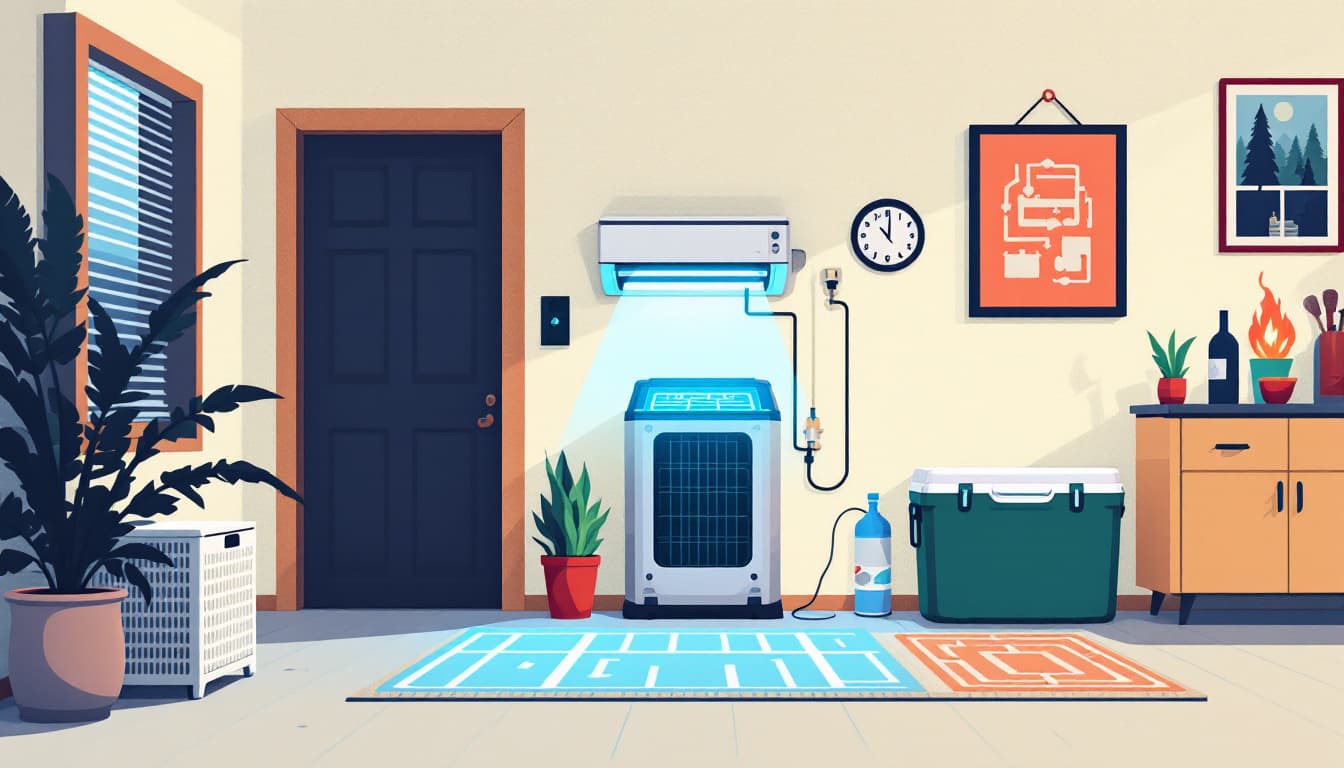
Audit your generator or battery backup situation honestly. A small 2,000-watt generator will not run a central AC unit (typical draw: 3,000–5,000 watts). It will run a window unit (500–1,500 watts), a refrigerator, phone charging, and a fan — enough to maintain a single safe room. If you don't have a generator, a quality rechargeable power station in the 1,000–2,000 Wh range (charged during off-peak overnight hours) can run a small window AC for two to four hours. Prices have come down. This is worth a realistic look at your household budget.
Check on neighbors proactively, not reactively. The 2021 winter storm and prior Texas heat events consistently show that excess deaths cluster among people who live alone and are not found for days. A ten-minute welfare check on elderly or isolated neighbors during a conservation alert costs nothing. Build that habit now, in July, before a genuine emergency makes coordination harder.
The bigger picture
Texas will have more summers like this one. The grid is genuinely better than it was in 2021 — more generation capacity, new battery storage, weatherization requirements that have pushed some improvements through — but it is still an islanded system operating at thin margins on peak days. Your household's job is not to solve the grid; it is to reduce your own exposure to a four-to-eight-hour outage on the hottest day of the year. That is a very solvable problem, and it does not require expensive equipment or panic purchases.
Durability is the goal. Staying comfortable, safe, and functional through a difficult week in July is entirely within reach for most Texas families.