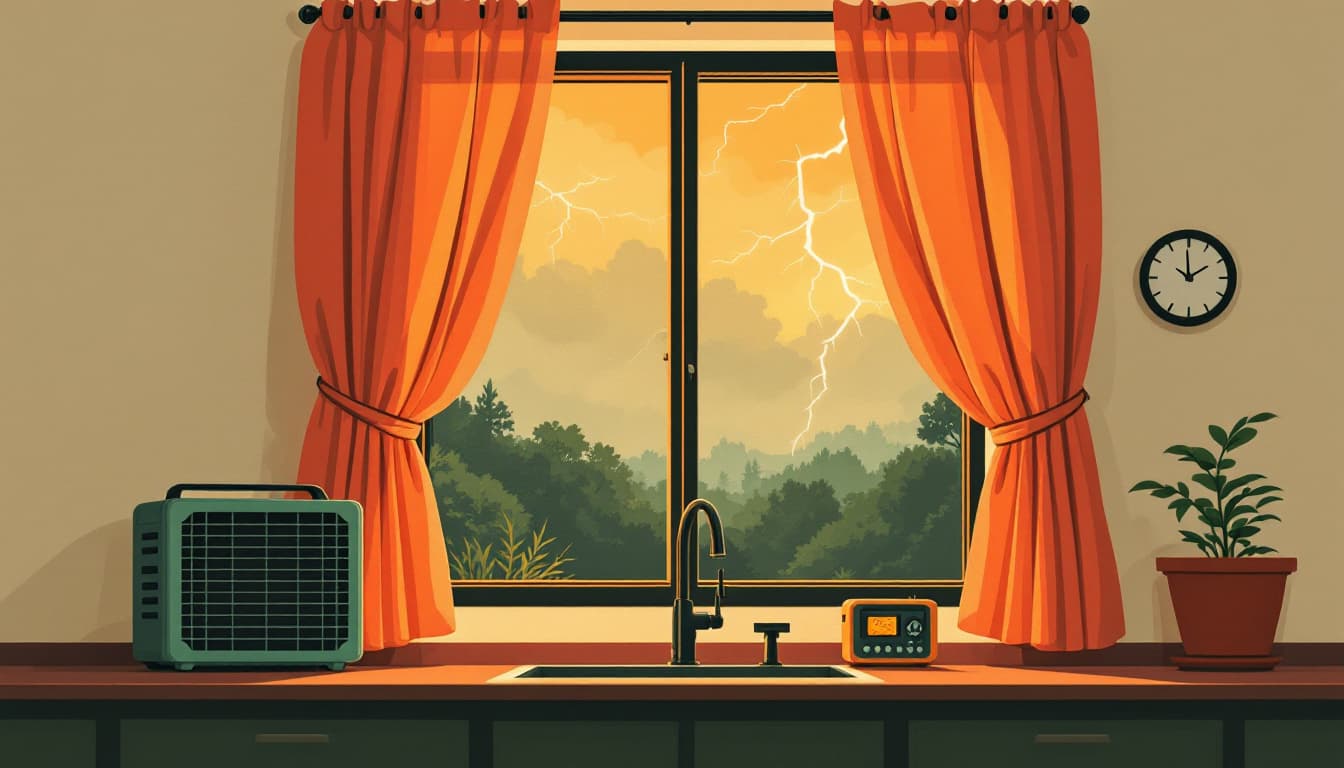
Thousands of Austin households lost power last week after severe storms rolled through Central Texas. Austin American-Statesman reported that Austin Energy restored most of those outages within a day or two — which sounds like a success story, until you remember that "a day or two without power" in early June in Austin means indoor temperatures above 90°F, spoiled refrigerators, and real heat-illness risk for the elderly and young children.
This will happen again. Texas gets roughly 50 to 60 named significant storm events annually across its major metros, and Central Texas sits in a corridor where fast-moving thunderstorms and straight-line wind events are routine from May through September. The question isn't whether your neighborhood loses power this summer. It's whether you're ready for a 48-hour outage when it does.
What's actually changing
ERCOT, the grid operator for most of Texas, has added generation capacity and weatherization since the February 2021 failure — but the grid's vulnerability to localized distribution damage from wind and debris hasn't changed much. Transmission lines still go down when trees fall on them. Neighborhood substations still flood. The "last mile" of the grid — the wires from the substation to your home — is largely the same infrastructure it was ten years ago.
Austin Energy serves roughly 500,000 customers. When a fast-moving squall line hits in June, simultaneous outages across multiple substations mean crews are triaged by size: the substation serving 4,000 people gets restored before the feeder line serving your block. That math is reasonable grid management. It means some households wait longer than others, with no reliable estimate of when service returns.
The heat piece is what elevates this from inconvenience to health issue. The National Weather Service regularly issues heat advisories across Central Texas from June through September, with heat indices routinely reaching 105°F or higher. Two days without AC in that environment is not just uncomfortable — it's medically serious for anyone over 65, under 5, or managing a chronic condition.
What we'd actually do
Know your household's actual heat tolerance, not a general guideline. Start here because it changes everything else. If you have a family member on heart medication, a newborn, or an elderly parent living with you, your threshold for leaving the house drops significantly — maybe to 12 hours without power rather than 48. Write that number down. Decide in advance at what indoor temperature you call a relative, check into a hotel, or drive to an Austin Public Library branch (many operate as cooling centers). The City of Austin maintains a list of official cooling centers that activates during heat emergencies; find it now, bookmark it, and put the address of the nearest one in your phone contacts.
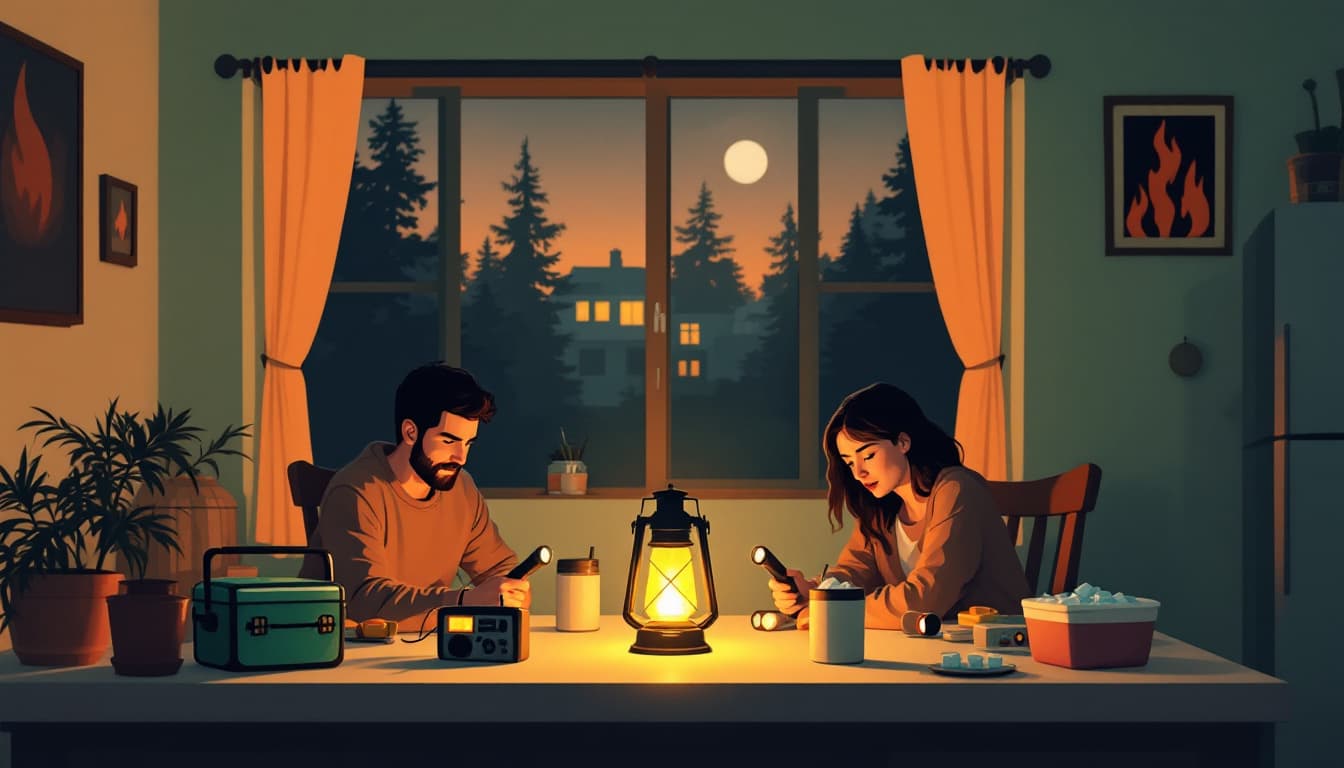
Build a 72-hour power-loss kit around the Texas summer specifically. Generic preparedness lists recommend flashlights and a hand-crank radio. Those are fine. What Central Texas summers actually demand: a battery-powered fan (not optional, a medical necessity for some), a cooler and enough ice or frozen gel packs to keep medications cold for two days, and a fully charged portable battery bank before every storm system. A 20,000 mAh battery bank costs around $30 to $40 and will charge a phone six to eight times. Buy one this week.
Freeze water now, before you need it. Fill gallon zip-lock bags or reuse plastic containers and freeze them. They do two things: they extend how long your freezer holds temperature during an outage (a full freezer holds safe temperature roughly twice as long as a half-empty one, per USDA guidance), and they give you ice for a cooler when the outage runs long. This costs nothing if you have freezer space.
Check your outdoor tree situation before July. Most Austin-area outages trace to trees contacting power lines. If you have large live oaks, cedar elms, or pecans near overhead lines, call your utility's line-clearance crew — Austin Energy does trim trees near lines at no cost to residents — or hire a certified arborist to assess hazard limbs. One removed limb can prevent a three-day outage for your block.
Sign up for Austin Energy outage alerts if you haven't already. Text and email notifications exist. They won't restore your power faster, but knowing that your outage is logged, has an estimated restoration time, and is actively being worked changes the psychological math considerably. It also tells you early if the estimate is "unknown," which is your cue to execute your cooling plan rather than wait it out.
The bigger picture
Texas summers aren't getting easier to navigate without power. The right response isn't a generator you bought in a panic (though if you want one, get a CO-rated unit and read the placement rules first). It's a household that has already thought through the 48-hour scenario, knows its medical constraints, has a destination if staying home becomes unsafe, and has spent maybe $50 on gear that actually addresses the specific threat. That's durability. That's the goal.