Picture a shelf at a big-box hardware store sometime in the last decade. Shrink-wrapped on a pallet near the generator displays: a red nylon bag with a bold label reading 72-HOUR EMERGENCY KIT. Three days of food bars tasting faintly of coconut. A mylar blanket. A whistle. A small flashlight with batteries that may or may not still hold a charge.
That bag has become the atomic unit of American preparedness culture — and it's probably the wrong one.
Where the 72-hour number came from
The three-day window traces back to guidance FEMA codified in the 1980s and early 1990s, built around a reasonable assumption: in a regional emergency, professional responders would reach affected households within roughly 72 hours. The number was never meant to describe how long disruptions actually last. It described an expected government response interval.
Those are two different things, and conflating them has quietly distorted how millions of households think about risk.
What disruptions actually look like
Household-level disruptions — the kind that actually happen to middle-class families — tend to cluster at two very different durations. There's the short disruption: a power outage lasting four to eighteen hours, a water-main break fixed by the next morning, a road closure during a snowstorm that clears before work on Monday. And then there's the medium disruption: a week-plus without power after a significant storm, a two-week stretch of supply uncertainty during a regional event, a household illness that sidelines the primary earner for ten days.
The 72-hour kit covers neither scenario particularly well. For the short disruption, it's massive overkill — most families already own a flashlight and enough food for dinner tonight. For the medium disruption, it's a significant undercount.
Utility restoration data from major storm events over the past fifteen years consistently shows that a meaningful percentage of affected households — often 10 to 20 percent, depending on the event's severity and geography — remain without power well beyond three days. Ice storms in the Southeast, derecho damage across the Midwest, hurricane landfalls along the Gulf: the tail of the restoration curve reliably extends past the 72-hour frame.
Three days prepares you for the median. It leaves you exposed to the distribution.
Why the orthodoxy persists
The 72-hour kit endures for the same reason most orthodoxies endure: it's legible, marketable, and just demanding enough to feel virtuous without requiring real behavioral change. A single bag you can buy for $35 and store in a closet is a product. A household that has genuinely thought through two weeks of water, meals, medications, and cash is a practice.
The preparedness industry — the blogs, the YouTube channels, the branded gear — has structural incentives to maintain the bag as the unit of measure. Completing the bag feels like completion. A practice has no completion event to sell against.
There's also an anxiety dynamic at play. The doom-prep end of the internet pushes the opposite error: months of freeze-dried food, underground water storage, ham radio licenses. That extreme makes the 72-hour kit feel proportionate by comparison. But "not as excessive as the bunker crowd" is a low bar for calibrating your household's actual risk exposure.
What to do this week
The reframe isn't to throw out your kit. It's to pick a second planning horizon and pressure-test it. Specifically:
1. Identify your household's most plausible medium disruption. Not a solar flare. Not a supervolcano. The weather event or infrastructure failure that your region has actually experienced in the past twenty years. For most households, that means extended power outage.
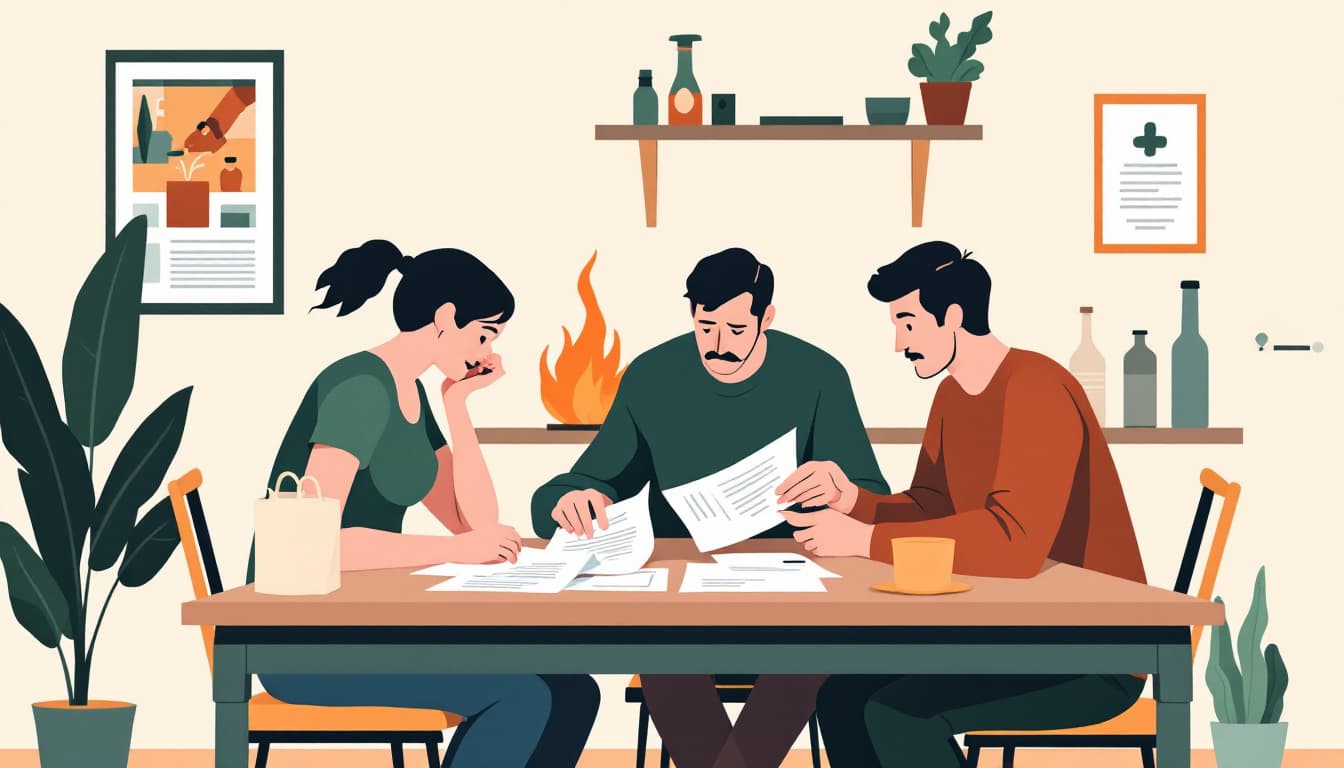
2. Run the two-week audit, not the three-day one. Open your pantry, your medicine cabinet, your freezer. If power went out tonight and stayed out for twelve days, what runs out first? Water storage is usually the fastest gap. Prescription medications are often a close second.
3. Calculate your actual water need. A gallon per person per day is the standard reference. For a family of four over two weeks, that's 56 gallons — a number that makes the two-liter bottles in your kit look like a rounding error. A 55-gallon drum and a water-bath rotation schedule is a one-afternoon project.
4. Don't fill the gap all at once. Add one extra week's worth of shelf-stable groceries over two shopping trips. That's achievable. That's the practice.
The bigger picture
The 72-hour kit was a reasonable public-health communication shortcut for a different era of media and household complexity. It got people to do something, and something beats nothing. But it also created a generation of households that believe they've solved a problem they've only partially addressed.
The goal of preparedness isn't to own the right bag. It's to correctly understand your household's exposure to likely disruptions and reduce it proportionally. That framing doesn't fit on shrink-wrap. It fits in the way you shop, the way you store, and the way you think about the tail of the distribution — not just its median.
Three days is where preparedness starts. Two weeks is where it gets real.