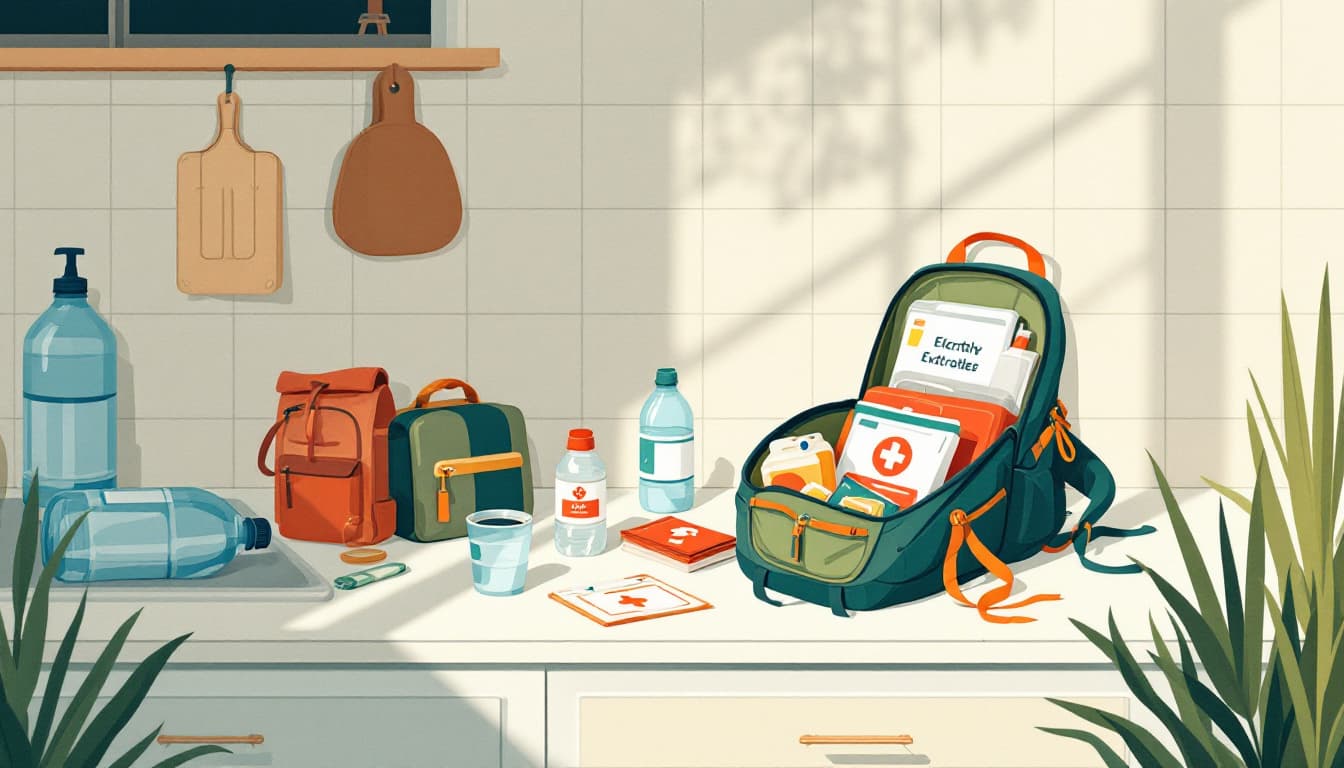
Walk into any preparedness retailer — physical or virtual — and the first thing you see is bags. Chest-rigged, MOLLE-paneled, color-coordinated bags stuffed with fire starters, water purification tablets, and emergency mylar blankets. The go-bag is the mascot of the preparedness world. Forums compare them obsessively. YouTube channels dedicate hours to "what's in my bag" walk-throughs. First-time preppers, looking for a place to start, are almost universally pointed toward building one.
It is also, for most families in most situations, the wrong place to start.
That's not a contrarian pose. It follows directly from looking at when and why people actually leave their homes in emergencies.
The departure scenario is rarer than the industry implies
The archetype driving go-bag culture is a sudden, catastrophic event — wildfire, civil unrest, a fast-moving flood — where you have 15 minutes to get out the door and you are not coming back for days. This scenario exists. Wildfire evacuations in the western United States make it real and annual for hundreds of thousands of people.
But look at the full landscape of emergencies that affect American households in any given year, and departure is actually a minority event. The much larger category — winter storms, extended power outages, illness, job loss, short-term supply disruptions — keeps you exactly where you are. You shelter in. You wait it out. You need your home to be the resilient thing, not your escape kit.
FEMA data on disaster declarations and Red Cross shelter registrations consistently show that the most common household disruptions are resolved in place. Even in declared disasters, most affected residents shelter at home or with nearby family — not in organized evacuation routes carrying a 72-hour pack.
The preparedness industry doesn't tell you this because a well-stocked pantry, a deeper medication supply, and a reliable water storage plan are not photogenic. They don't ship in one box. They don't have MOLLE attachment points.
What most families actually need first
The framework we'd offer is simple: before you optimize for leaving, make staying survivable.
That means, in rough priority order:
Food depth. Not a freeze-dried mountain for the apocalypse — a genuine two-to-four week buffer of food your family already eats, rotated through your normal shopping cycle. This is the single highest-return preparedness investment for disruptions that actually happen (job loss, illness, supply hiccup, regional storm).
Water storage and treatment. Even modest urban disruptions can compromise municipal water for days. Storing and treating water at home serves you in power outages, pipe failures, and boil notices — which are dramatically more common than scenarios requiring evacuation to a wilderness water source.
Medication continuity. A 30-day buffer on maintenance medications is more protective for most families than any gear purchase. Pharmacies close. Supply chains stall. This is an underappreciated gap.
Financial resilience. The most statistically likely "emergency" is economic. A liquid household buffer — three months of core expenses — does more protective work than almost any physical prep.
A go-bag has a role in a mature preparedness plan. But it belongs after the above, not before.
Why the orthodoxy persists
Part of it is psychological. A bag feels like a plan in a way that a well-organized pantry doesn't. It's concrete, portable, visible. You can zip it closed and feel ready. Incrementally stocking a freezer and rotating canned goods is slower, less satisfying, and harder to photograph.
Part of it is commercial. Go-bags and their contents — tools, water pouches, fire starters, survival knives — are individually priced, easily marketed, and shipped with satisfying speed. "Build your pantry depth slowly over six weeks" is not a landing page that converts.
And part of it is preparedness culture's romance with worst-case scenarios. The SHTF framing that dominates the genre elevates the one scenario — total social breakdown, mass displacement — where your bag genuinely matters above all else. Designing for that outlier crowds out thinking about the much more probable, much more manageable disruptions that actually affect families.
What to do this week
- Walk your kitchen and do a rough count: how many days of full meals can you prepare without a grocery run? Be honest.
- Check your most critical maintenance medications. How many days of supply do you have on hand? Call your doctor or pharmacy this week about getting to 30.
- Look at your water storage situation. One gallon per person per day is the floor; two weeks of that is a reasonable target. Start with what fits your space.
- If you already have the above in decent shape, then look at your go-bag.
The bigger picture
Preparedness is not about surviving the apocalypse. For the vast majority of families, it's about absorbing the disruptions that actually arrive — economic shocks, regional disasters, health crises, short-term supply failures. The family that can weather four weeks of difficulty without leaving their kitchen is more genuinely prepared than the family that has a beautiful bag in the closet and four days of food in the pantry.
Build the house resilient first. Then, if you want, pack a bag.