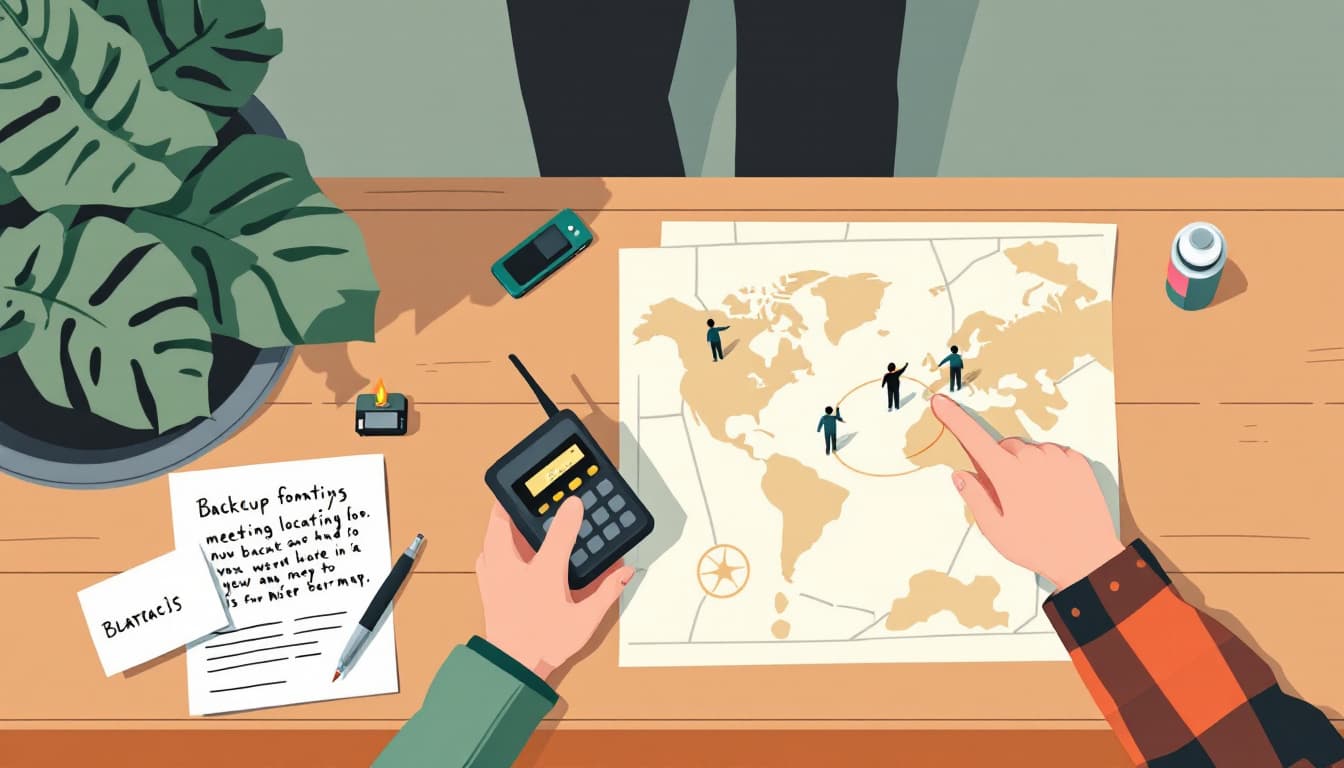
On the morning after a major earthquake in the Pacific Northwest — any major earthquake, pick a decade — the first thing most families discover is that they cannot reach each other. Cell networks jam within minutes. Texts queue and fail. The kids are at school, a spouse is at the office across town, and the plan, if there was one, was roughly: we'll figure it out.
The supplies are in the garage. The communication plan is nowhere.
This is the pattern we keep circling back to this week: household preparedness has become almost entirely supply-focused. People know their water storage number. They've read the 72-hour kit guides. They've thought about food. But the connective tissue — how the people in the household actually find each other and share information when normal channels are gone — is treated as an afterthought, or not treated at all.
Why communication degrades faster than supplies
Physical supplies fail slowly. A water jug lasts years. A communication gap fails in minutes.
When a significant disruption hits — a severe storm, a grid outage, a localized emergency — cell networks don't just get slow. They get deliberately deprioritized and in some cases deliberately restricted to keep bandwidth open for emergency services. This is documented practice, not speculation. A family that has never discussed where to meet, who calls whom, or what the fallback is when calls don't connect has effectively no communication plan at all, regardless of how many flashlights are in the closet.
The problem compounds across households. Grandparents don't know what school the grandchildren are at. A college student three hours away doesn't know whether to drive home or stay put. A spouse at work doesn't know if the other parent already picked up the kids.
These gaps don't resolve themselves in a crisis. They create secondary emergencies.
What makes this counterintuitive
Supplies feel like preparedness because they're tangible. You can see the cans on the shelf, feel the weight of the water container. A communication plan is a conversation, maybe a laminated card, maybe a practiced drill. It feels too simple to count.
But after-action reporting from real emergency responses — the kind FEMA and state emergency management agencies publish — consistently identifies communication breakdown as a primary driver of household-level failures in the first 48 hours. Not lack of supplies. Not lack of gear. The inability to find family members and establish shared situational awareness.
The other reason people skip it: it requires actually talking to your family about a scenario no one wants to imagine. Supply shopping is something you can do alone on a Saturday. A communication plan requires a conversation that might feel dramatic or alarmist. It's easier to buy another headlamp.
What to do this week
These are not complicated. That's the point.
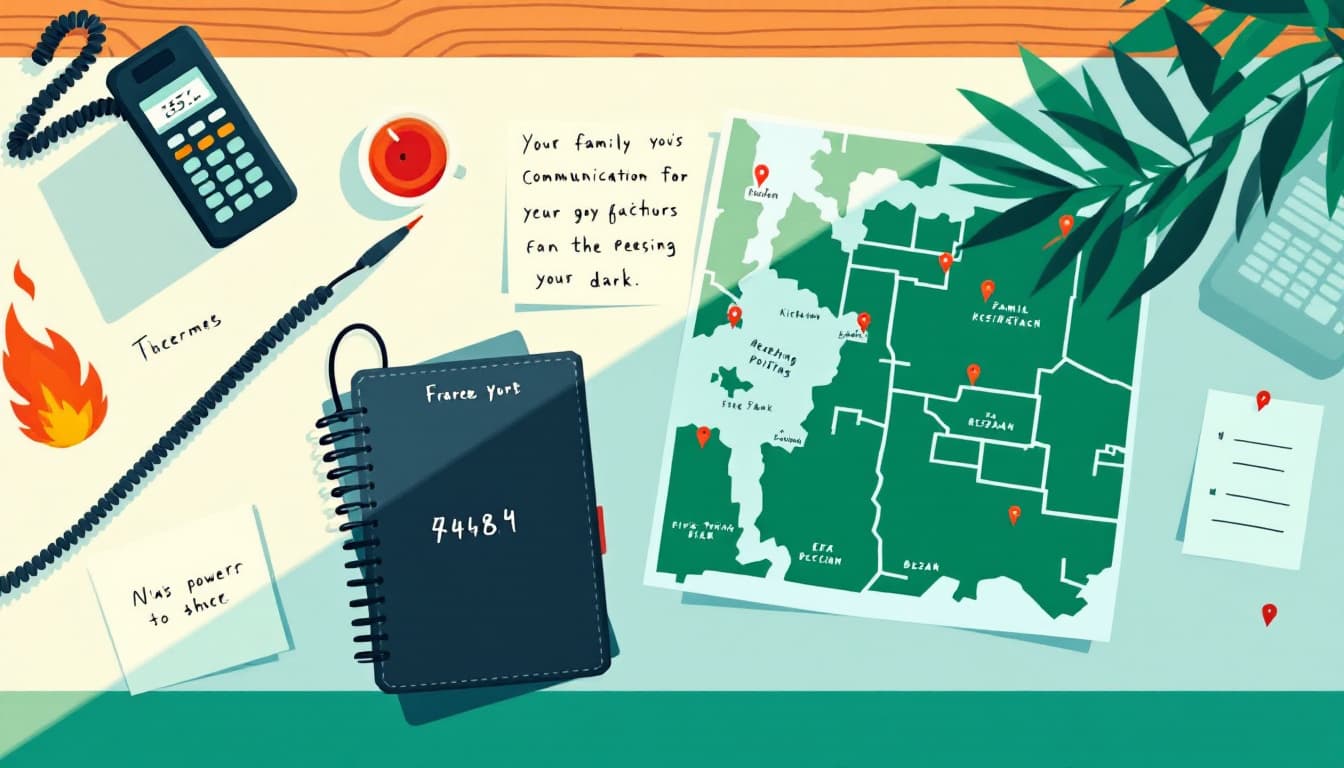
Designate an out-of-area contact. Someone in a different region — a relative, a close friend — who can serve as a message relay. Local lines jam; long-distance calls often connect when local ones don't. Everyone in the household should have this number memorized or written down, not just stored in a phone.
Write down a meet-up protocol. Two locations: one near home (the front of the school, a neighbor's house), one farther away if the neighborhood is inaccessible. Write it down. Put it in wallets, backpacks, and car gloveboxes. A plan that lives only in someone's head is not a plan.
Decide in advance: shelter or travel? The single most paralyzing question in a disruption is whether to stay or go find the other people. Make a decision rule before you need it. For example: If schools are closed and we can't reach each other, the parent who is closest to the school goes there. Everyone else shelters at home until 6 p.m., then goes to Location B.
Get a battery or hand-crank radio. Not for entertainment. For the one-way broadcast that still works when everything else doesn't. Local emergency broadcasts on AM and NOAA weather radio are often the only reliable information source in the first hours of a regional event.
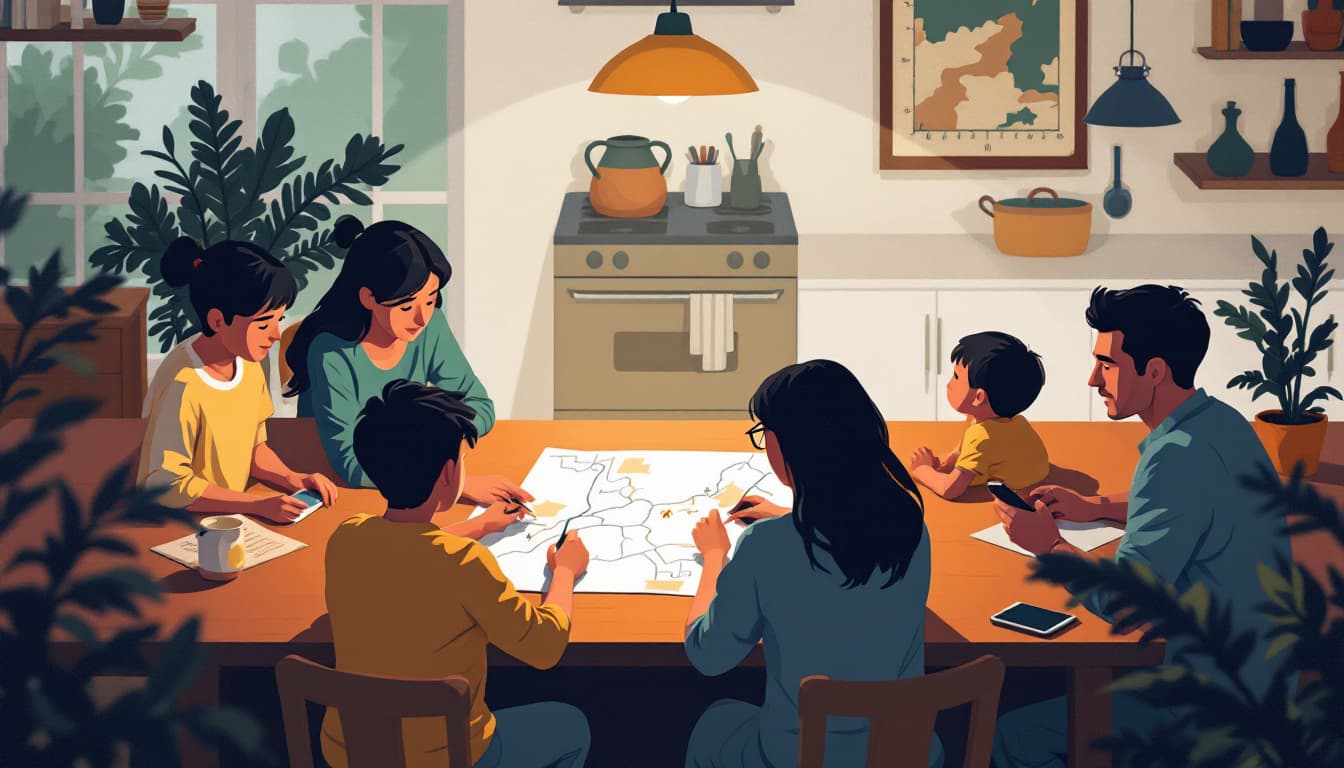
Practice once a year. Not a full drill. A ten-minute conversation at the dinner table where you walk through the scenario. Who calls whom first? What if your phone is dead? Where do we meet if the road is blocked?
The bigger picture
Every household is a small system with moving parts that scatter during normal life and need to reconverge during an emergency. Supplies support the body. Communication supports the system. A well-stocked house where the family can't find each other is a preparedness plan that stops working exactly when it's needed most.
The supplies are fine. Go build the plan.