Picture a household that has done most of the work. They have a two-week food supply. A hand-crank radio. Cash in a fireproof box. They've thought carefully about water. And then, nine days into a regional power outage — the kind that a major ice storm or infrastructure failure can produce without anyone calling it a "disaster" — one adult realizes she has four days of her blood pressure medication left, and every pharmacy within driving distance is either closed or running on a skeleton system with no electronic prescription access.
This is not a prepper nightmare scenario. This is a supply-chain friction event. It happens at small scale every winter across the upper Midwest and the Southeast. The household was prepared for hunger and darkness. They were not prepared for the one thing that, for roughly half of American adults, is non-negotiable: a daily prescription.
The numbers are worth sitting with.
Recent data from the CDC and industry pharmacy groups consistently puts the share of American adults taking at least one prescription medication at around 50 percent. For adults over 40, that share rises sharply — closer to 70 percent. Common categories include antihypertensives, statins, thyroid medications, anticoagulants, antidepressants, and diabetes management drugs including insulin analogs.
Many of these medications have narrow therapeutic windows. Missing three days of a blood thinner like warfarin is not equivalent to missing three days of a multivitamin. Missing a week of a thyroid medication produces measurable hormonal disruption. And insulin — which requires refrigeration, has manufacturer-printed expiration dates, and is needed multiple times daily by millions of Type 1 diabetics — sits at the most acute end of the spectrum.
Now do the calendar math on a typical insurance plan. Most commercial plans allow a 30-day supply dispensed with a maximum 7-10 day early refill window. That means the household that's staying on top of things has, at any given time, somewhere between 7 and 37 days of medication on hand — with the average falling around 12 to 18 days if they refill on a normal schedule. A two-week disruption in pharmacy access doesn't hit the prepared household; it hits the average one.
Why most people underweight this.
Preparedness culture has a physical goods bias. Canned food, fuel, and water are visible, stackable, and satisfying to accumulate. Medications feel different — they're tied to healthcare systems, require prescriptions, involve insurance rules and DEA scheduling, and carry an implicit social signal that acknowledges vulnerability or chronic illness. People who would cheerfully show you their pantry will not frame a 90-day medication supply as a preparedness measure, even though it's a more acute personal risk than running out of rice.
There's also a substitution illusion. People intuitively feel that if they got into real trouble, they could just go to an ER or urgent care and get what they need. In a true continuity disruption — the kind where roads are compromised, electronic health records are offline, and clinics are triaging actual emergencies — that safety net is less reliable than assumed. Emergency physicians are generally cautious about dispensing maintenance medications to unfamiliar patients without records access, and with good reason.
The third factor is insurance structure. The same insurance rules that prevent early refills also prevent buffer-building. But there are workarounds, and they're legal and underused.
What to do this week.
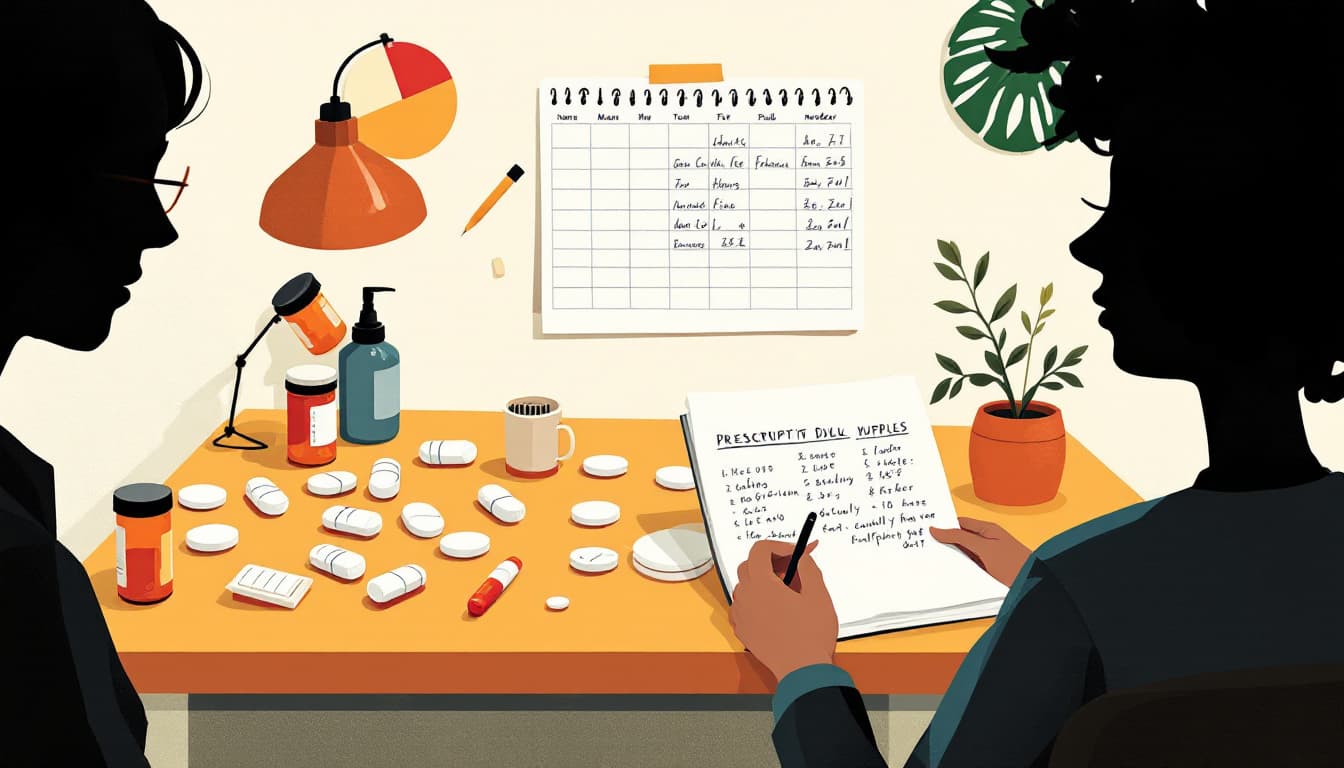
First, inventory. Make a list of every prescription medication in your household, including the prescriber, the therapeutic category, and what happens if it's missed for 3 days, 7 days, or 14 days. This is not dramatic — it's information you should have regardless of preparedness.
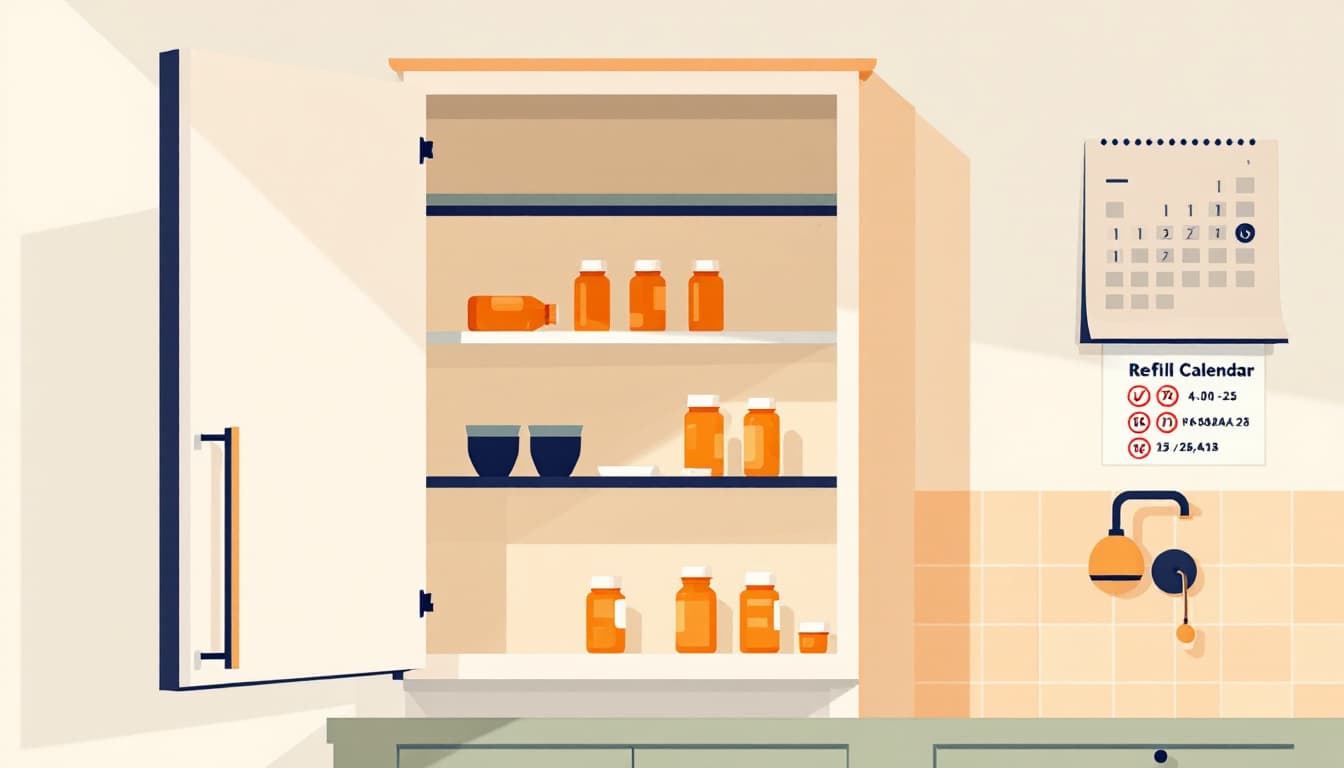
Second, ask for a 90-day supply. Most commercial plans and nearly all Medicare Part D plans allow 90-day mail-order fills at reduced copays. If you're currently getting 30-day supplies for a stable chronic condition, call your pharmacy or insurance and ask about converting. A 90-day fill gives you a rolling buffer that a 30-day fill does not.
Third, ask your prescriber directly about emergency supply. Many states allow pharmacists to dispense emergency 30-day fills for maintenance medications when a prescription can't be reached. Some states have expanded this authority following recent natural disaster experience. Know your state's rules before you need them.
Fourth, for insulin users specifically: understand the difference between your analog insulin and older formulations. Older NPH and regular insulin remain available over-the-counter at major pharmacy chains in most states without a prescription. They are not equivalent to modern analogs, and a switch requires medical guidance — but knowing this option exists is not the same as using it carelessly.
The bigger picture.
Preparedness writers spend a lot of energy on the dramatic end of the risk spectrum — grid-down scenarios, supply chain collapse, civil disruption. The medication continuity problem doesn't live there. It lives in the two-week ice storm, the insurance gap between jobs, the pharmacy that's closed because it flooded. It's a slow-leak risk with a quantifiable solution, and that solution fits in a cabinet.
The households that weather disruptions well are rarely the ones with the most dramatic gear. They're the ones who did the boring math in advance.