The dollar value of goods moving across borders has climbed back toward pre-disruption levels. Headlines are reading this as a recovery signal. A Global Issues.Org analysis published this month pushes back on that reading, arguing that aggregate trade values obscure what is actually happening inside supply chains: longer lead times, thinner inventories, more fragile routing, and costs that don't show up in the headline number but do show up in your checkout total.
That gap between the macro signal and the household experience is worth sitting with.
What the numbers hide
When trade values rise, it can mean more goods are moving. It can also mean the same goods cost more to move. Shipping insurance, fuel surcharges, rerouting fees, and buffer-stock premiums all inflate the dollar value of a shipment without adding a single unit to the shelf. A retailer paying 30 percent more to get 10 percent fewer units of a product will pass that math to the consumer, not the trade statistician.
The disruptions driving this are not mysterious. Red Sea shipping diversions around the Cape of Good Hope have added days to Europe-Asia routes. Drought-related constraints on the Panama Canal remain a recurring pressure point. Port labor negotiations in several major economies have introduced new scheduling uncertainty. None of these are catastrophic in isolation. Together, they create a supply chain that functions — goods do arrive — but functions with less slack than it did five years ago.
Less slack means that when something else goes wrong — a factory fire, a sudden demand spike, a weather event at a key port — the system has fewer buffers to absorb it. The result is spot shortages that appear fast and resolve slowly.
What this actually looks like in a household
You probably feel it in three places.
Specific branded products disappear without warning. Not entire categories — one SKU of a medication, one variety of a canned good, the exact infant formula your pediatrician recommended. The product exists; it just isn't at your store this week, or the next.
Price volatility is higher than the inflation rate suggests. Averages smooth over the swings that individual households experience. If you buy the same 40 items every month, your personal inflation rate may diverge significantly from official indexes depending on which categories you shop in.
Delivery windows for durable goods have gotten noisier again. Appliances, HVAC parts, specialty medical equipment — lead times that briefly contracted in 2024 have crept back up in several categories.
What we'd actually do
Build a small, rotating stockpile around the specific items your household actually uses. Start with a four-to-six week supply of medications, shelf-stable proteins, and any specialty food items your family depends on. The goal is not a bunker — it is enough buffer that a two-week shortage at your local store is an inconvenience rather than a crisis. Rotate stock by using oldest items first so nothing expires.
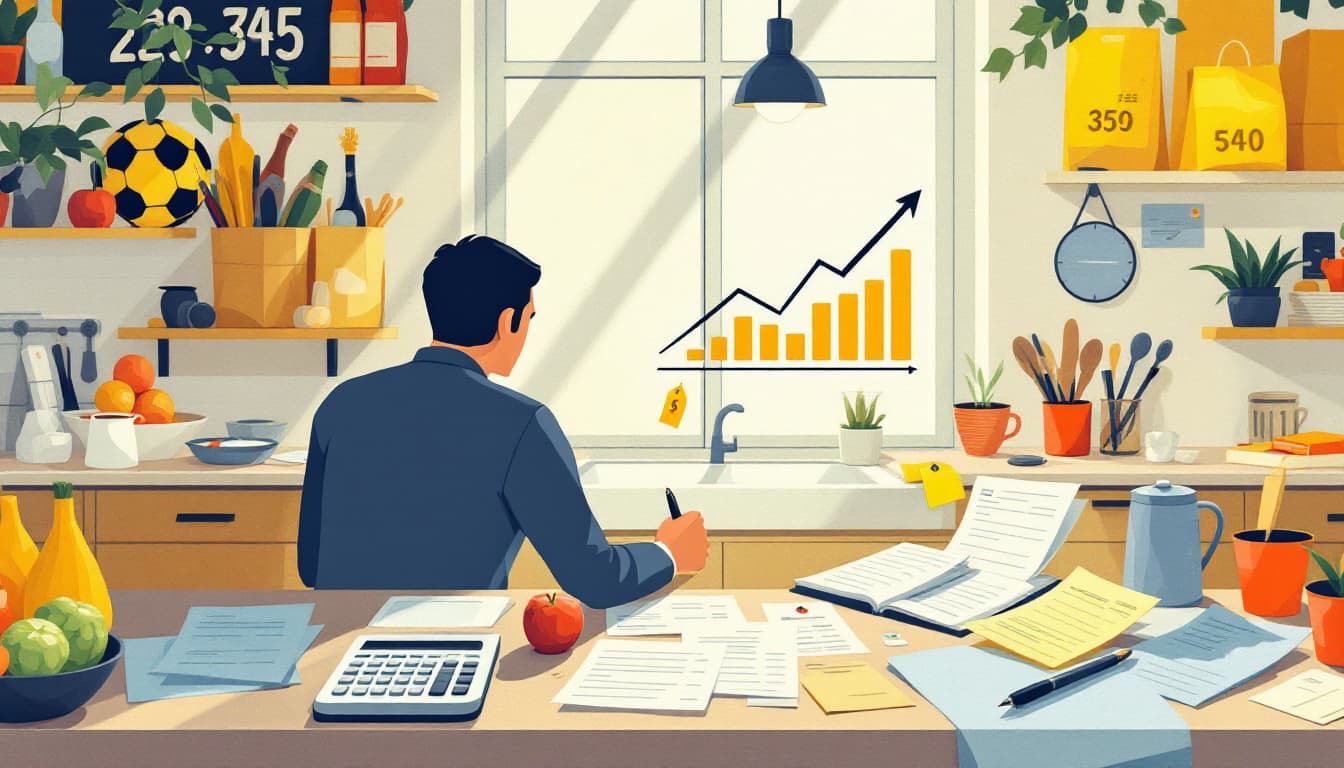
Track your personal grocery spend for 60 days, by category. A simple spreadsheet with totals for produce, proteins, dairy, and staples will tell you where your household inflation rate actually lives. That data is more useful than the CPI for making decisions about where to add buffer stock and where not to bother.
Identify the two or three items your household cannot easily substitute. Prescription medications with narrow generic availability, specialty infant or elder-care products, specific medical supplies. For those items, understand your supply chain: Is your pharmacy ordering weekly or monthly? Does your insurer allow 90-day fills? Can you source from a second pharmacy if your primary is out? These questions are worth answering before the shortage, not during it.
Diversify where you shop for staples. A single grocery chain's supply chain is a single point of failure. Knowing which items your local warehouse club, ethnic grocery, or co-op carries — and keeping a small relationship with those stores — gives you options when one retailer's shelves are thin.
Don't let the calm stretches make you complacent. Supply chain stress is not uniform. There are normal weeks and then sudden, sharp gaps. A household with a modest buffer doesn't need to react to the gap. A household running on just-in-time logistics has to scramble every time.
The bigger frame
The Global Issues.Org analysis is a useful corrective to the instinct to read rising trade values as a clean health signal. For household planning purposes, the more useful question is not "is the supply chain recovering?" but "how much slack does it have?" The honest answer right now is: less than the aggregate numbers suggest, and probably less than most families have priced into their planning.
Durable households are not built on panic buying or gear accumulation. They are built on knowing your own needs, understanding your local supply picture, and maintaining enough buffer to stay calm when the system hiccups. That is achievable, unglamorous, and more protective than anything you can buy in a single weekend.