Snowpack in the Cascades feeds roughly half of Washington's summer water supply. When that snowpack runs thin, the state's water managers start watching a cluster of indicators — reservoir storage, streamflow forecasts, soil moisture — and at some threshold, the Governor issues a drought declaration. Washington's Department of Ecology published a piece this month walking through exactly how that science works. It's worth reading. But it stops at the agency level. It doesn't tell you what to do with a 500-gallon backyard cistern, a well on rural Kittitas County land, or a family of four in Spokane on municipal water.
That gap is our job.
What's actually changing
A drought declaration in Washington is not a crisis announcement. It's an administrative trigger that unlocks emergency water right transfers, conservation orders, and state assistance programs. Ecology uses a formal matrix: if snowpack falls below roughly 75 percent of average and streamflows are projected low, declarations become likely. Once declared, junior water-right holders — including some agricultural users and rural domestic wells — can face curtailment before senior rights holders get touched.
East of the Cascades, this is not theoretical. The Yakima Basin has operated under some form of drought stress in multiple recent years. The Columbia Plateau aquifer system, which serves a significant portion of eastern Washington's rural domestic wells, has shown long-term drawdown trends in some areas. West of the Cascades, municipal systems with Cascade reservoir storage are generally more buffered, but smaller rural systems — think Skagit County's smaller water associations or island communities on rainwater — are exposed.
The piece Ecology published explains the science crisply: drought declarations are data-driven, not political, and they follow specific numeric thresholds. That's reassuring. It also means by the time a declaration lands, the stress on your water source has already been building for months.
What we'd actually do
Check your water source type and its vulnerability. If you're on a municipal system, pull your annual Consumer Confidence Report — utilities are required to mail or post these. Look for whether your system draws from surface water (more drought-exposed) or groundwater (more stable, but not immune). If you're on a private well in eastern Washington, contact your county's conservation district; some offer free basic water level monitoring guidance.
Rural eastern Washington well owners sit at real risk during declared drought years. Junior groundwater rights can be curtailed under Washington's water law, and even senior domestic rights can face reduced pressure as aquifer levels drop. Knowing your well's static water level — the measurement a licensed well driller can give you — tells you how much buffer you have before the pump starts pulling air.
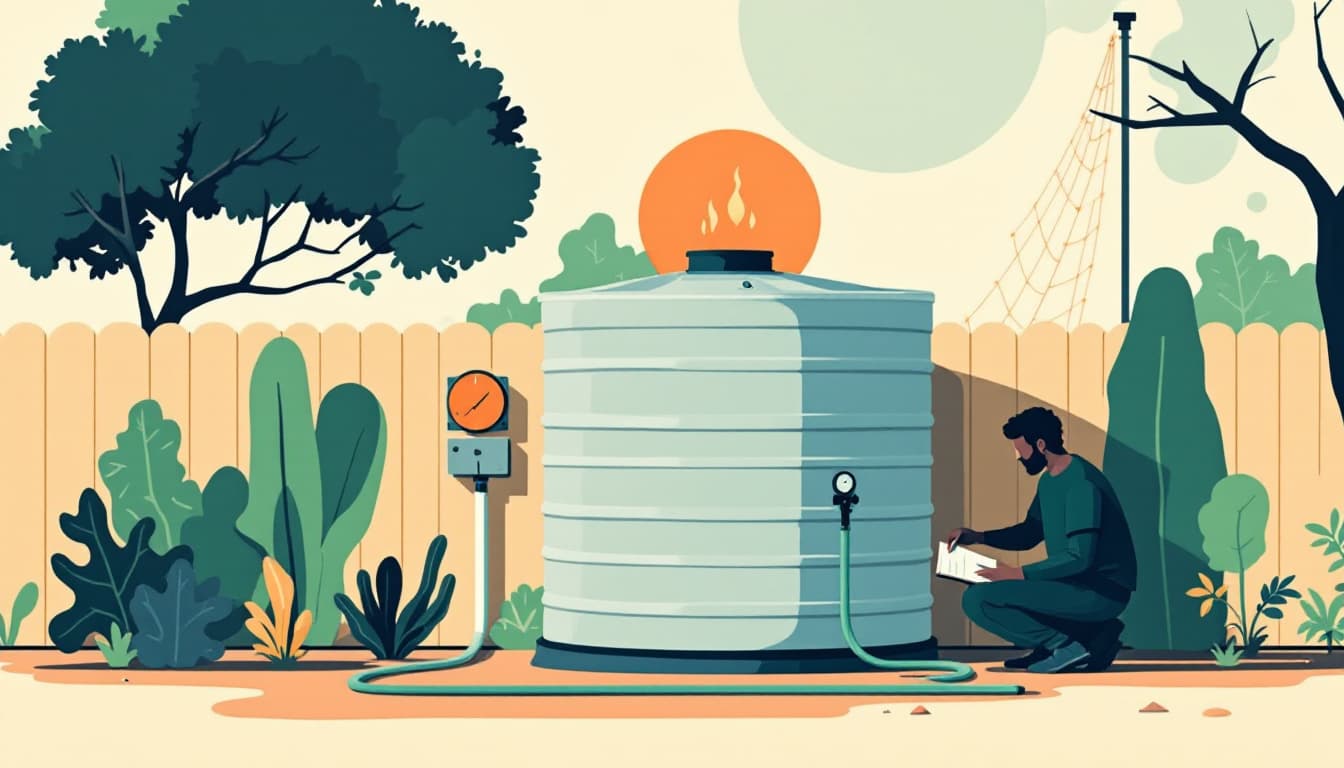
Store a meaningful amount of water, not a symbolic amount. FEMA's standard "one gallon per person per day" figure is a survival floor, not a livability target. A family of four using municipal water during a summer conservation order will want enough stored to cover cooking, hygiene, and a toilet flush or two. Fifty gallons in food-grade containers — roughly $50 to $80 in used or new containers — covers two weeks of survival-level use. If you have a yard and a gutter system, a 50- to 300-gallon rain barrel costs $80–$250 and is legal in Washington up to the first 55 gallons per barrel under current state code.
Identify your utility's drought response tier. Most Washington water utilities have tiered drought response plans with escalating conservation stages. Find yours — it's usually on the utility's website under "water conservation" or "drought." Stage 2 or Stage 3 restrictions typically ban outdoor irrigation and car washing. Knowing the trigger points lets you adjust now, not the week the notice goes out.
If you garden or keep animals in eastern Washington, map your water options now. Drip irrigation systems use roughly 30–50 percent less water than sprinklers. Mulching vegetable beds deeply — four to six inches — measurably reduces soil moisture loss in hot, dry summers. These are not emergency measures; they're standard practice for anyone farming or gardening on the dry side of the state.
The bigger picture
Washington's drought science is genuinely good. Ecology's monitoring systems, the USDA Natural Resources Conservation Service snowpack data, and the streamflow forecasting tools available through the Northwest River Forecast Center give households and agencies real lead time. Lead time is only useful if you do something with it before the declaration arrives.
The goal here is not to stockpile against catastrophe. It's to close the gap between "the state is watching" and "my household is watching too." A family that has checked its water source type, has two weeks of stored water, and knows its utility's conservation stages is not a survivalist household. It's a prepared one — and in a dry summer east of the Cascades, or on a small island water system west of them, that's the difference between minor inconvenience and a genuine problem.