The Cascade snowpack that feeds most of western Washington's municipal water supply melts on a schedule. When a dry spring follows a low-snow winter, that schedule compresses. This June, it's worth paying attention.
A report this week from FOX 5 DC covered drought watch conditions now affecting millions of residents across the DC metro area. The DMV situation is its own story, but it's a useful early-season signal: drought watches are being issued earlier and covering more people than they did a decade ago, and the pattern holds in the Pacific Northwest as much as anywhere else.
What's actually changing in Washington
Washington state's water picture is regional and complicated. Eastern Washington — the Columbia Basin, the Yakima Valley — has lived with irrigation-dependent water stress for generations. The Yakima River basin in particular operates under a senior water rights system that can leave junior users dry in a bad year. That's not new.
What has shifted: western Washington, long accustomed to the joke about rain, is seeing more frequent late-summer stress on municipal systems. The Washington State Department of Ecology issues drought advisories that track snowpack, streamflow, and reservoir levels. In low-snowpack years, some systems that serve smaller cities and unincorporated areas start asking for voluntary conservation by July. In worse years, mandatory restrictions follow.
The honest uncertainty here is that 2026's snowpack and reservoir data is still developing. What's consistent is the underlying dynamic: Washington's water infrastructure was built around a climate that's shifting, and the gap between "we have plenty of water" and "we'd like you to cut back" can close faster than most households expect.
Puget Sound Energy and Seattle City Light don't control water, but the same heat events that strain the power grid in August also drive up residential water draw. The two stresses often arrive together.
What we'd actually do
Check your utility's current drought status now, before any restrictions are announced. Washington's Department of Ecology posts a drought status map updated regularly throughout the season. Find your watershed, bookmark the page, and spend five minutes understanding which stage of restriction your utility would impose and what each stage requires. Most households discover this information reactively, when a mailer arrives. Getting ahead of it by six weeks changes your options considerably.
Most water utilities in Washington issue voluntary, then mandatory, conservation stages in order. Stage 1 typically means no outdoor watering between certain hours. Stage 2 restricts outdoor watering to specific days. Stage 3 can mean no outdoor irrigation at all and pressure reductions in some systems. If you know this before July, you can front-load garden watering, finish any outdoor projects that require water, and make sure your household isn't caught resetting habits under pressure.
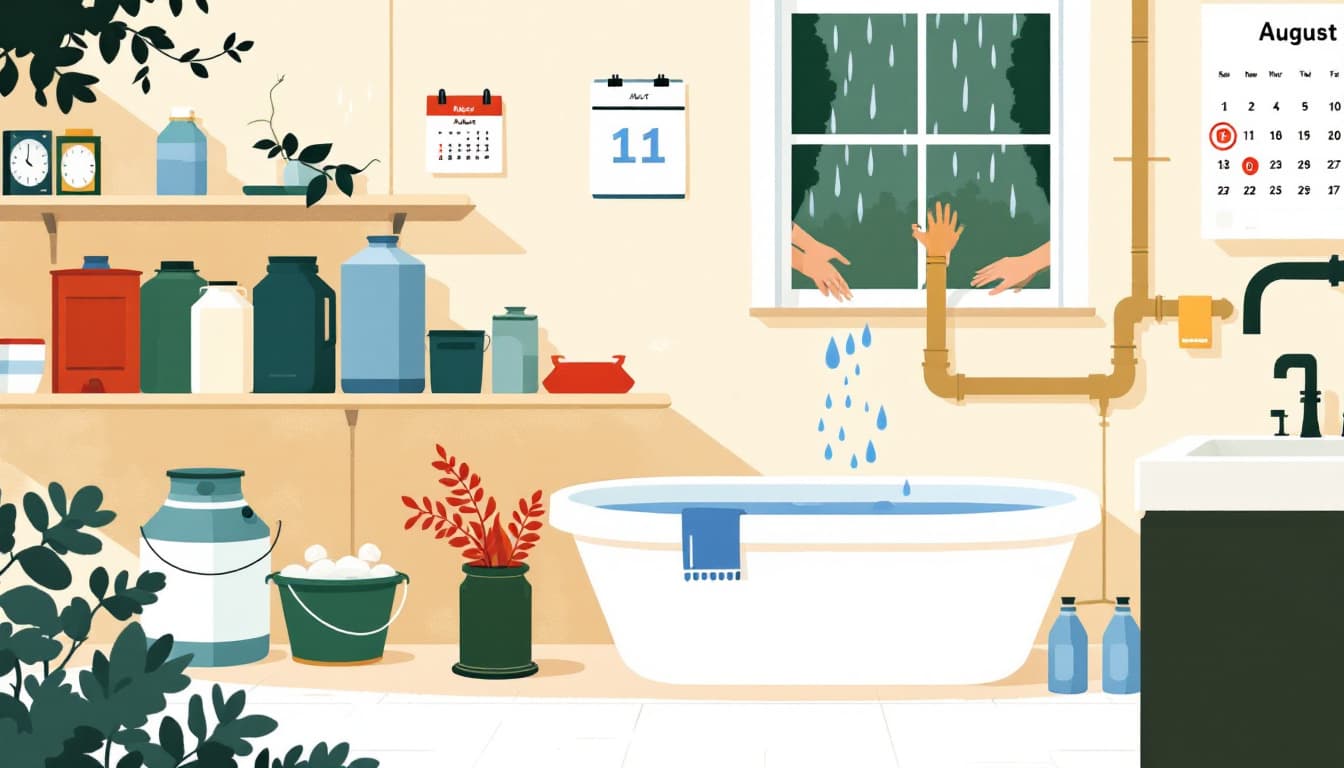
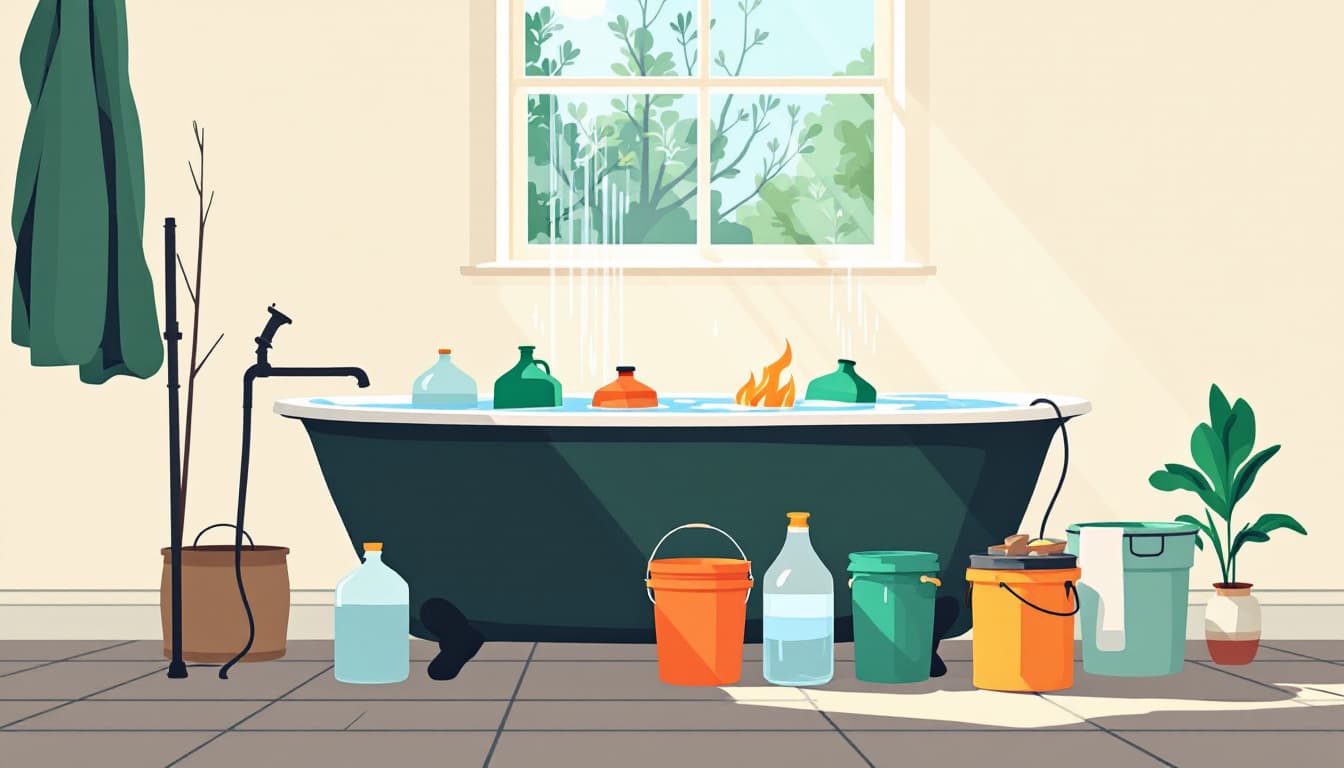
Store a two-week indoor water supply for your household. The standard emergency planning figure is one gallon per person per day for drinking and sanitation. For a family of four, that's 56 gallons for two weeks — achievable with a mix of commercially filled 5-gallon jugs and a clean storage container like a WaterBOB bathtub bladder kept in a closet. Drought itself rarely cuts municipal supply entirely, but a drought combined with a heat event, a pump failure, or a boil-water notice can. The storage isn't paranoia; it's insurance against the combination.
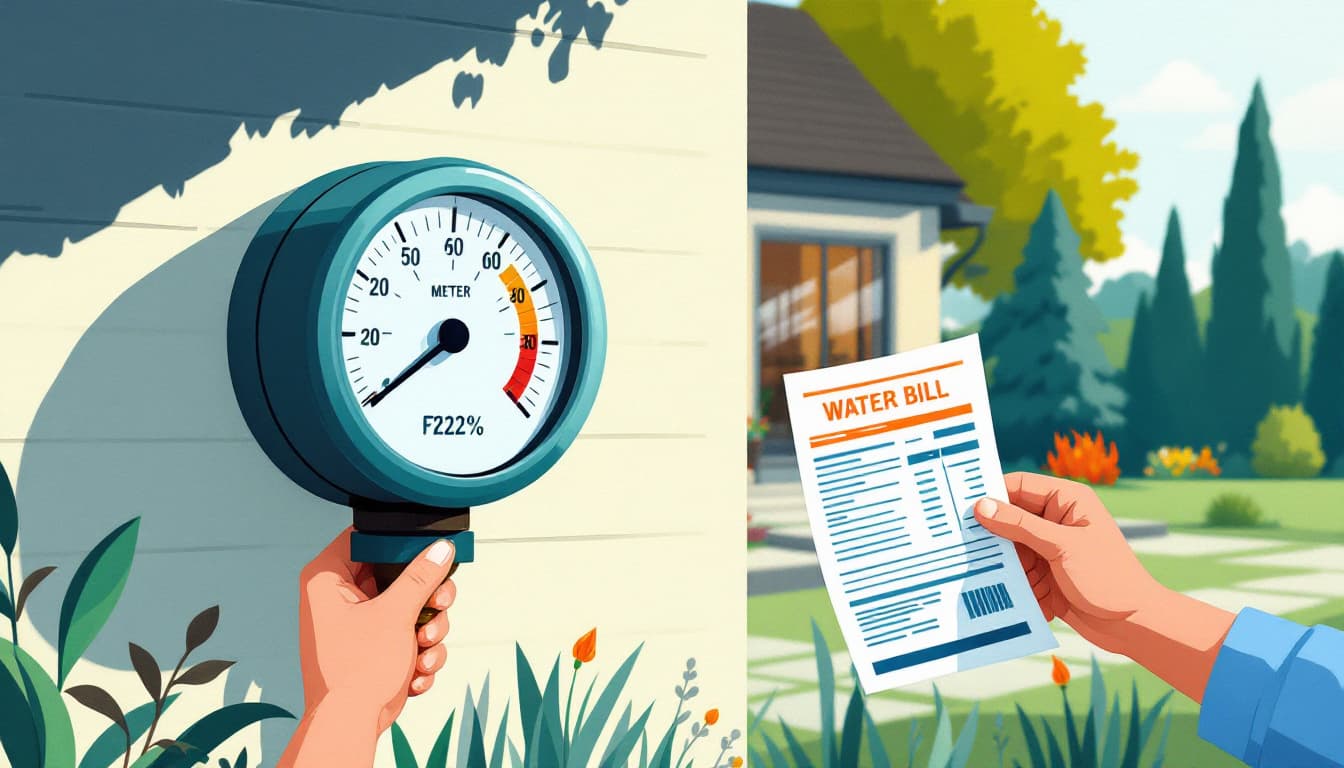
Fix the drips now. A faucet dripping once per second wastes roughly 3,000 gallons a year. A running toilet can waste ten times that. Neither fix is expensive — a replacement flapper costs under five dollars — but both become urgent if your utility imposes a tiered billing surcharge for overages during a restriction period. Do a 15-minute walk-through of every faucet, toilet, and hose bib this weekend.
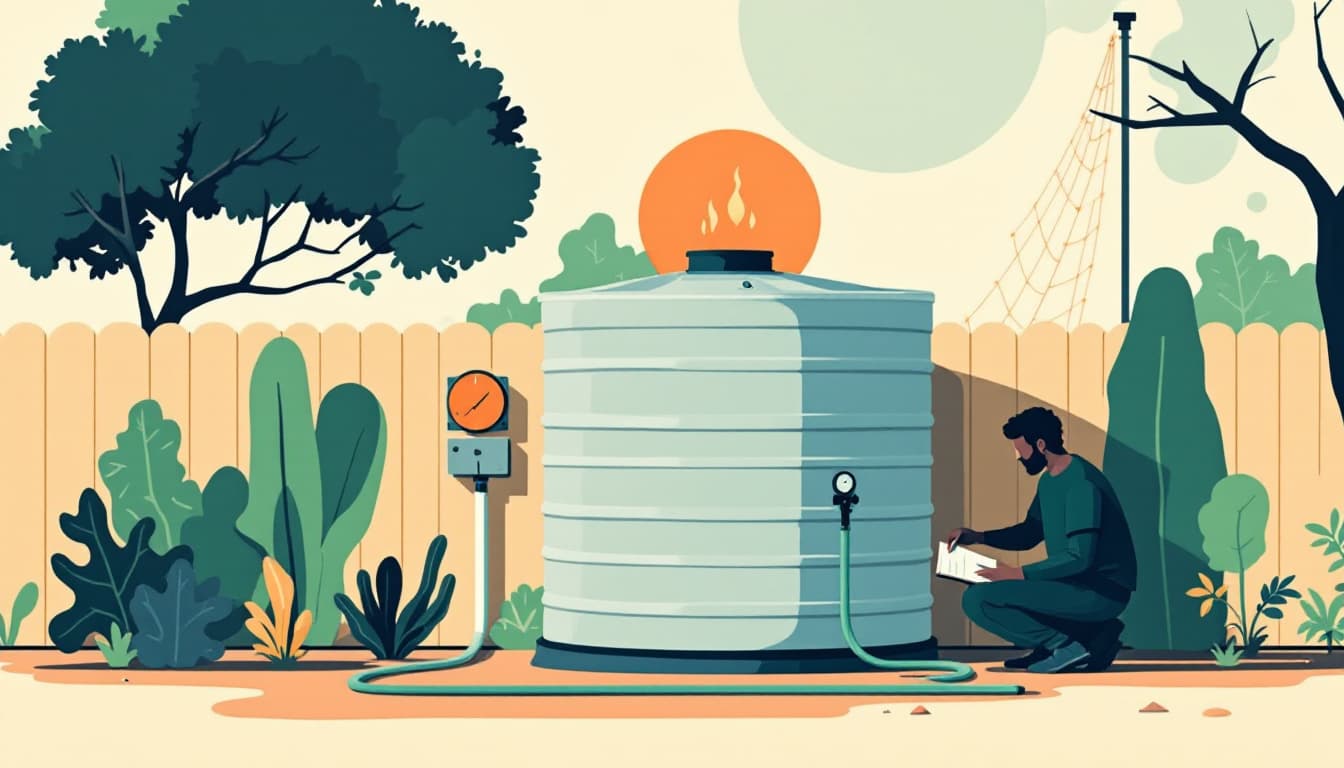
If you have a yard, audit your irrigation before mid-July. Drip systems and soaker hoses use a fraction of the water that overhead sprinklers do. If you're still on a timer-based overhead system with no soil-moisture sensor, you are almost certainly overwatering now and will be among the first to receive a violation notice if restrictions tighten. A basic soil-moisture sensor add-on for most irrigation controllers runs under $30 and pays for itself in one billing cycle during a hot August.
The bigger picture
Drought prep for a Washington household isn't about surviving without water. It's about not being caught flat-footed when the utility sends a notice, when the neighbor's well starts pulling sediment, or when a heat dome arrives in late July and everyone in the region simultaneously runs their hoses. The families who handle that week well are the ones who made two or three low-effort decisions in June.
Durability doesn't require a bunker. It requires paying attention to the right things six weeks early.