A wind-driven fire outside Los Angeles moved fast enough this week to outpace evacuation orders, according to a report from The Washington Post. The details — dry air, offshore wind surge, steep terrain — will read as familiar to anyone who lives east of the Cascades or in the foothills west of them.
Washington is not Southern California, but the mechanism is identical. When a strong easterly wind event hits the Columbia Basin, the Okanogan Highlands, or the I-90 corridor near Cle Elum, fire behavior changes. Humidity drops below 15 percent. Spotting distances extend. A fire that was two acres at 9 a.m. is 2,000 acres by 3 p.m. The Washington State Department of Natural Resources and the National Interagency Fire Center have both documented that Washington's fire seasons have expanded in duration and intensity over the past decade. That's not a political claim. It's acreage data.
What's actually different about wind-driven fires
Most household fire planning assumes you will have time. Time to pack. Time to grab the dog. Time to check the news. Wind-driven fires specifically erase that assumption. In the Los Angeles event, some residents had minutes, not hours, between ignition and structure loss.
The implication for Washington households isn't "panic." It's "compress your decision timeline in advance." A family that has already decided what triggers their evacuation — say, a Level 2 notice from their county emergency management office — moves faster than a family that starts deliberating at Level 2.
Washington uses a three-level evacuation system: Level 1 (Be Ready), Level 2 (Be Set), Level 3 (Go Now). Most families treat Level 2 as a prompt to start packing. Treat it as your departure signal instead.
What we'd actually do
Sign up for your county's emergency alert system today, not in July. Washington counties run their own alert systems — Chelan, Okanogan, Yakima, Kittitas, and Douglas counties have some of the highest wildfire exposure, but King and Snohomish counties have seen Interface fires too. Go to your county's emergency management page and confirm your cell number and address are enrolled. Wireless Emergency Alerts from the federal system do not always reach everyone in time; county opt-in systems give you more lead time.
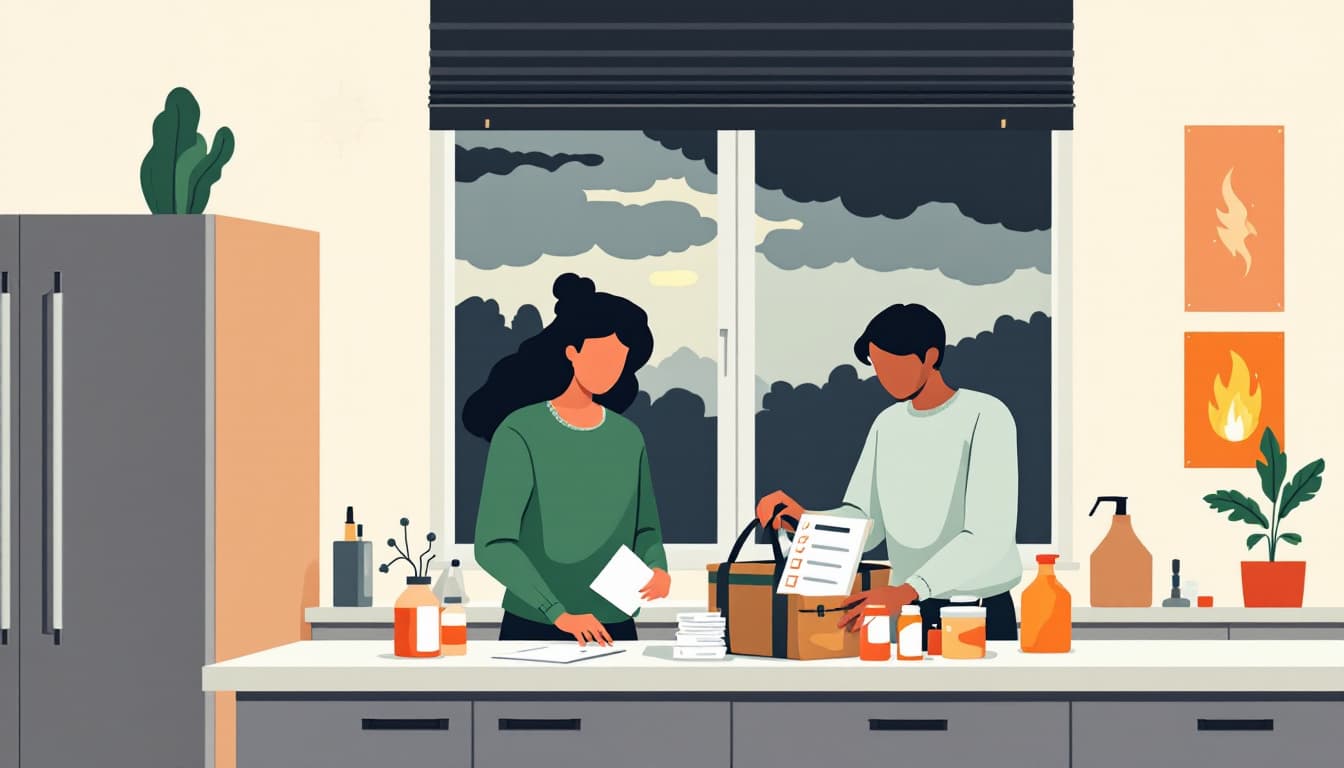
Build a go-bag that requires zero decisions under stress. A bag that contains copies of documents (insurance, IDs, prescriptions), three days of medication, phone chargers, and a change of clothes per person is not a doomsday kit — it's a 45-minute project this weekend. The goal is not to be ready for anything. It is to not be scrambling for your cat's vaccination records while smoke is visible on the ridge.
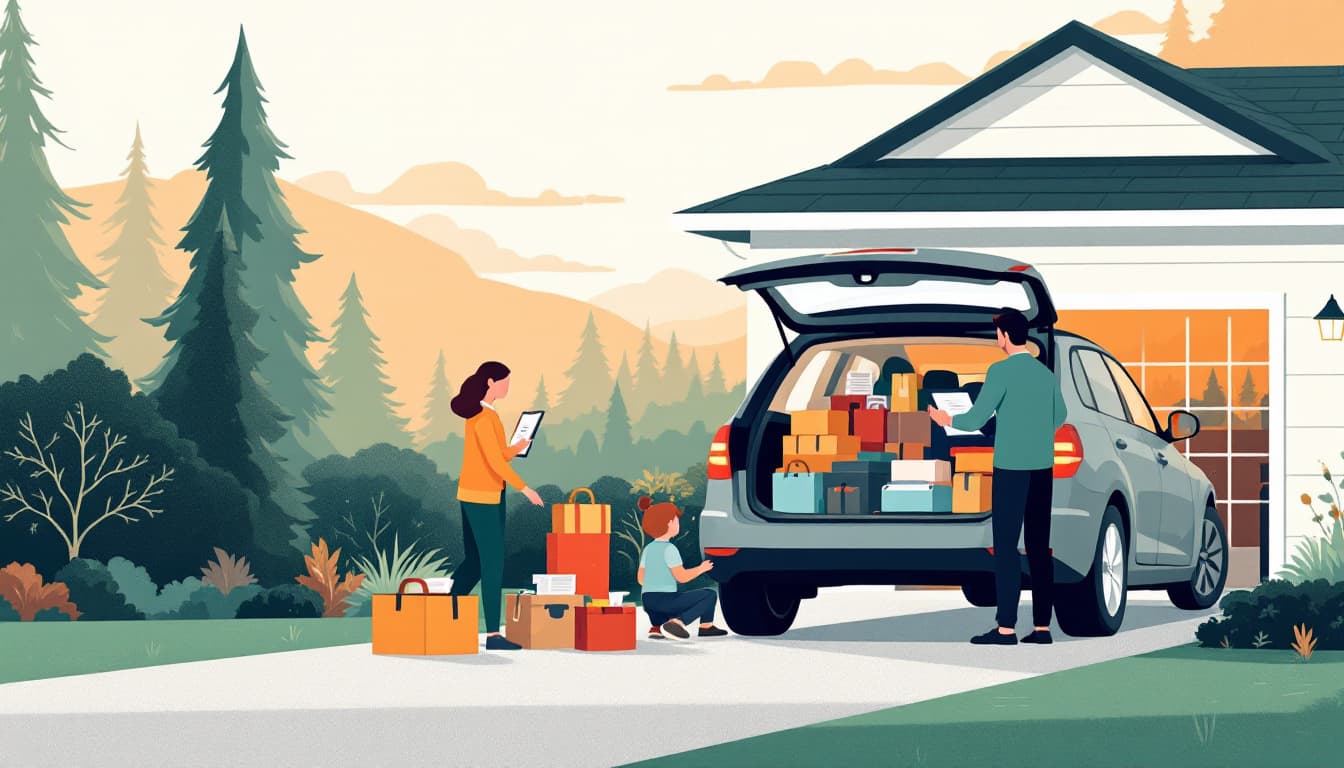
Know your two exit routes now, before fire season. In many eastern Washington communities, there is effectively one paved road out of town. Identify a secondary route — gravel, forest service road, or alternate highway — and drive it once. Know where it connects. Fire can close roads with no warning.
Set a household trigger rule and write it down. Decide in advance: "If our county issues a Level 2 notice and wind is forecast above [X] mph, we leave." Put it on the refrigerator. The value of the rule is that it moves a stressful, in-the-moment judgment into an already-made decision. Behavioral research on evacuation consistently finds that households with pre-committed rules evacuate earlier and more safely than households that re-evaluate in real time.
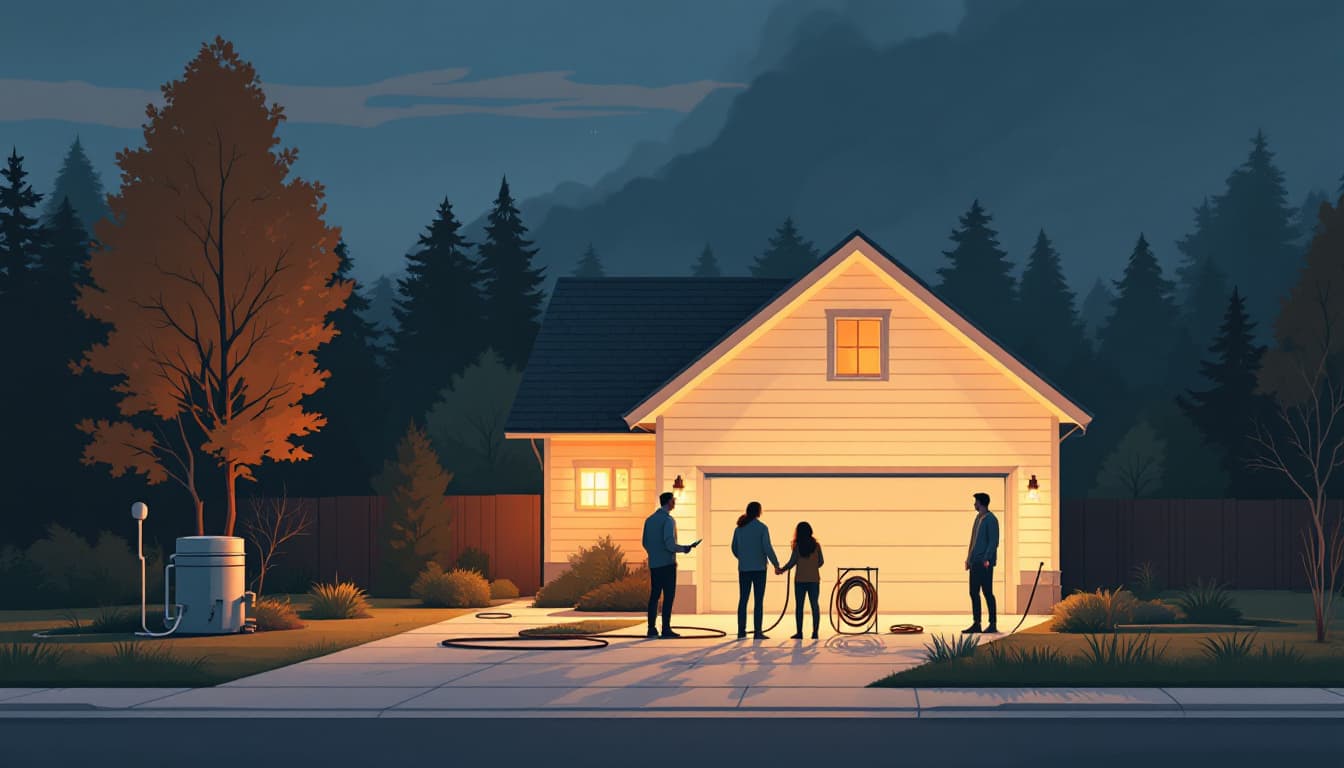
Reduce ember intrusion points this month, while it's calm. The majority of structure losses in wildland-urban interface fires are caused by embers, not direct flame contact. Clean gutters of pine needles and debris. Move woodpiles away from exterior walls. These are free or near-free actions that meaningfully change the odds if you have to shelter briefly or if the fire moves faster than your evacuation.
The Los Angeles fire is a calibration event, not a prediction about Washington. The takeaway isn't that your home will burn. It's that wind-driven fires move faster than most household plans account for, and the gap between "I should do that" and "that is done" is exactly where preparedness fails.
Washington households have resources their southern counterparts sometimes lack — longer stretches of cooler weather, more developed state coordination through the Washington Military Department's Emergency Management Division, and in many areas more buffer time. The task is to use that buffer now, in May, rather than in August when the conditions arrive.
Durability, not catastrophe. The goal is a household that can make a calm decision under pressure because the work was already done.