When farmers voluntarily accept water cuts before summer even starts, the season ahead is already in trouble.
A report this week from The Spokesman-Review confirmed that agricultural users along the Yakima River have agreed to early reductions in their water allocations as drought conditions deepen across central Washington. That's not a routine adjustment. The Yakima basin's water allocation system is one of the most closely managed in the American West, and farmers there fight hard for every acre-foot. When senior water-right holders start accepting cuts in May, it signals that snowpack and reservoir storage are both below the thresholds where everyone comes out whole.
What's actually changing
The Yakima River system supplies irrigation water to roughly half a million acres of orchard and row-crop farmland in Kittitas, Yakima, and Benton counties. It also feeds municipal systems in the valley. In a tight water year, the allocation hierarchy matters: senior rights holders draw first, junior rights holders get cut first. When even senior holders are accepting voluntary reductions early, it typically means managers are trying to spread pain now to prevent a complete system failure in August.
For households west of the Cascades, this might sound like a Yakima Valley problem. It isn't, entirely. Washington's central and eastern produce supply is concentrated in exactly the valleys facing these cuts — apples, cherries, hops, wine grapes, potatoes, asparagus. A compressed growing season or reduced yield shows up at Safeway and the Yakima farmer's market alike, usually as price increases, reduced selection, and shorter harvest windows. Recent BLS food price data has shown fruit and vegetable categories are among the most volatile when regional supply tightens.
For households in the Yakima area specifically, the question is more direct: if drought persists and municipal reservoirs draw down, communities face outdoor watering restrictions, pressure drops, and in worst cases, supply advisories. The Yakima Basin's record shows these conditions can arrive fast once reservoir levels fall past critical thresholds.
None of this is guaranteed to become a crisis. But the farmers accepting cuts are the early-warning system. They're reading the snowpack data and the reservoir gauges, and they're adjusting. Households should do the same.
What we'd actually do
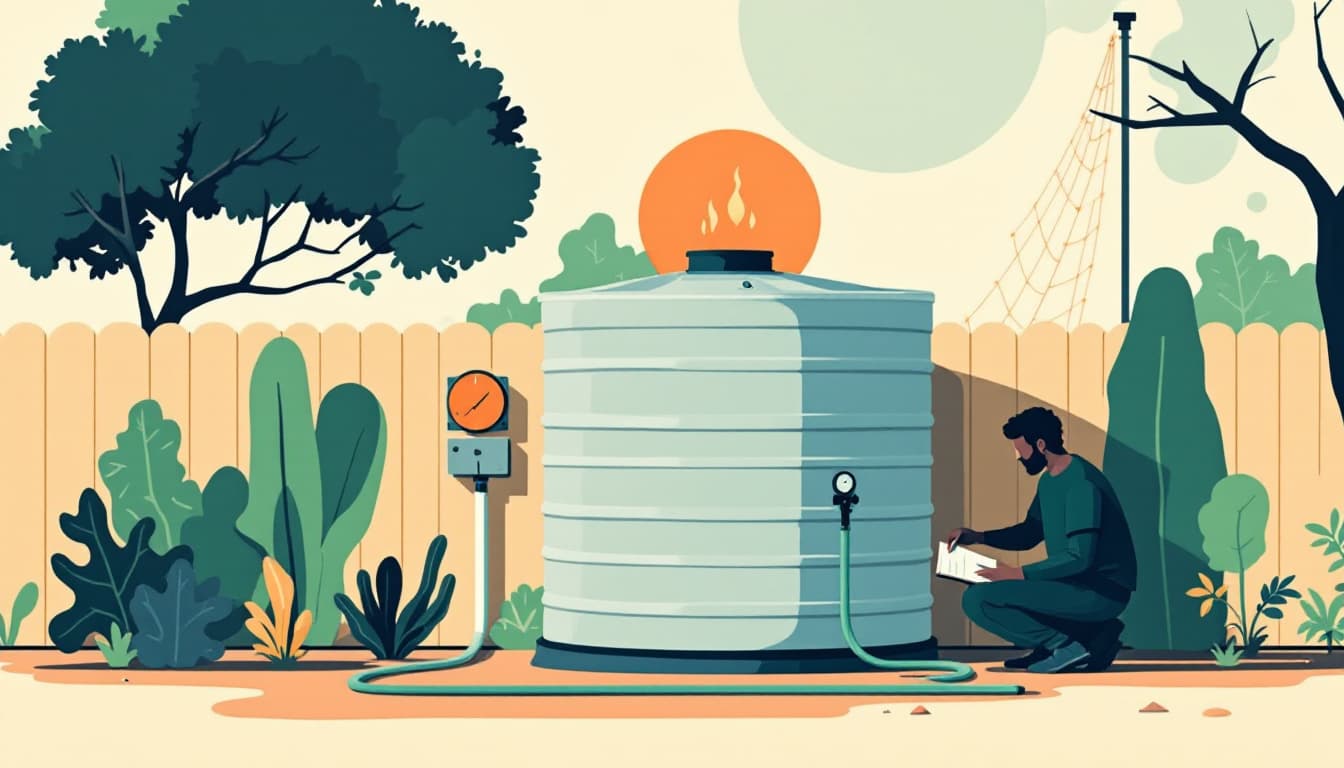
Audit your household's water storage right now. Most households have zero stored drinking water beyond what's in their pipes. The standard emergency guidance from FEMA is one gallon per person per day for at least three days — a number most preparedness professionals consider a floor, not a target. For a family of four in a week-long restriction scenario, that's at least 28 gallons. A mix of store-bought 5-gallon jugs and refillable containers kept in a cool space covers this without significant cost.
If you have a garden, shift to drip or soaker hose irrigation before restrictions arrive. Overhead sprinklers waste 30–50% of water to evaporation and runoff, particularly in central Washington's dry summer heat. Drip systems are inexpensive at most hardware stores, reduce your outdoor water use substantially, and are almost always exempt from odd-even watering restrictions because they're so efficient. Switching now, before restrictions are announced, means you're not scrambling.
Check your municipality's current drought stage and trigger levels. Yakima, Ellensburg, and Sunnyside all publish drought-response plans with specific trigger points tied to reservoir levels. These documents tell you exactly at what storage percentage outdoor watering bans kick in. Knowing your local utility's thresholds removes the surprise. Most of these plans are posted on city utility websites; if yours isn't, call and ask.
Invest in high-water-content canned and shelf-stable foods. This is less obvious but real: in a prolonged restriction or pressure-drop scenario, cooking from scratch requires water you may not want to spend. Canned soups, beans, and vegetables already contain moisture that reduces cooking water demands. Building a modest pantry rotation of these items costs under $50 and serves double duty as general emergency food storage.
Talk to neighbors who irrigate. In rural Yakima Valley communities especially, neighbors with senior water rights will know earlier than any news report whether the season is headed somewhere serious. That informal network is real-time information that no dashboard fully replaces.
The bigger picture
Drought years in Washington are not new, and the Yakima Valley's managed water system is specifically designed to stretch scarce supply across a large agricultural region. The system has handled bad years before. The goal here isn't to alarm anyone into panic-buying or stockpiling for collapse. It's to recognize that the farmers accepting cuts in May are telling us something, and that the cost of a few hours of preparation now is trivially small compared to being caught unprepared in August if this season runs dry.
Durability is the point. A household that has thought through its water exposure once doesn't need to think about it again until conditions change. Do it once. Do it right. Move on.