
A small film with serious intentions
There is a particular kind of post-apocalyptic story that has almost nothing to say about the apocalypse itself. The collapse is backdrop, texture, weather — not subject. Arcadian, directed by Benjamin Brewer and released in 2024, belongs firmly in that tradition, and it is all the better for it. The end of the world here is simply the condition under which a family must survive, and the film is far more interested in the psychic cost of that survival than in any mythology of catastrophe. It is a creature feature in the classical sense — small in scope, relentless in tension, and anchored in relationships rather than world-building.
That focused ambition is both the film's great strength and, occasionally, its limitation. But at its best, Arcadian achieves something genuinely unnerving.
The shape of the premise
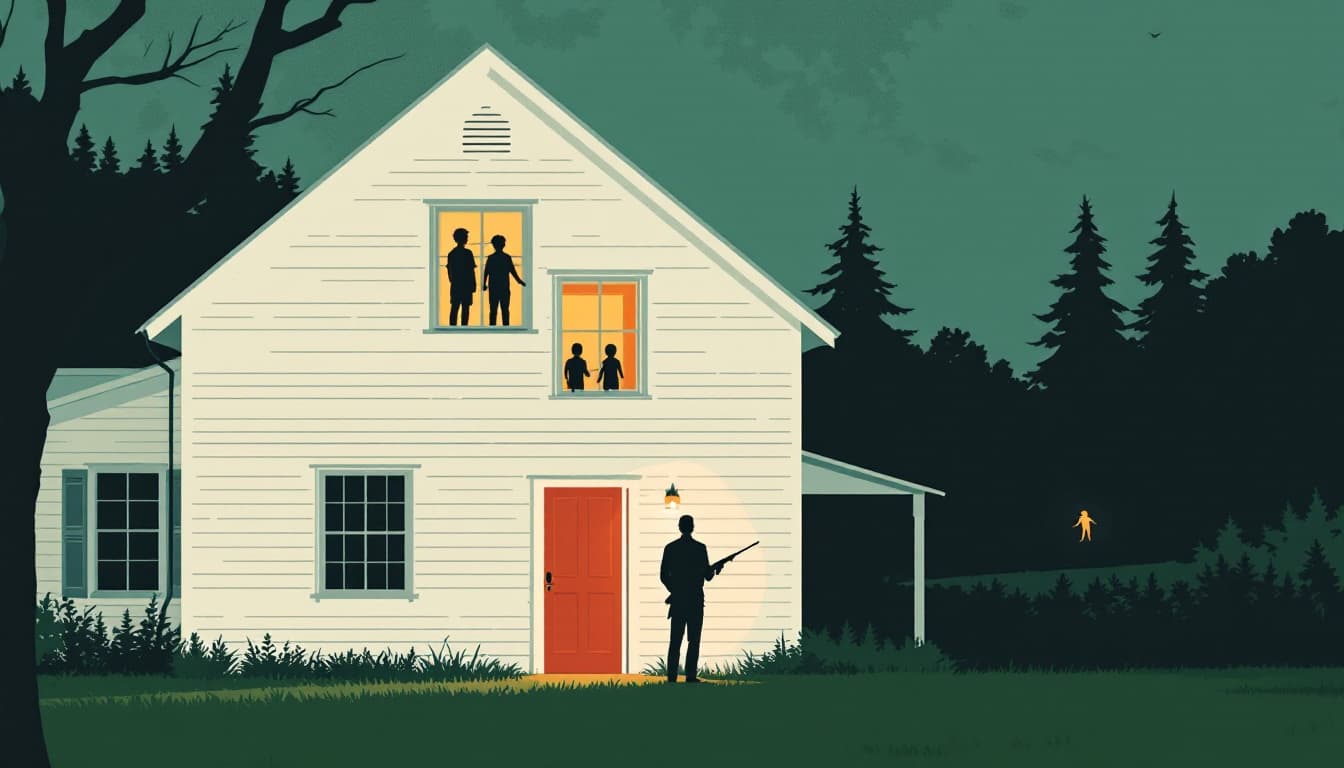
Nicolas Cage stars as a father raising two teenage sons in an isolated farmhouse in a world that has already ended in some vague, unspecified way. Civilization has collapsed. The landscape is empty and overgrown. And when night falls, something comes. The creatures — and there are creatures — emerge from the darkness with methodical, terrifying intent, and the family has developed a set of fortified routines to keep them out until dawn.
The premise is deliberately elemental. Brewer and screenwriter Mike Nilon are not interested in explaining where the monsters came from or what they represent in any heavy-handed allegorical sense. The horror is simply that they exist, that night is long, and that the walls between safety and death are thinner than anyone would like.
Performance and direction
Cage, who can be a maximalist performer in ways that sometimes derail films around him, is notably restrained here. His father is a man ground down by vigilance — someone who has converted love entirely into protocol and preparation. Cage finds the exhaustion in this without making the character pathetic, and in the film's quieter scenes, when he moves through the farmhouse doing the small tasks of staying alive, there is a real melancholy to his physicality. It is one of his more controlled recent performances.
The two sons — one cautious and inward, one restless and inclined toward risk — give the film its dramatic spine. The tension between them, and between each of them and their father, is handled without heavy exposition. Brewer trusts the actors to carry the weight of what is unsaid, and largely they do. The result is a family dynamic that feels lived-in rather than scripted, which matters enormously when you are being asked to believe that these people have been doing this — surviving, fortifying, enduring — for years.
Brewer's direction is patient without being slow. He understands that the dread of what might get through is more sustainable than the horror of what has gotten through, and he holds off on his creature reveals with genuine discipline. The cinematography leans on a muted, washed-out palette that makes the rare moments of warmth — firelight, a morning that has somehow been survived — feel almost painfully precious. There is real visual intelligence at work here in how the film uses darkness not just as cover for the monsters but as an emotional register for the characters' inner lives.
What works, and what doesn't
The creature design, when we finally see it fully, is inventive and strange — biological in a way that feels genuinely alien rather than derivative. Brewer earns the late-film revelations by withholding them long enough that they land with impact rather than obligation.
Where the film stumbles slightly is in its second act, when a subplot involving a neighbouring community pulls the story outward in ways that diffuse the claustrophobic intimacy Brewer has so carefully constructed. It is not a disaster — the narrative logic is sound enough — but the film is measurably less compelling when it expands its geography. Arcadian is at its finest when it is essentially a siege film, and every time it remembers that, it recovers its footing.
The screenplay occasionally reaches for sentiment in ways the film's austere style can't quite accommodate. A handful of scenes in which characters articulate their emotional states too directly feel like concessions to convention rather than natural outgrowths of the story. In a film that has otherwise shown real confidence in implication, these moments land with a small but noticeable thud.
These are relatively minor complaints. The film knows what it is, and it delivers on its own terms with consistency and craft.
Who should watch this
Arcadian is not the kind of film that will satisfy viewers expecting action-forward horror or the elaborate world-building of prestige dystopian television. It is a quiet, serious, occasionally beautiful film about the psychological and physical labour of keeping a family alive, told through the grammar of a monster movie. If you came to A Quiet Place and wished it were darker and stranger and less interested in crowd-pleasing, Arcadian is your film.
Nicolas Cage completists will find it genuinely worth their time — this is a side of him that rewards attention. And anyone who thinks the creature feature as a form has been exhausted should see what Brewer does with the constraints he has given himself.
It is a film about fathers, sons, routine as love, and the dark as an adversary that never stops being one. That is more than enough.

