Walmart is the largest grocery retailer in the country by store count, and California has more Walmart locations than any other state. That context matters when a recall surfaces there.
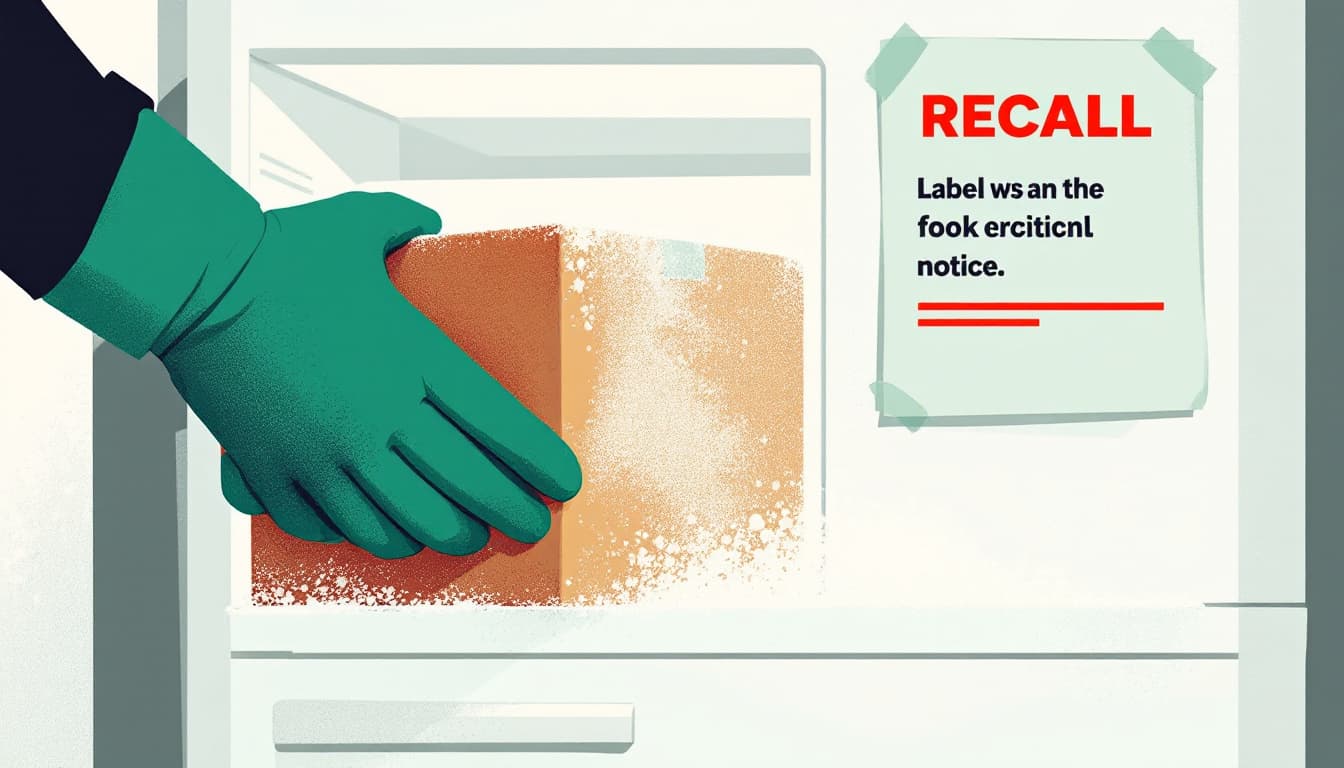
A report this week from Greenville Online flags an ongoing salmonella issue connected to ranch dressing products sold at Walmart. The recall is active. If you bought ranch dressing — or any ranch-based product — at a Walmart in the past several weeks and haven't checked it against the FDA recall database, that's the first thing to do today.
What's actually happening
Salmonella recalls follow a predictable pattern: a product tests positive during routine surveillance or after illness reports cluster, the FDA issues a Class I or Class II recall depending on severity, and the retailer pulls shelf stock. What rarely makes the news clearly is the lag. By the time a recall is announced, the product has typically been in homes for days or weeks. Some of it has already been consumed.
The FDA maintains a searchable recall database at fda.gov/safety/recalls-market-withdrawals-safety-alerts. California's own Department of Public Health — CDPH — also issues food safety alerts independently and is worth bookmarking separately from the federal feed. CDPH has historically been faster than the FDA in some cases, particularly when California-specific distribution chains are involved.
Salmonella is not a minor inconvenience for everyone. Healthy adults typically recover in four to seven days without treatment. For young children, adults over 65, pregnant people, and anyone immunocompromised, it can require hospitalization. The CDC estimates tens of thousands of hospitalizations from salmonella annually in the U.S. Those numbers aren't meant to alarm — they're meant to calibrate. Most people will be fine. Some won't be.
The ongoing nature of this recall, as framed in the Greenville Online report, suggests the contamination source hasn't been fully resolved. That's a signal to stay alert, not to panic-buy alternatives.
What we'd actually do
Check the FDA recall database against every condiment and dressing currently in your refrigerator. Go to fda.gov, search "salmonella ranch," and cross-reference lot numbers and UPC codes on your bottles. This takes about three minutes. Most households skip this step and rely on news coverage, which is incomplete by design — headlines rarely include lot numbers.
This is the only step that actually confirms whether your specific product is affected. Brand awareness is not enough. A recall covers specific production runs, not entire product lines in perpetuity. One lot number can be recalled while the bottle next to it on the shelf is fine.
Set up a free FDA recall alert. The FDA offers email notifications for Class I and Class II food recalls at fda.gov/safety/fd-c-act-provisions. California households can layer that with CDPH's food safety alert page. Two-minute setup, persistent value. Most food recalls never generate national headlines, and this is the only reliable way to catch them.
Review how you handle recalled products with other household members. If you have teenagers making their own food, elderly parents visiting, or anyone in a higher-risk category, make sure they know what to do when a recall notice arrives. "Throw it out, don't taste-test it, wash the area where it was stored" is the protocol. That's it.
Don't stockpile replacement condiments reactively. The preparedness-industrial complex will tell you this is a signal to buy six months of shelf-stable dressings. It isn't. The practical response is to keep one backup of staple condiments — not six — and rotate through them. A deep pantry doesn't protect you from a contaminated lot if you bought twelve bottles from the same batch.
The bigger picture
Food recalls happen roughly 150 to 200 times per year in the U.S. California's density and its reliance on large-format retail like Walmart means any national recall has outsized exposure here. The goal isn't to be afraid of your refrigerator. It's to have a simple, low-friction system so you're checking these things once a week rather than never.
Durable households aren't ones that react to every headline. They're ones with habits that make the routine response automatic. Adding the FDA email alert takes two minutes. Checking lot numbers takes three. That's the entire preparedness lift here.