Three straits. One bottleneck economy.
The Strait of Hormuz is roughly 21 miles wide at its narrowest point. The Bab-el-Mandeb, connecting the Red Sea to the Gulf of Aden, is narrower still. The Strait of Malacca, through which a substantial share of Asia-Pacific trade moves, averages about 1.7 miles at its tightest. A Financial Times report this week examines the intensifying power struggle over these and other narrow seas — and why control of these passages is increasingly contested by state and non-state actors alike.
The FT piece focuses on the geopolitical chess. Our job is different: what does a family actually feel when one of these passages goes wrong?
What's actually changing
The short answer is that these waterways were always fragile. What's shifted is the combination of actors willing to disrupt them and the reduced diplomatic bandwidth to deter those actors quickly.
Houthi attacks on Red Sea shipping, which began in late 2023, gave the world a live demonstration. Major carriers rerouted around the Cape of Good Hope rather than risk the Bab-el-Mandeb. That detour added roughly two weeks and significant fuel cost to each voyage. Consumer goods prices don't spike overnight from a shipping disruption — the lag is typically four to eight weeks, depending on inventory buffers — but they do move. Electronics, apparel, and certain food commodities sourced from Asia or the Middle East showed measurable price pressure within a quarter.
Energy is the faster channel. Roughly a fifth of global liquefied natural gas and a large share of Gulf crude move through Hormuz. A serious, sustained Hormuz disruption would hit gasoline prices within days, not months, because futures markets price in the risk immediately. Heating oil, diesel for freight, fertilizer derived from natural gas — all follow.
None of this is new information. What the FT's current framing signals is that multiple chokepoints are under simultaneous geopolitical stress, not just one at a time. That reduces the global economy's ability to reroute and absorb.
What we'd actually do
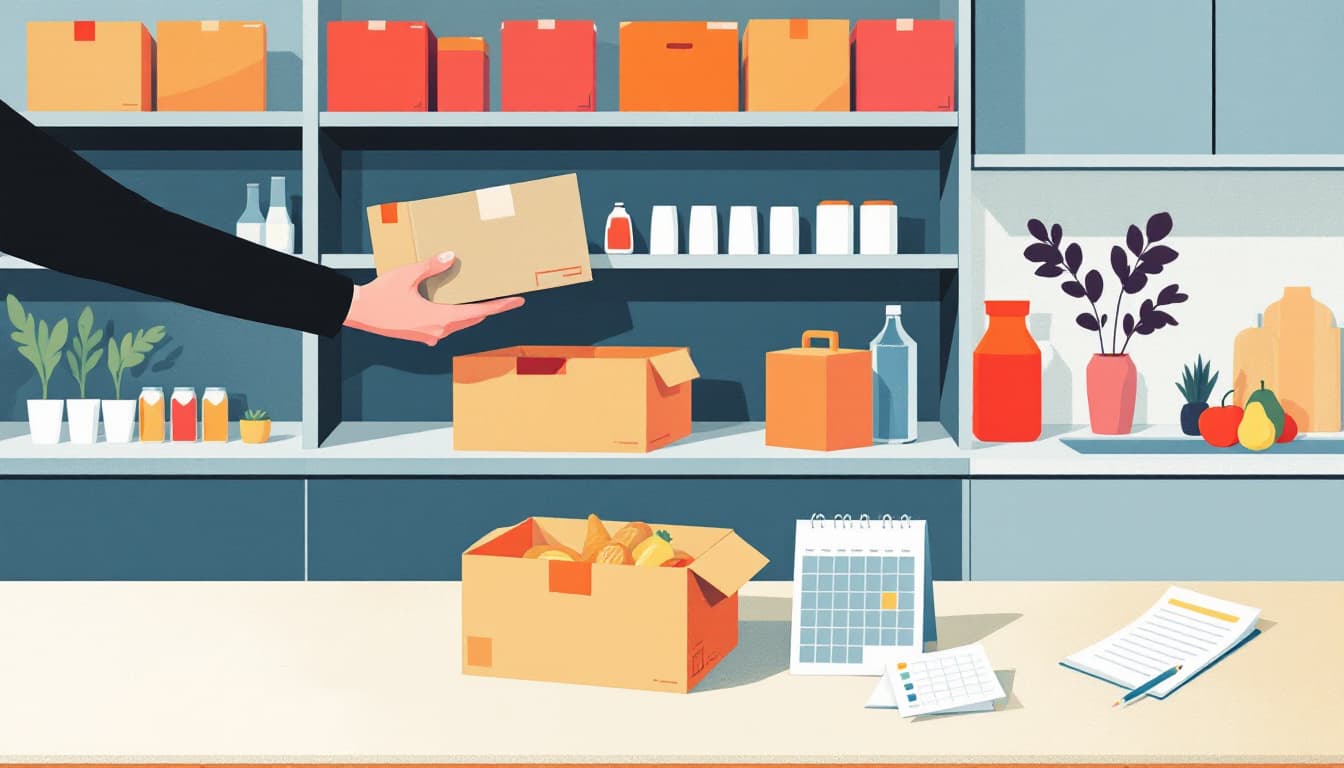
Build a four-to-six-week food buffer, organized by caloric density and shelf life, not by category. Most households think in terms of "canned goods" without a plan. A better frame: could your family eat adequately for 30 days without a grocery run? That doesn't mean freeze-dried survival pouches. It means enough rice, lentils, canned fish, olive oil, and shelf-stable staples to cover a period when prices spike or shelves thin. BLS data consistently shows food-at-home inflation accelerates faster than general inflation during supply shocks. Being two months ahead of a price spike is better than scrambling during one.
Know your household's fuel exposure and trim it where you can. If you drive a vehicle that takes premium fuel, or heat with propane or heating oil, you're directly exposed to Hormuz-linked price moves. This is not the week to panic-buy a new car. It is a reasonable time to know how much fuel buffer you have — a full tank, a full propane cylinder, a basic energy audit — and to have a plan if prices jump 30 percent over a quarter.
Put one month of key medications in reserve. Pharmaceutical supply chains run through the same straits. A significant share of active pharmaceutical ingredients are manufactured in Asia and move through Malacca or around the Cape. Generic medications, in particular, operate on thin margins with lean inventories. Talk to your doctor or pharmacist about whether a 90-day supply is available through your insurance. Do this before a disruption, not during one.
Watch the Baltic Dry Index, not the news cycle. The BDI measures bulk shipping costs and moves before consumer prices do. If you see it spike sharply over a few weeks, supply-chain stress is real and spreading. It's publicly available, free to track, and more signal than noise compared to most financial headlines.
The bigger picture
Narrow seas have always been strategic leverage points. What a family can control is not which navy controls the Bab-el-Mandeb. What a family can control is whether a six-week supply disruption is a mild inconvenience or a genuine crisis.
The goal of household preparedness is not to predict which chokepoint closes next. It's to build enough buffer that the answer, when something does close, is: we're fine for now, let's watch and wait. That posture — calm, stocked, not panicked — is available to most middle-class families at low cost, spread over time.
Durability doesn't require a bunker. It requires a pantry, a plan, and the patience to build both before you need them.