A new model ships. A thread lights up on Hacker News. Developers post benchmarks. Someone says "this changes everything." Someone else says it doesn't. And somewhere between those reactions, a real family in a real city is wondering whether their job still exists in three years.
That's the question worth answering.
Anthropic's Claude Fable 5 release, noted by Hacker News this week, is the latest in a now-familiar pattern: a frontier AI lab ships a model that meaningfully outperforms its predecessor on reasoning, writing, and task completion. Each release in the past two years has compressed the timeline between "impressive demo" and "deployed in a workflow." The gap is now measured in months, not years.
What's actually changing
The pattern isn't one model. It's the cadence. Major capability releases are arriving faster than most households — or employers — can absorb them. That matters because the economic disruption doesn't come from a single dramatic event. It comes from a hundred quiet decisions: a marketing team that doesn't backfill a copywriter role, a law firm that trims its paralegal headcount at renewal, a mid-sized company that cancels a contractor engagement because a product like this one now covers 80% of that work.
Recent BLS data on white-collar employment has shown softness in exactly those categories — writing, research, administrative analysis, entry-level legal and financial work — that AI tools are now capable of handling at production quality. The causation is still contested. The correlation is not.
For households, the risk isn't uniform. A family where both earners are in AI-adjacent knowledge work faces a different picture than one where both work in physical trades. But almost every household has some exposure, because income isn't the only vector. AI displacement also affects the freelance side income, the spouse returning to the workforce, and the adult child who just graduated.
What we'd actually do
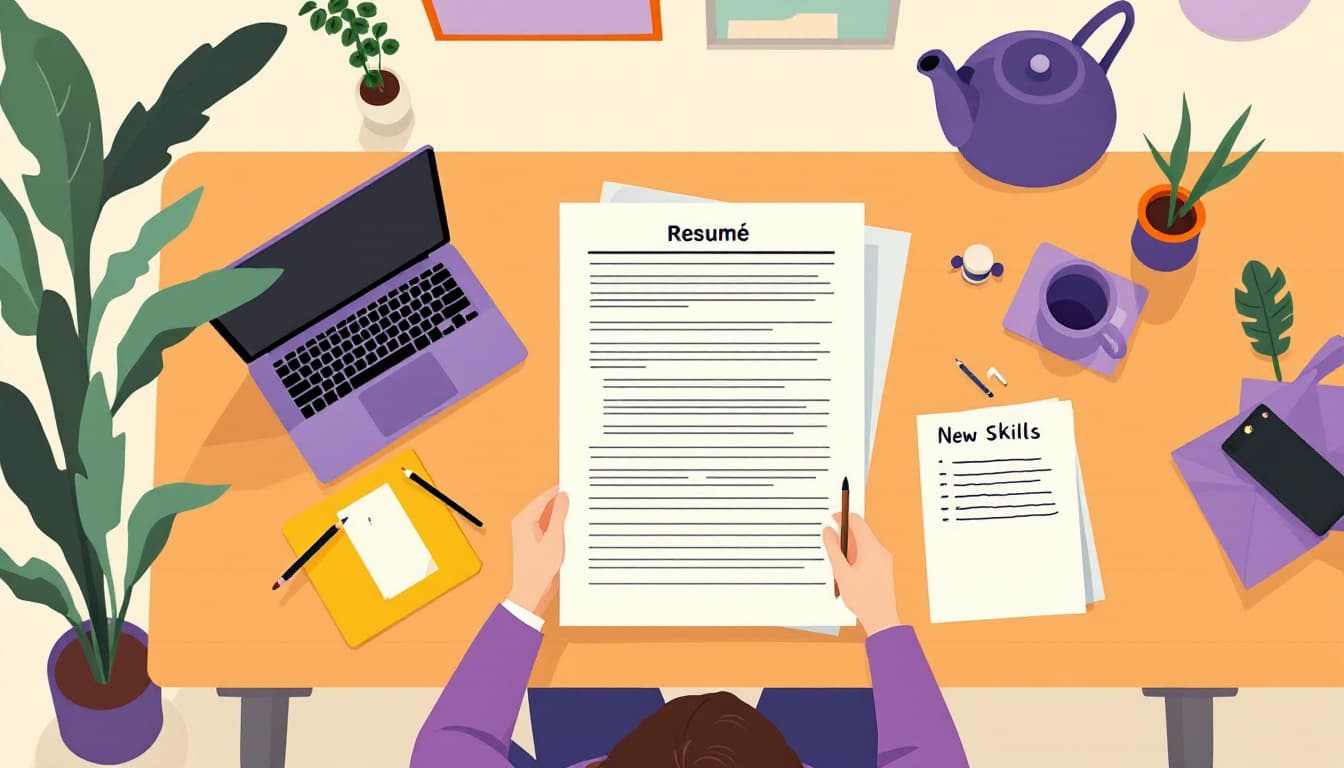
Audit your household's income sources for AI exposure. Sit down and list every income stream — primary jobs, freelance work, side contracts — and ask honestly which tasks within each role a current AI tool could perform adequately. This isn't a crisis exercise; it's a map. You can't navigate what you haven't charted.
The goal here is not to catastrophize, but to find your soft spots before an employer does. If 60% of a role involves tasks that are now automatable, that's useful information. If it's 15%, the near-term risk is lower. Write it down. Revisit it every six months.
Build one skill that requires physical presence or real-time human judgment. AI tools are genuinely weak at anything requiring in-person coordination, embodied skill, or trust earned through sustained human relationship. Trades, healthcare support, complex negotiation, hands-on technical repair, direct client management. You don't need to pivot careers. You need at least one part of your household's value to be difficult to replicate remotely by a reasoning model.
Build a six-month cash buffer, not a doomsday stockpile. Displacement events don't look like explosions. They look like a contract not renewed, a restructuring announcement, a headcount freeze. The family that weathers that is the one with enough runway to retrain, reposition, or wait for the next opening. Six months of essential expenses in a high-yield savings account is the single most durable form of household preparedness for an AI-disrupted economy. No gear required.
Learn to use these tools, not just fear them. The displacement risk is real, but so is the productivity gain for individuals who actually develop working fluency with AI tools. The middle position — neither dependent nor avoidant — is the durable one. Spend a few hours this month actually working with a frontier model on tasks from your real job. You'll learn quickly where it helps and where it falls apart.
The bigger picture
Every major general-purpose technology — electricity, computing, the internet — produced years of labor market turbulence before it settled into something manageable. That turbulence was real and it hurt real people. The families that got through it best were the ones who stayed financially flexible, kept acquiring skills, and didn't freeze waiting for certainty that never came.
Claude Fable 5 is not the end of the story. It's about chapter four. The goal isn't to predict the ending. It's to stay in the game long enough to adapt.