The Arkansas River near Salida is running low enough this June that outfitters are canceling commercial trips. A few months earlier, resorts on the Western Slope were manufacturing snow to cover bare ground. A report this week from The Colorado Sun connects the dots: a grim ski season followed immediately by a drought-crippled rafting season. Two industries, one underlying problem.
What's actually changing
Colorado's water comes from snowpack. The mountains are the reservoir. When that snowpack comes in thin or melts too fast, the rivers that feed households, agriculture, and recreation all feel it in sequence — ski hills in winter, river levels in spring, municipal supplies by late summer.
This isn't a single bad year. Colorado has been oscillating between drought and marginal recovery for most of the past decade. Recent data from the Colorado Water Conservation Board shows significant portions of the state in moderate-to-severe drought conditions heading into early summer. The Palmer Drought Severity Index for much of the Arkansas and South Platte basins has been negative for extended stretches.
What's new is the compression. The ski season and the rafting season are failing in the same calendar cycle. That means the natural buffer — a good melt season refilling what a bad snow year drained — isn't materializing. The Front Range, which gets most of its water from transmountain diversion systems pulling from the Colorado and Fraser rivers, is not insulated from this.
Denver Water and Colorado Springs Utilities both publish annual drought-stage reports. Neither is in emergency restriction mode as of this writing, but both operate tiered restriction systems that can move quickly when reservoir levels drop. Dillon Reservoir, a primary Denver Water supply, and Pueblo Reservoir, which serves the southern Front Range, are the numbers worth watching through August.
What we'd actually do
Check your utility's current drought stage and know what Stage 2 or Stage 3 means for your address. Every major Colorado water utility publishes its current drought stage online. Stage 1 is typically voluntary. Stage 2 starts banning specific outdoor uses. Stage 3 can include time-of-day restrictions and surcharge pricing. Knowing your utility's trigger thresholds costs you ten minutes and could prevent a fine or a surprise on your bill.
Audit your outdoor water use now, before restrictions force you to. Outdoor irrigation accounts for roughly half of residential water use in Colorado's semi-arid Front Range cities, according to Denver Water's own usage breakdowns. If you're running a traditional bluegrass lawn, you're the first target in any restriction order. Converting even a portion to xeric plantings — or simply adjusting your irrigation schedule to pre-dawn watering — reduces your exposure before anyone tells you to.
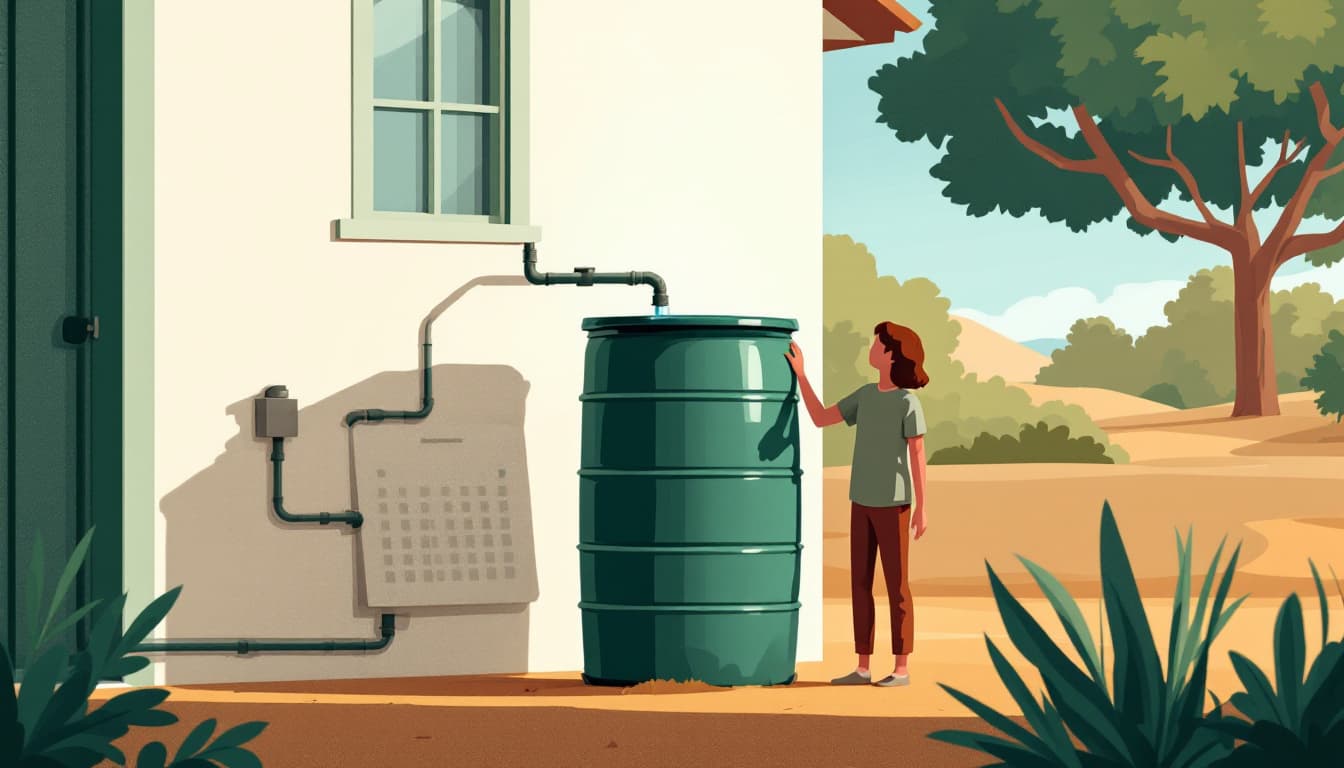
Store more water than you think you need for a 72-hour disruption. The standard FEMA guidance of one gallon per person per day is enough to survive, not enough to function. A family of four should have at minimum 12 gallons stored in food-grade containers, ideally 20-30. If you're on a well in El Paso, Weld, or Larimer County, add a manual pump assessment to your list — electric well pumps fail when power does, and drought years correlate with high fire risk and grid stress.
Look at your home's water heater as an emergency reserve. A standard 40- or 50-gallon tank water heater holds potable water. If municipal service is interrupted, you can drain it from the relief valve at the bottom. Most Colorado households have never thought about this. It takes no investment and is worth knowing before you need it.
Have a plan for a two-week outdoor watering ban on any garden you depend on. If you grow food — even a modest raised bed — a sudden Stage 3 restriction can threaten it. Drip irrigation systems use 30-50% less water than overhead sprinklers and are generally exempt from the most aggressive restriction tiers in most Colorado utility codes. Installing one for a vegetable bed costs under $50 in materials from any hardware store.
The bigger picture
Two failed seasons back-to-back don't mean the taps go dry next year. Colorado's water infrastructure is substantial, and the utilities managing Front Range supply are experienced with dry cycles. But the pattern the Colorado Sun is describing — consecutive climate-sensitive industries absorbing hits in the same year — is the kind of signal that compounds quietly until it doesn't.
Household water resilience isn't about surviving the apocalypse. It's about not being caught flat-footed by a Stage 3 restriction in August, a well pump failure during a fire evacuation, or a two-day boil order after a main break. Those are the actual scenarios. They're manageable. Start with storage, audit your irrigation, and know your utility's numbers.