The National Weather Service has recorded triple-digit heat across the Dallas–Fort Worth metroplex for stretches this July that would have been unusual a decade ago and are now a scheduling problem. A recent report from Dallas News covers how residents are managing the heat day to day — shade-seeking, hydration, cooling centers. All of that is correct. None of it is what breaks your household.
What breaks your household is the gap between the heat being uncomfortable and the heat being dangerous — and that gap is thinner than most people in Texas have planned for.
What's actually changing
The pattern is not just temperature peaks. It's the combination of high overnight lows, grid demand approaching capacity, and the physical age of housing stock in Texas cities. When the low at 3 a.m. is still 84°F, your home never cools down. Your body never recovers. Your window unit — if you have one — runs continuously and is more likely to fail. That's the cascade worth preparing for, not just the 108°F afternoon.
ERCOT, the operator of Texas's main grid, has added generation capacity since the 2021 winter storm, but the grid is still demand-sensitive during sustained heat events. Conservation notices — voluntary requests to reduce usage during peak hours — have appeared in recent summers. They are not blackouts, but they signal how close the margin is. During an actual rotating outage, a household without any plan faces a medical situation within hours if vulnerable people are present.
This is not catastrophizing. It's arithmetic. A healthy adult in a 95°F house with no airflow is uncomfortable. An elderly parent, a toddler, or someone on diuretics in that same house is at risk within two to four hours.
What we'd actually do
Locate every cooling center within five miles of your home and save those addresses offline. Dallas, Houston, San Antonio, and most Texas counties run publicly funded cooling centers, usually in libraries, rec centers, and some churches. Search your county's emergency management page now, when you're not in crisis, and screenshot the addresses. Cell data gets congested during widespread outages and heat events. A screenshot costs nothing.
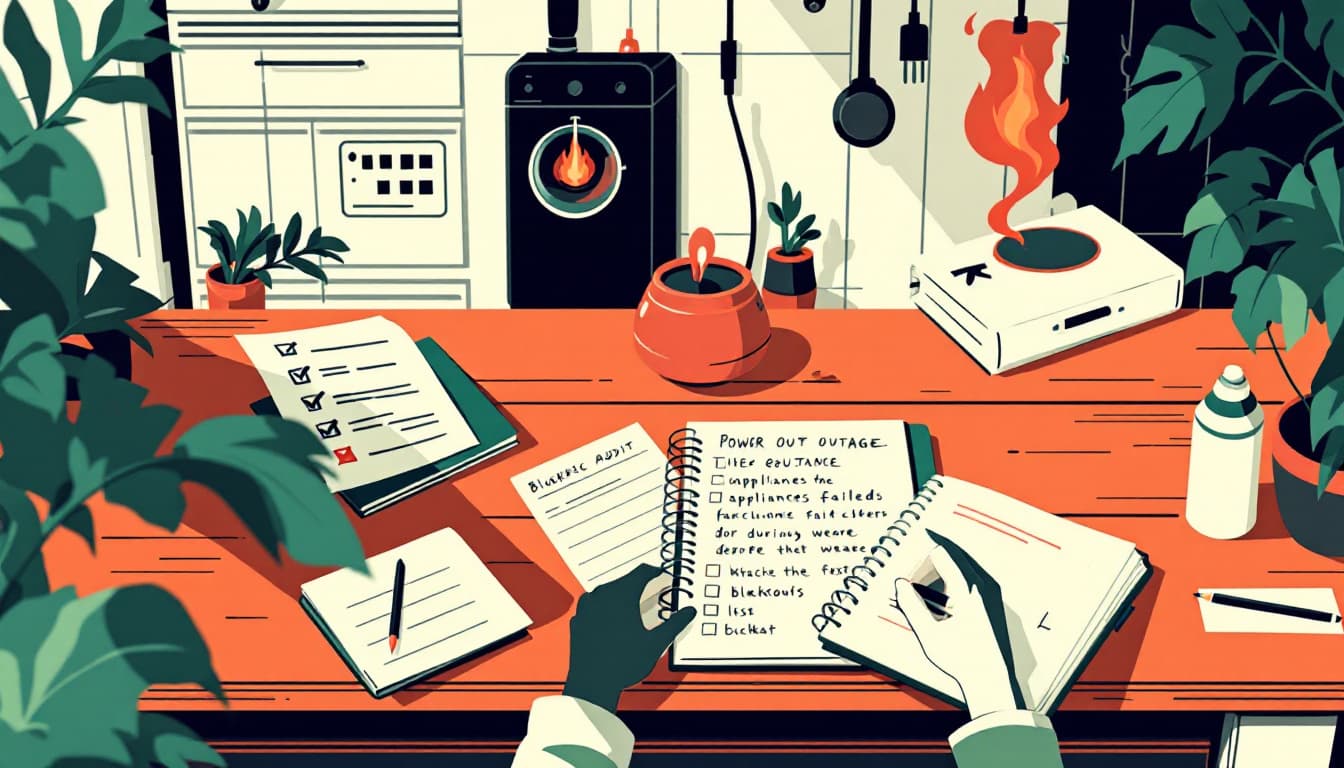
Know your household's medical vulnerability before you need to. Sit down and list everyone in your home, then note who takes medications that require refrigeration, who takes blood pressure medication (which affects heat tolerance), and who is over 65 or under two. This list tells you your actual timeline in an outage. If someone needs insulin stored cold, your window is measured in hours, not days. Your pharmacist can tell you the specific temperature range for any medication you're unsure about.
Add one low-tech cooling tool you don't currently own. Battery-powered fans have gotten better and cheaper. A quality USB-rechargeable box fan runs 8–12 hours on a charge and can be topped off from a car outlet or a small battery bank. It won't replace air conditioning, but it changes whether a 90°F room is survivable or miserable. This is not gear-buying panic — it's a $35 decision that sits in a closet until needed.
Set a household trigger for leaving. Decide right now: "If we lose power and the indoor temperature hits X°F, we leave." For most Texas households, 90°F inside is a reasonable trigger for vulnerable members; 95°F for healthy adults. Pick the number, write it on a sticky note on the fridge, and know where you're going — a family member's home, a hotel, a cooling center. The worst time to make this decision is at 2 a.m. when you're already heat-stressed.
Check your window and door seals before the next heat event. Weatherstripping degrades in Texas's UV environment faster than in most climates. A poorly sealed door is a meaningful inefficiency when your AC is running continuously. Run your hand along door frames on a hot afternoon and feel for warm air intrusion. A $10 foam seal from a hardware store is among the highest-return home improvements available to Texas renters and homeowners alike.
The bigger picture
Texas's summer heat is not a fringe event anymore — it's an operating condition. The households that handle it well are not the ones with the most gear. They are the ones who made three or four decisions in advance: where they'd go, who was most vulnerable, what their trigger point was.
Durability is just preparation that doesn't panic. A cooling center address saved to your phone and a conversation about medications is more valuable than a generator you haven't tested in two years.