The Federal Reserve's benchmark rate has sat in a range that would have seemed punishing to any borrower who locked in during 2020 and 2021. CNBC reported this week that Kevin Warsh is taking the chairmanship into what the outlet called a "family fight" — a genuine internal disagreement among Fed governors about when and how fast to cut rates. That internal friction is not a Washington spectator sport. It has a direct price tag for households.
What's actually changing
A new Fed chair does not automatically move rates. The Federal Open Market Committee votes, and governors have long served as independent voices even under pressure. What changes with leadership transitions is the framing of the debate: which risks get weighted more heavily, how the chair signals future intentions, and how quickly consensus forms around a path.
The current disagreement, as CNBC described it, centers on familiar tensions. One camp worries that cutting too soon risks reigniting inflation that has not fully returned to the Fed's 2 percent target. The other camp argues that holding rates too high for too long causes unnecessary economic damage — job losses, credit crunches, small business failures — that takes years to heal.
Both camps are right about something, which is exactly what makes this hard to call. The Fed does not have clean data. Supply chains are still re-routing around tariff structures. Labor market signals are mixed. Shelter costs in the official inflation indexes lag real-world rent movements by months. A new chair inherits all of that noise.
For households, the practical consequence of prolonged disagreement is prolonged uncertainty. Mortgage rates track Treasury yields more than they track the Fed directly, but Fed signals shape yield expectations. A Fed that can't clearly signal its next move keeps long-term rates elevated longer than a Fed speaking with one voice. That costs real money on every refinance, every car loan, every home equity line.
What we'd actually do
Lock in any high-yield savings rate you can find right now. Online banks and credit unions have been offering rates on savings accounts and short-term CDs that haven't been available in over fifteen years. If the Fed does cut — whenever that happens — those rates will compress quickly. A 12-month CD at a competitive rate requires almost no effort to open and turns uncertainty into a locked-in return.
Shop around using FDIC's BankFind or NCUA's credit union locator. You're looking for institutions currently offering the highest available annual percentage yield on terms of 6 to 18 months. Park your emergency fund there, not in a checking account earning near zero.
Do not assume rates will fall in time to help a near-term purchase. If you are planning to buy a home or a car in the next six months, build your budget around today's rate environment. Rate-cut timing is genuinely uncertain. Households that plan around an anticipated cut and then don't get it are the ones who overextend. Run every major purchase scenario at the rate available today. If it works, proceed. If it only works at a rate that doesn't yet exist, wait.
Audit your variable-rate debt now. Home equity lines of credit, some private student loans, and certain small business credit lines carry variable rates that move with the Fed. If you carry balances on any of those, list them, their current rates, and their approximate monthly cost. This is not a panic exercise — it is a baseline. If rates do eventually drop, you will see real relief on these lines. If they don't, you have already identified where to focus paydown energy.
Separate your emergency fund from your investment thinking. In a high-rate environment, there is a temptation to push cash into money market funds or short-duration bond funds chasing slightly higher yields. That's fine for money you genuinely won't need for 18-plus months. Your three-to-six month emergency reserve should sit in something liquid, FDIC or NCUA insured, and accessible within one business day. A rate transition — whichever direction it goes — is not the moment to discover your emergency cash is tied up.
The bigger picture
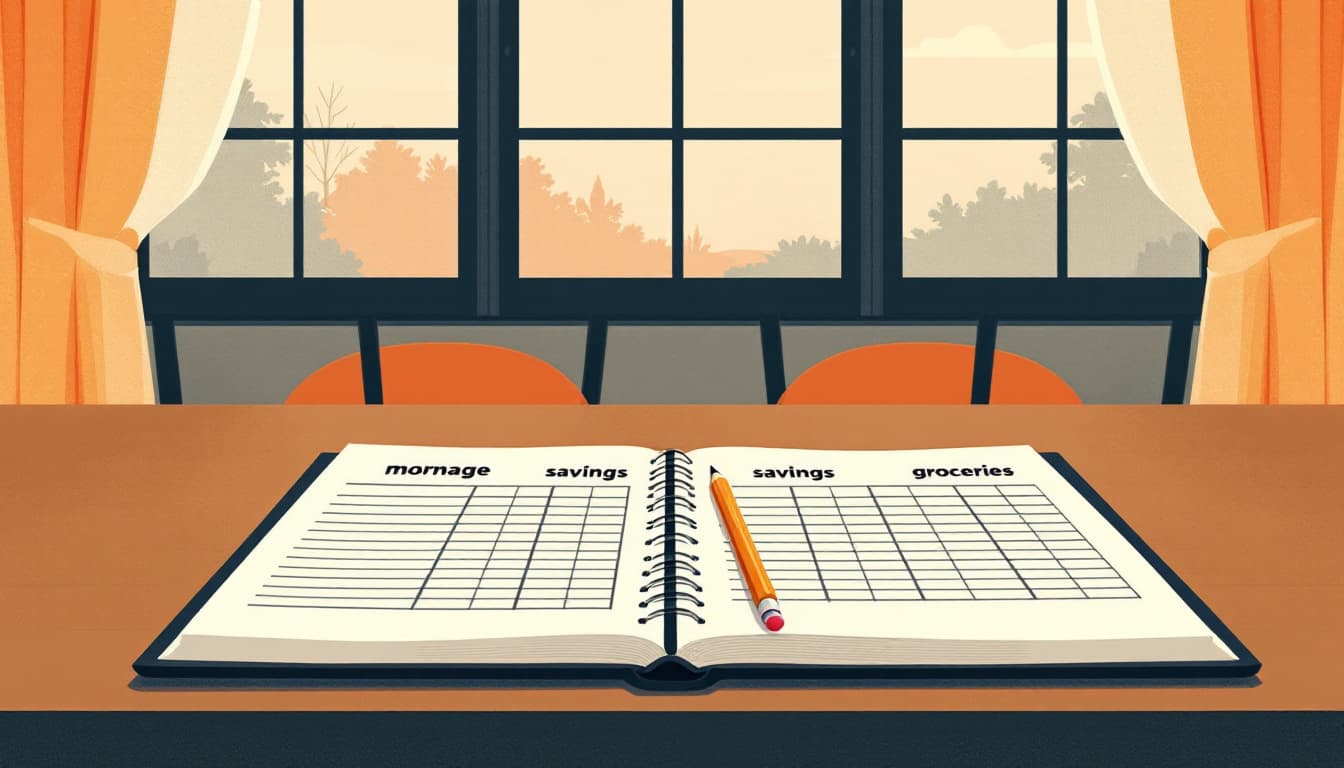
The Fed's internal disagreement reflects a genuine split in how economists read the same data. That is normal, and it is honest. What families should resist is the urge to build their financial lives around a predicted resolution. The households that weather rate cycles best are the ones with low fixed-rate debt, liquid reserves, and monthly budgets that don't require a rate cut to survive.
Durability is the goal. Not predicting the Fed. Not timing the market. Just building a household balance sheet that can absorb another year of elevated rates if that's what happens — and that benefits quietly if rates do fall.