A bag of enoki mushrooms sits in roughly the same corner of your refrigerator where it's been since last week — behind the leftovers, maybe forgotten. That's exactly the scenario a recall like this one is designed to reach before it becomes a health event.
AOL.com reported this week that enoki mushrooms sold in Florida are being recalled over potential listeria contamination. The recall follows a pattern that repeats several times a year with ready-to-eat or minimally processed produce: a pathogen is identified somewhere in the cold chain, product has already dispersed to retail shelves across the state, and consumers are notified after the fact.
Listeria isn't a dramatic poison. It's a slow-moving bacterial risk, most serious for pregnant women, adults over 65, and anyone immunocompromised. Symptoms can take up to 70 days to appear, which is why recalls like this one tend to feel abstract — nobody is sick right now that you know of. That lag is the actual hazard, not some sensationalized outbreak.
What's actually happening with produce recalls in Florida
Florida's geography creates specific cold-chain vulnerabilities. Heat and humidity mean that any break in refrigeration — during transport, at a distribution center, at a retailer that struggles with consistent cooling — accelerates bacterial growth faster than in cooler climates. The state also imports a significant share of its specialty produce, including Asian vegetables like enoki mushrooms, through ports in Miami and Tampa. A contamination event at a packing facility outside Florida can seed product into the state's retail network before any signals surface.
The FDA's recall database (searchable at fda.gov) lists active recalls by product, lot number, and distribution region. Florida households that buy specialty mushrooms — enoki, oyster, king trumpet — from Asian grocery chains, mainstream supermarkets, or warehouse clubs should check that database directly rather than waiting for a store notification that may never come.
One more thing worth naming: listeria survives refrigeration. Unlike most foodborne pathogens, cold temperatures slow but do not stop it. Cooking enoki mushrooms to an internal temperature above 165°F eliminates the risk. Eating them raw — which is common in salads and hot pots where they're added at the last moment — does not.
What we'd actually do
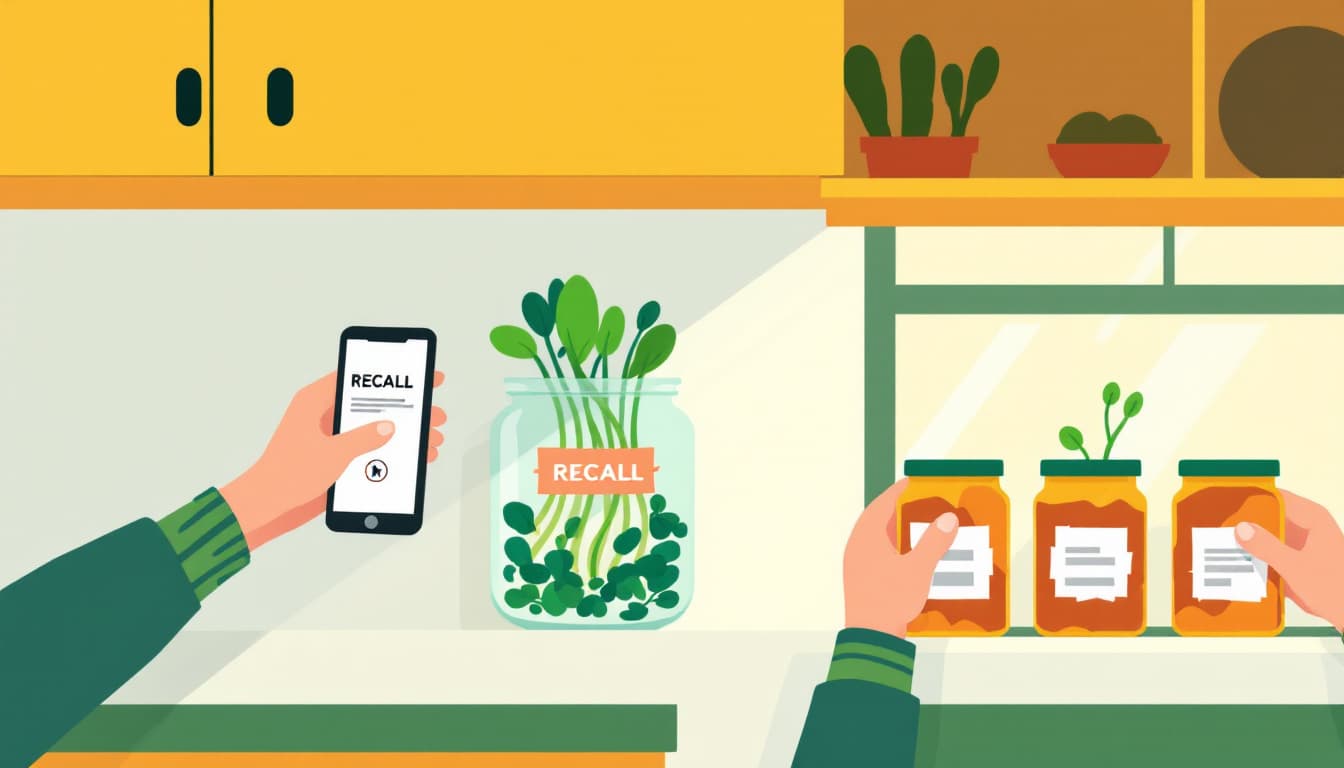
Check the FDA recall database this week, not eventually. Go to fda.gov/safety/recalls-market-withdrawals-safety-alerts and search "enoki" or "mushroom." Pull up the specific lot numbers and compare them to any packaging in your refrigerator. This takes four minutes. Lot numbers are printed on the back of the bag near the UPC.
Establish a monthly recall check as a household habit. The FDA database is public, searchable, and updated continuously. Florida households that eat specialty produce, imported seafood, or deli meats — all categories with recurring listeria incidents — benefit from a quick monthly sweep. Pair it with something you already do: the first of the month, bill pay day, whatever your anchor habit is.
Understand your refrigerator's actual temperature. Most Florida households run refrigerators set at the manufacturer default, which is often 37–40°F. The FDA recommends 40°F or below, and that upper edge matters more in a Florida home where the fridge door opens frequently in a warm kitchen. A refrigerator thermometer costs about $10 at any hardware store. If your fridge is running at 42°F, you're accelerating bacterial growth on every perishable in there, not just recalled products.
Don't over-rotate your specialty produce. The prepper instinct is to stock up. For shelf-stable goods, that logic holds. For fresh specialty produce with short shelf lives and complex import chains, buying smaller quantities more frequently reduces your exposure window. A bag of enoki mushrooms eaten within two days of purchase carries meaningfully less risk than one sitting for a week.
Know the listeria symptoms and who in your household is most vulnerable. Fever, muscle aches, nausea, diarrhea — that's the early presentation. If anyone in your home is pregnant, elderly, or immunosuppressed and consumed enoki mushrooms recently, that context belongs in a conversation with a doctor, not a Google search spiral.
Recalls are not emergencies. They're signals that the food system's self-monitoring is working as intended — imperfectly, with delay, but working. The goal for a Florida household isn't to stop eating specialty produce. It's to spend ten minutes a month staying informed so that when a bag of mushrooms in the back of your refrigerator turns out to be part of a lot number you should have tossed, you catch it before anyone gets sick.
Durability looks like that: small, consistent habits that close the gap between a public health notification and your kitchen.