A report this week from ABC7 WWSB flagged unhealthy air quality levels in Sarasota — the kind of alert that most Florida households scroll past because it doesn't carry the drama of a named storm. That's a mistake.
Florida's dry season runs roughly October through May, but the transition into summer doesn't end fire risk. It shifts it. As spring ground moisture burns off and thunderstorms become more frequent and localized, lightning-sparked fires in palmetto scrub and pine flatwoods can push smoke plumes across populated areas with almost no warning. Sarasota County sits close enough to several wildland-urban interface zones that this is a repeating pattern, not a freak event.
The Florida Forest Service tracks active fires in near-real-time, and the EPA's AirNow platform reports AQI at the county level. Most Florida residents have never bookmarked either.
What's actually changing
Wildfire smoke is not a western states problem that occasionally drifts east. Florida saw significant fire activity in recent years across Highlands, Polk, and Osceola counties — all within smoke-transport distance of the I-4 corridor and the Gulf Coast. When the AQI in a county like Sarasota hits the "Unhealthy" band (151–200 on the EPA scale), fine particulate matter — PM2.5 — is at concentrations that cause measurable cardiovascular and respiratory stress even in healthy adults, not just in people with asthma.
Florida households tend to run central air constantly from May onward, which creates a false sense of protection. Most residential HVAC systems recirculate air and filter at MERV 8 or below. That rating captures dust and pollen reasonably well. It does almost nothing for PM2.5, the primary hazard in wildfire smoke.
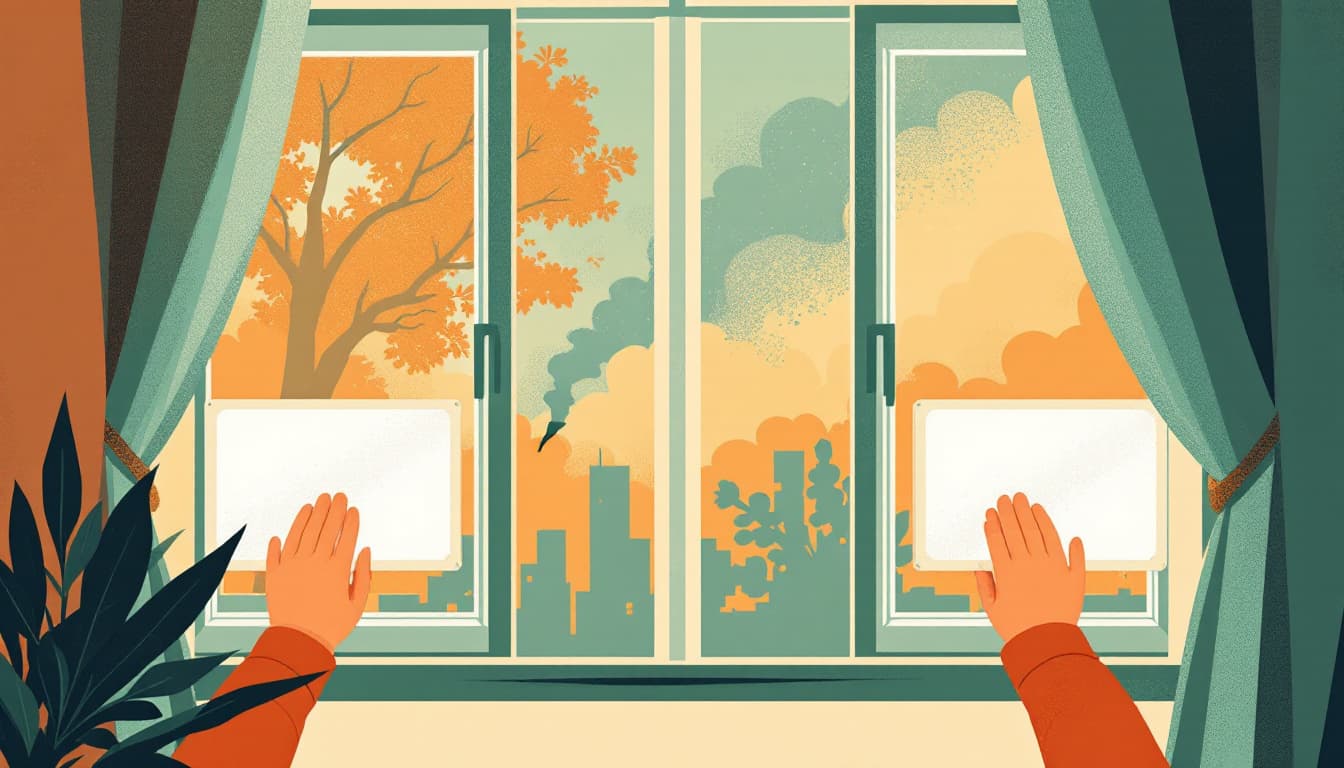
The other underappreciated factor: Florida's older housing stock, particularly in coastal counties like Sarasota, often has gaps around windows, sliding doors, and aging weatherstripping that allow significant outdoor air infiltration even when windows are "closed." A house that drafts freely on a calm day is not a clean-air refuge during a smoke event.
What we'd actually do
Check your HVAC filter rating this week. Pull your current filter and look at the MERV number printed on the frame. If it's below MERV 13, it is not filtering fine smoke particles. A MERV 13 filter costs roughly $15–25 at any home improvement store and fits most standard residential systems. The upgrade takes five minutes. One note: older or lower-capacity air handlers may restrict airflow with a denser filter; if your system is 10+ years old, check the manufacturer spec or ask an HVAC tech whether MERV 13 is appropriate for your unit.
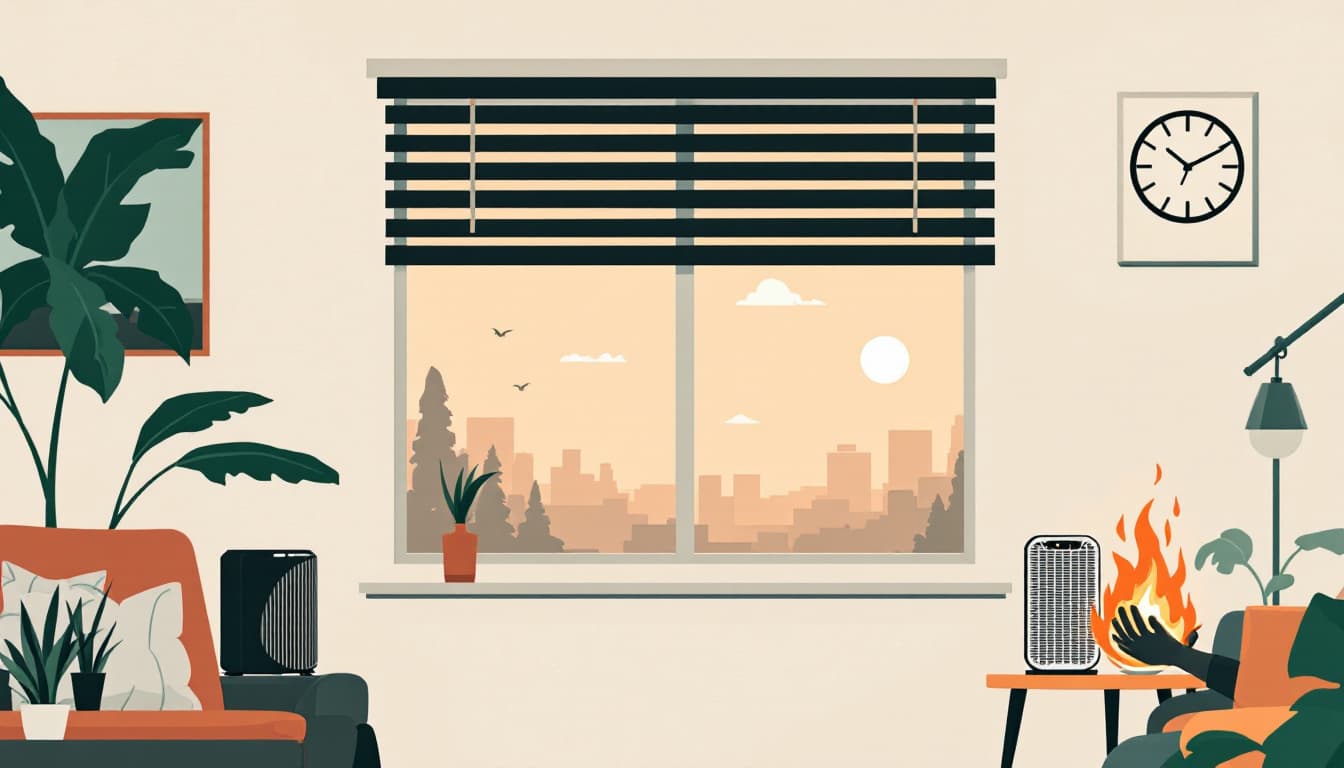
Designate one room as your clean-air room. Pick the room in your home with the fewest windows and exterior doors — often an interior bedroom or bathroom hallway. During a smoke event, this is where family members with respiratory conditions, young children, or elderly relatives should spend time. A portable air purifier with a true HEPA filter running in that room meaningfully reduces PM2.5 concentration. You don't need one for every room. You need one for the room where vulnerable people will shelter.
Bookmark AirNow and the Florida Forest Service fire map. Go to airnow.gov and search Sarasota County (or your county). Bookmark it. Do the same at the Florida Forest Service's active fire viewer. These are free, state and federally maintained tools that update throughout the day. You don't need a paid app or an alert subscription to stay informed; you need a thirty-second habit during high-risk periods.
Stock N95s with the rest of your emergency supplies. You probably already have some from recent years. N95 respirators — properly fitted — filter PM2.5. Surgical masks and cloth masks do not. Two N95s per household member is a reasonable baseline. They cost roughly $1–2 each in multi-packs and store indefinitely in a sealed bag. If you need to drive to a pharmacy, run an errand, or briefly step outside during a smoke event, this is your tool.
Check the weatherstripping on your primary entry door and sliding glass doors. This is a fifteen-minute walk-around. Hold a piece of tissue near door edges while a family member stands outside; visible movement means smoke (and insects, and humidity) is infiltrating freely. Foam or rubber weatherstripping replacement kits run under $20 at any hardware store and are a legitimate air-quality and energy upgrade.
The bigger picture
Florida emergency preparedness culture is almost entirely organized around hurricanes. That focus makes sense — tropical systems are the state's dominant risk. But the infrastructure built for hurricane prep doesn't automatically transfer to smoke events, which arrive faster, leave less lead time, and affect indoor air quality in ways that aren't visible or dramatic. No one photographs smoke coming under a door.
Durability as a household means being prepared for the mundane threats, not just the catastrophic ones. Sarasota's air quality alert this week will resolve. The conditions that produced it will return.