A fire burning along Highway 82 in Brantley County, Georgia is pushing smoke south. This week, IQAir flagged the Brantley Highway 82 Fire in its wildfire map spotlight — and if you live anywhere from Jacksonville to Orlando, that plume does not stop at the state line.
Florida households tend to think of smoke season as a local problem: the Everglades in spring, Osceola County flatwoods in a dry year, the Okefenokee fringe. What gets underestimated is transport smoke — particulate matter that originates hundreds of miles away, rides a southerly pressure gradient, and drops air quality index readings into the orange or red range with almost no warning. Residents wake up, the sky has a yellow cast, and nobody knows what's in the air or how long it will last.
What's actually changing
The broader pattern matters more than this single fire. Wildfire activity across the Southeast has expanded in recent dry seasons, and Georgia and the Florida panhandle share an ecosystem — the longleaf pine flatlands — that carries fire readily. When large burns ignite in south Georgia, the smoke column often settles over north and central Florida within 12 to 36 hours depending on wind.
Fine particulate matter — the fraction measured as PM2.5 — is the health concern. At elevated concentrations it irritates lungs in healthy adults and creates genuine risk for children, the elderly, and anyone with asthma or cardiovascular disease. Florida has both a large retiree population and a large number of households with young children. That demographic overlap is why this matters more here than in most states.
Air quality data for Florida is publicly available in near-real time through the Florida Department of Environmental Protection's air monitoring network and through AirNow.gov. Most households have never bookmarked either one.
What we'd actually do
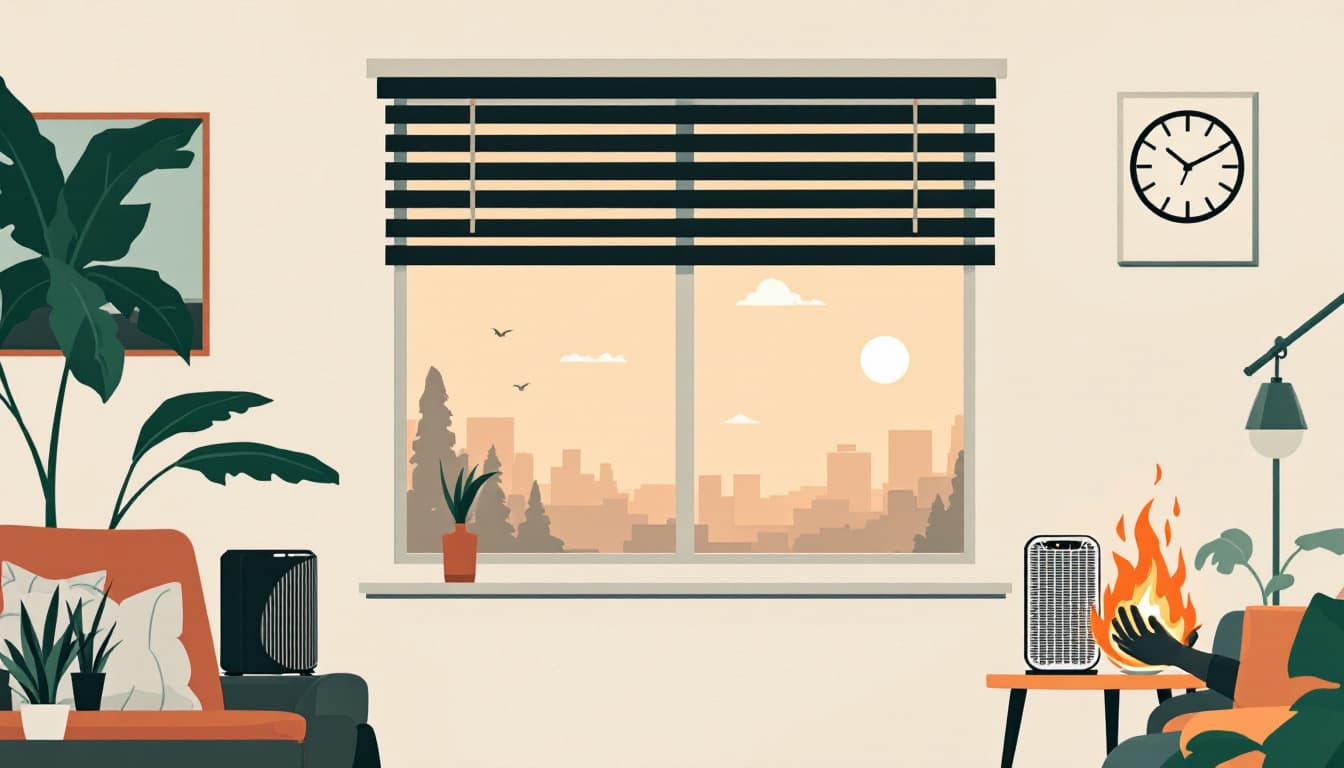
Check your air quality before opening windows on hazy mornings. Pull up AirNow.gov or your county's DEP monitoring station before you throw open the house to the morning breeze. This takes 45 seconds. A reading above 100 AQI (orange range) means you should leave windows closed, especially if anyone in your household has a respiratory condition. A reading above 150 (red range) means you run whatever air filtration you have.
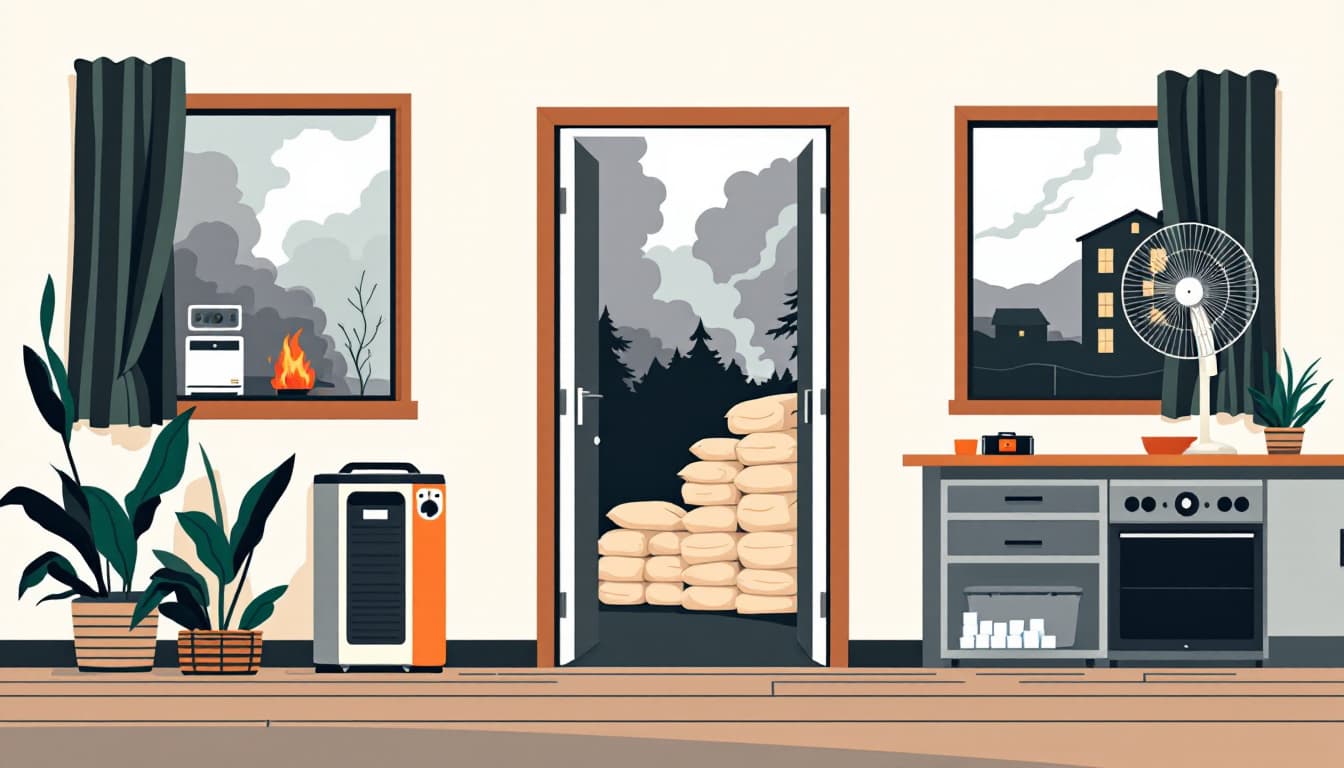
Put one box fan and one MERV-13 or better filter on your shopping list. A store-bought box fan paired with a 20x20 MERV-13 furnace filter taped to the intake side creates a room-level air purifier for under $40 total. It won't clean a whole house, but it will meaningfully reduce PM2.5 in a bedroom or a room where vulnerable family members spend most of their time. This setup has been validated in peer-reviewed research and is sometimes called a Corsi-Rosenthal box in a simplified two-piece form. You don't need a $300 branded air purifier to get most of the benefit.
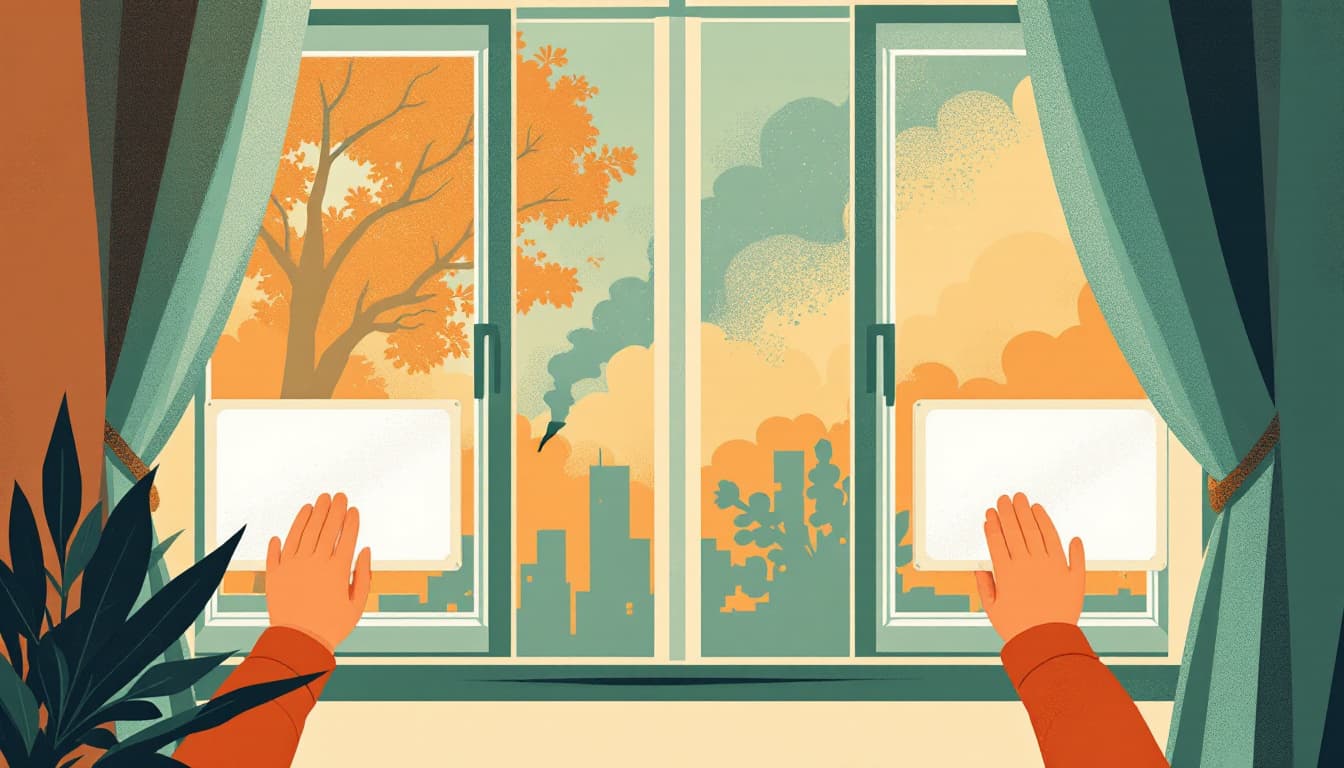
Identify one room in your home you can seal and filter during a smoke event. Pick a room with few gaps, ideally interior-facing, where you can run a filtered fan and keep the family during peak AQI hours. Tape window gaps with painter's tape if needed. Know which room this is before smoke arrives, not during.
Keep a small supply of KN95 or N95 masks accessible for outdoor movement. If you need to walk to a car, take a child to school, or do yard work during a smoke event, a properly fitted respirator reduces your inhaled PM2.5 significantly. Surgical masks and cloth masks do not. Buy a box, store it with your basic emergency supplies, and rotate it annually.
Sign up for your county's emergency alert system. Florida's 67 counties all run alert programs — most accessible through AlertFlorida.gov — and several now include air quality advisories alongside storm warnings. Takes two minutes to register. Most households have not done it.
A wildfire in south Georgia is a small event in the national news cycle. For a household in Gainesville, Lake City, or the northern suburbs of Jacksonville, it can mean two days of degraded outdoor air and elevated indoor exposure if you're not paying attention. The goal isn't to stay indoors forever or buy an arsenal of gear. It's to know your local conditions, have one simple tool running, and make one smarter decision than you would have made without the information.
Durable households aren't the ones who stockpiled the most. They're the ones who noticed the signal first.