For the past two years, most households could play a kind of triage game at the grocery store: skip the beef, watch the eggs, shrug at the canned goods. That game is getting harder to play.
A Knoxville News Sentinel report this month describes grocery inflation spreading beyond the usual high-profile categories — proteins, eggs, fresh produce — and into the broader store. Dairy, baked goods, condiments, pantry staples: the price creep is becoming less selective. Recent BLS consumer price data has tracked a similar pattern nationally, with food-at-home inflation running persistently above the broader CPI for more than a year.
This matters not because any single price increase is catastrophic, but because the math compounds. When inflation was concentrated in a few aisles, a disciplined shopper could absorb it by substituting. When it's broad-based, there's nowhere left to substitute to.
What's actually changing
Narrow inflation is manageable through behavior. Broad inflation is a structural cost shift — it changes what your grocery run costs at baseline, regardless of how careful you are.
The driver isn't one thing. It's layered: input costs (energy, packaging, transport) hit manufacturers first. Those costs travel downstream to retailers on a lag, which is why price spikes in raw commodities often show up at the register months after the commodity market has cooled. Several of those cost layers hit simultaneously in 2022–2023, and the repricing still isn't fully complete.
There's also a shrinkflation dimension that pure price-per-unit tracking misses. When the package gets smaller and the shelf price stays flat, the price index doesn't capture it the way a family's receipt does. NielsenIQ panel research has tracked shrinkflation across hundreds of SKUs — the headline inflation number understates what households actually experience.
What this means practically: your $200 weekly grocery run from two years ago is not the same cart today. If you haven't consciously recalibrated your food budget, you've likely absorbed several hundred dollars per year in cost without realizing it — through credit card drift, smaller meals, or skipping items.
What we'd actually do
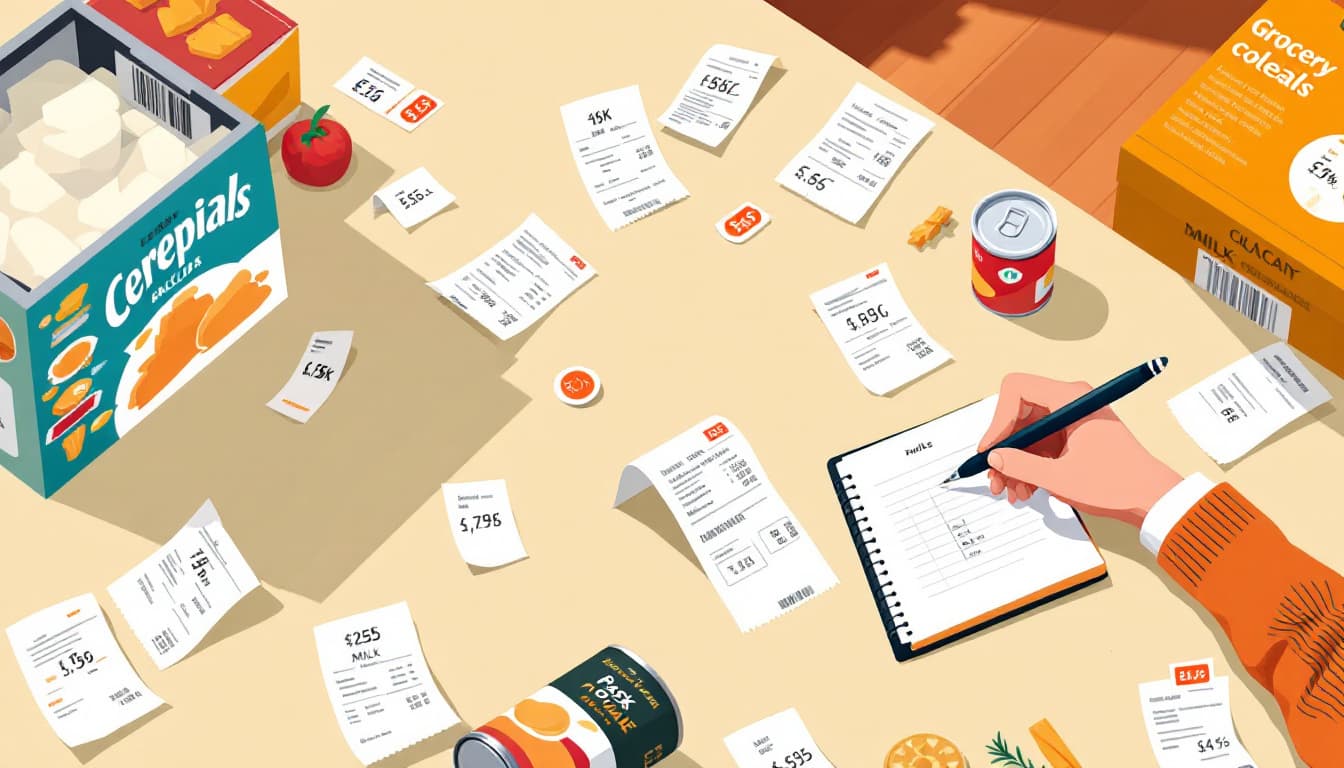
Build a household price baseline this week. Pick 15–20 items your family buys every week without fail — a specific yogurt, a specific pasta, a specific cooking oil. Write down today's price. Do it again in 60 days. This is the only inflation number that actually matters for your household, and it's more accurate than any index.
Most people know roughly what their grocery bill is but can't tell you whether ground beef is $4.99 or $7.49 per pound right now. That gap is where budget drift lives. A handwritten list or a notes-app photo of your weekly receipt gives you real data to act on.
Shift one-third of your pantry spend toward bulk staples. Rice, dried lentils, canned tomatoes, oats, cooking oil — these are not disaster-prep purchases. They are ordinary food that stores well and buffers against the next price spike in any single category. Buying a 25-pound bag of rice at today's price is a straightforward hedge, not a prepper move.
The goal isn't a bunker. It's a 4–6 week pantry that lets you skip a week of full-price shopping when your budget is tight or prices spike in something you need.
Review your store loyalty and comparison habit. Broad inflation makes store-brand switching and store-switching more valuable than it was when only a few categories were expensive. Recent consumer research suggests store-brand penetration is rising — households that hadn't bought private-label before are switching now. If you've been loyal to one grocer or one national brand, run a single comparison shop. The savings on a full cart are often larger than expected.
Cut one convenience food category, not a beloved one. Pre-cut vegetables, single-serve snacks, bottled salad dressing — pick the category where you pay the largest convenience premium and absorb the function another way this month. This isn't austerity. It's finding the $30–50/month in low-pain savings before inflation forces a higher-pain cut later.
The bigger picture
Broad-based grocery inflation is not a signal that the food system is collapsing. It is a signal that the cost of running a household has structurally risen, and that the gap between your current food budget and what your cart actually costs is probably wider than you think.
The durable response is not anxiety-buying freeze-dried meals or obsessing over worst-case scenarios. It's knowing your real numbers, building a modest pantry buffer, and making a few deliberate substitutions before the drift forces your hand.
Households that track their food costs and have a few weeks of staples on hand are not "preppers" in any meaningful sense. They're just running their finances with a little more intentionality than the average person who hasn't looked at their grocery receipt since 2023.